
What if your facial isn’t the problem, but your skin’s needs have changed? If you’re wondering what to do when facials stop working, start by reassessing whether your treatment plan and home routine still suit your skin. Repeating the same approach may not address new concerns or buildup, dryness, and irritation that can affect results.
It’s natural to expect a treatment that once left your skin looking refreshed to keep doing so. But results may become subtler as your skin improves, while stress, hormones, weather, and aging can change what it needs. The answer isn’t automatically to book more treatments or add stronger products.
Learn how clogged pores, dullness, dehydration, and a weakened skin barrier can affect facial results, and how home care can support or undermine them. A routine may need to change over time. Professional treatments paired with thoughtful care between appointments can offer a more consistent approach.
Key Takeaways
- Facial results depend on both in-office treatments and the care that supports your skin between visits.
- Persistent irritation, dryness, breakouts, or products that no longer seem effective can signal that your routine needs a reset.
- Dullness may reflect slower skin cell renewal and surface buildup, not simply a need for stronger exfoliation.
- A compromised skin barrier can leave skin feeling tight and reactive, so hydration and gentle care matter when results stall.
- When progress plateaus, reassessing your skin’s current concerns can help guide the next treatment and home-care approach.
Combining professional treatments with a personalized home routine
Facial results depend on the fit between professional treatments and your daily skin care. A consistent cleanser and carefully chosen products, such as natural formulas from MYNICKY, help support results between appointments.
Matching Treatments to Skin Concerns
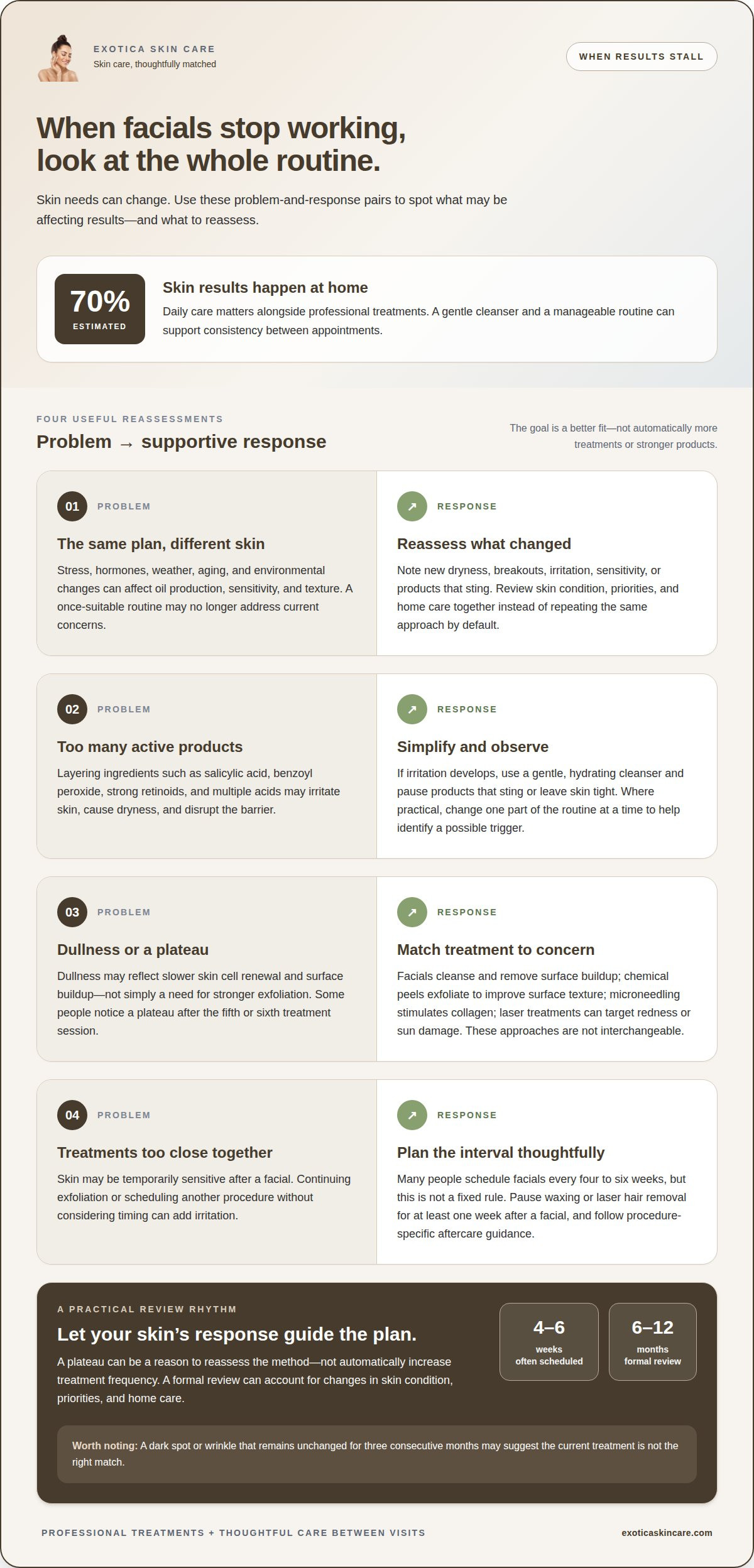
Matching a treatment means choosing a method for the concern it can address. Facials cleanse and remove surface buildup, while chemical peels exfoliate to improve surface texture. Microneedling stimulates collagen, and laser treatments can target concerns such as redness or sun damage.
These approaches aren’t interchangeable. A staged plan might use a vascular laser for redness and inflammation, microneedling for collagen, then light peels for texture. A consultation can match treatment choices to your skin’s condition, medical history, and priorities. It can also clarify whether combining treatments makes sense or whether a focused approach is more suitable.
Choose a provider who builds the plan around your concerns rather than emphasizing add-ons at every visit. Treatment cost depends on the case and is provided after a quote request; factors include the treatment type, areas addressed, and planned combination.
Planning Treatment Frequency and Results
Treatment frequency is the interval that suits your skin type, concerns, products, and response. Many people schedule a professional facial every four to six weeks, but that isn’t a fixed rule for every concern. Persistent congestion, sensitivity, or dryness may call for a different approach than maintenance for balanced skin.
Some people notice a plateau after the fifth or sixth treatment session. That can be a reason to reassess the method, not automatically increase treatment frequency. A formal review every six to 12 months can account for changes in skin condition, priorities, or home care.
Results also depend on the routine between visits. An estimated 70% of skin results happen at home, so daily care matters alongside professional treatments. A gentle cleanser and a manageable routine can support consistency; adding several strong products may instead complicate it. Skin may need a different plan as concerns or tolerance change.
Maintaining Results Between Appointments
Maintenance means supporting results at home and spacing procedures thoughtfully. Skin care between facials can help maintain progress, while professional treatments can change as concerns evolve. Combination plans should have a clear purpose: for example, a laser for redness, microneedling for collagen, and light peels for texture, rather than every option at once.
After a facial, wait at least one week before waxing or laser hair removal. This pause helps avoid scheduling another treatment while skin may be temporarily sensitive. Keep timing in mind when planning appointments, especially if facial waxing or hair removal is already on your calendar.
Home care should complement, not compete with, professional treatment. If products cause irritation or your skin’s response changes, discuss your routine during your next consultation. A provider can consider your cleanser, active ingredients, treatment sequence, and appointment interval together, then adjust the plan to support more consistent results.
Is Your Home Routine Canceling Out Results?
Support results between facials by simplifying your routine, using a gentle cleanser, and pausing exfoliation for several days after treatment. Continuing the same facial approach despite irritation may increase dryness, sensitivity, or pigment changes, depending on your skin and medical history.
Recognizing When a Routine Needs Support
Consider professional support if persistent dullness, uneven texture, breakouts, dryness, irritation, or sensitivity appears. Note what has changed: products may sting, for example, or moisturizer may no longer feel comfortable. A dark spot or wrinkle that remains unchanged for three consecutive months may suggest the current treatment isn’t the right match. These signs can help identify whether the issue is your routine, treatment, or both.
Why Routines Seem Less Effective
A routine may seem less effective when your skin’s needs change, even if its ingredients and steps stay the same. Age, hormones, stress, weather, and other environmental changes can affect oil production, sensitivity, and texture. A product that once suited your skin may now feel irritating or fail to address its current concerns. Increasing product strength without reassessing the cause can add irritation rather than improve results.
Review active ingredients as a combination, not just individually. Salicylic acid, benzoyl peroxide, strong retinoids, and multiple acids can each have a role, but layering them may irritate skin, cause dryness, and disrupt the barrier. Benzoyl peroxide may help some acne patterns, yet combining it with several other active ingredients can increase irritation. A personalized routine targets your main concern without making every product an active treatment.
If irritation develops, simplify your routine. Use a gentle, hydrating cleanser and pause products that sting or leave skin tight. Don’t add another exfoliant to address rough texture. After a facial, skip scrubs and exfoliators for several days. Pause retinols, at-home peels, and salicylic acid cleansers or toners for a few days after treatment, too. Follow your treating professional’s aftercare guidance for the specific procedure.
Check product condition, too. Older skincare formulas can oxidize, separate, become less effective, or irritate skin. Skipping sunscreen can also affect facial results, so include sun protection in your daytime routine. Where practical, change one part of your routine at a time so you can identify which ingredient or step may be contributing to a reaction.
Repeated treatments on skin that remains irritated can prolong discomfort or expose a mismatch between the treatment and the concern. Chemical peels and other professional treatments may cause irritation, dryness, temporary sensitivity, or pigment changes, depending on skin and medical history. If symptoms persist, a skin care consultation can help review the products and treatment approach together.
Dullness and slower cell turnover
A dull complexion can reflect dead skin lingering on the surface as natural cell turnover slows with age. The skin’s renewal cycle is described as about 30 days, but it doesn’t stay identical for everyone throughout life. When surface cells accumulate, they can make texture look uneven and light reflect less evenly. A facial may temporarily improve the appearance, while the underlying pace of renewal still shapes what you see between appointments.
Look for patterns, not just one day in the mirror. Persistent lack of radiance, rough patches around the cheeks, or makeup settling unevenly can point to surface buildup. Dryness and irritation can also make texture more noticeable, so dullness doesn’t always mean your skin needs stronger exfoliation. Adding scrubs or acids without considering sensitivity may create inflammation that distracts from the original concern.
Professional facials can remove buildup, dead skin cells, and impurities that block product absorption. They can also support the skin’s natural cycle and help reveal fresher-looking skin. This is not the same as changing the skin’s renewal rate. If a treatment gives you a brief glow but texture soon looks unchanged, consider whether the treatment still matches your concern and whether home care supports the result.
Keep your skin care consistent enough to see what helps. A gentle cleanser removes daily residue without making cleansing another source of irritation. Pair it with hydration and daytime sunscreen, then observe changes in comfort, texture, and tone. A simple record of products and visible changes can reveal patterns, such as increased tightness after an exfoliating product or renewed dullness during colder weather.
Consider exfoliation in context, rather than as a remedy for every dull patch. If skin feels raw, tight, or unusually reactive, pause abrasive scrubs and avoid layering multiple exfoliating ingredients. Over-exfoliation can make skin look smoother temporarily while reducing resilience, especially for sensitive skin. A calmer routine makes it easier to tell whether roughness comes from surface cells, dryness, or irritation.
Regular facials can be adjusted as your skin changes instead of repeating the same approach indefinitely. During a professional review, describe where dullness appears, how long it lasts after treatment, and which products affect comfort. These details help distinguish surface buildup from dehydration or inflammation. The goal is a consistent plan that addresses visible texture while respecting your skin’s current tolerance, not simply a more intensive treatment.
Barrier repair and hydration
A compromised skin barrier can leave skin dull, tight, and more reactive. Fine lines may look more noticeable, and a skin treatment may feel or look different afterward. The barrier also helps skin retain moisture. When it is impaired, the skin may not heal or produce collagen properly. Repeating a treatment without addressing the barrier may overlook a factor affecting results.
Look for a combination of signs rather than one isolated dry patch. For example, skin that feels tight after cleansing, stings when you apply moisturizer, and looks flushed may need a gentler approach. Cold weather, low humidity, and indoor heating can increase dryness, so a facial may feel less effective in winter than summer. Environmental changes can shift what your skin needs between appointments.
Start with a simple routine while sensitivity settles: use a gentle, hydrating cleanser, then apply moisturizer to support moisture retention. Avoid harsh cleansers that leave skin feeling stripped. After a facial, pause retinols, at-home peels, and salicylic acid cleansers or toners for a few days. This gives temporarily sensitive skin a break from active ingredients that could add irritation.
Hydration can be a reset, not an extra treatment. Giving skin three months of rest with hydration may help restore its receptivity to future treatments. During that time, avoid trying to remove every rough area with scrubs or multiple acids. A calmer routine makes it easier to notice whether tightness, dullness, or reactivity improves with consistent barrier care.
When facial results seem to fade, include your skin barrier’s condition in the treatment conversation. Describe when tightness starts, which cleanser or active ingredients cause discomfort, and whether cold weather or indoor heating changes your skin. This context can help shape a more suitable treatment plan. Once your skin is more comfortable, reconsider treatment choices rather than treating dryness as a reason to intensify exfoliation.
How long should it take to see results from regular facials?
There’s no single timeline for every facial. Results depend on the concern, treatment, and skin response. A refreshed appearance may be noticeable soon after an appointment, while concerns involving texture or acne can require a longer view. Track a specific goal, such as fewer breakouts or smoother-looking texture, rather than judging every visit by the same immediate glow.
A short-lived effect can offer useful context. If a treatment’s post-session effect lasts only a few days instead of weeks, it may signal diminishing returns. That doesn’t necessarily mean every facial has stopped helping. It does mean the current approach deserves review, especially if the original concern remains unchanged or returns quickly between appointments.
Some patients notice a plateau after the fifth or sixth session of a skin treatment. This can happen as visible progress becomes subtler or because the treatment no longer matches the main concern. Compare the result with your starting point: note changes in breakouts, tone, or texture, and whether they last between visits. This gives you a clearer picture than relying on memory alone.
Temporary post-facial changes can also shape expectations. Mild pinkness from massage or stimulating ingredients should subside during the day. Purging, if it occurs, should settle within a week or two. Those short-term changes differ from persistent irritation or a concern that steadily worsens. Consider the timing and type of change when assessing your skin’s response.
Make reassessment part of the plan rather than repeating the same treatment indefinitely. Review the treatment approach every six to 12 months, or sooner when your skin’s condition or priorities shift. For example, a plan focused on congestion may need reconsideration if breakouts improve but dryness or uneven tone becomes more noticeable. A professional can use those changes to adjust the treatment goal and cadence.
Keep a simple record after each appointment: the treatment received, the concern targeted, the first visible change, and how long it lasted. For example, note whether post-treatment brightness fades within days or remains noticeable between visits. Bring that timeline to your next consultation. It helps distinguish a natural plateau from a mismatch between treatment, home routine, and your skin’s current needs.
If your results have stalled, book a facial treatment review to discuss your progress and next steps.
Exotica Skin Care
Exotica Skin Care can help you reassess your skin concerns when familiar facials no longer seem to deliver the results you want. A thoughtful treatment plan considers your skin’s current condition, your goals, and how home care supports progress. Depending on the concern, options include Scarlet SRF, BioRePeelCl3® Peel, PRX Derm Perfexion, and AquafirmeXS. Each has a distinct role, so the appropriate choice depends on what you want to address and your skin’s needs. If your results have plateaued, or dryness, congestion, or uneven texture has become more noticeable, discussing your treatment history and routine can help clarify a suitable next step. Contact Exotica Skin Care to discuss your skin concerns.
Choose a Clear Next Step for Your Skin
When deciding what to do when facials stop working, focus on clarifying the result you want next instead of repeating a familiar appointment. Consider which concern matters most now, such as persistent congestion, uneven tone, or changes in texture. Bringing that priority to a professional consultation can make your next treatment decision more intentional.
Exotica Skin Care offers Scarlet SRF, BioRePeelCl3® Peel, and PRX Derm Perfexion among its treatment options. The right discussion begins with your goals and current skin concerns, rather than choosing a treatment by name alone. A considered plan can connect your next step with the care you want to pursue.
Take the next step at your own pace. Contact Exotica Skin Care to discuss your skin goals and treatment options. A thoughtful conversation can help you move forward with greater clarity and confidence.
Frequently Asked Questions
Why Do My Facials Stop Working After a While?
Facials may seem less effective when your skin’s needs or your treatment goals change. For example, a routine aimed at congestion may not address a new concern, such as sensitivity or uneven tone. Stress, hormones, medication, or climate can also affect your skin. Compare the concern you originally targeted with what you notice now; the difference can guide a useful reassessment.
Did My Skin Get “Used To” Facials?
Your skin doesn’t become immune to facials. Instead, visible changes may become less dramatic as your skin improves, or the same treatment may no longer suit your current concern. Consider whether your goal has changed since you began. A treatment that once addressed frequent congestion may be less relevant if your main concern is now uneven tone.
Are facials worth the hype?
Facials can be worthwhile when a treatment matches a specific goal and fits into a considered skin-care plan. They may help address surface buildup and support a refreshed appearance, but they aren’t a universal solution for every concern. Before booking, identify the change you want, such as fewer clogged-looking areas or smoother texture. That makes it easier to judge whether the appointment served its purpose.
Is It Clogged Pores, Dehydration, or Something Else?
Clogged pores and dehydration can look different, but may also occur together. Congested areas may show visible blackheads or whiteheads, while dehydrated skin may feel tight or look less supple. These observations can guide a conversation, but they don’t establish a diagnosis. Note where the concern appears and how your skin feels after cleansing or applying moisturizer, then share those details during a skin-care consultation.
Why might facials stop improving my skin?
A facial may stop producing noticeable change when it no longer targets your main concern. For example, a treatment focused on surface texture may not resolve recurring breakouts with multiple contributing factors. Progress can also be harder to notice once a concern has improved. Set a clear goal for your next appointment and describe what has changed, stayed the same, or returned between visits.
What skin conditions require a dermatologist instead of facials?
Choose a dermatologist for concerns that need medical diagnosis or treatment rather than cosmetic skin care. Persistent or worsening acne, an unexplained rash, or a changing spot deserves medical assessment. A facial can support cosmetic goals, but it can’t determine the cause of a medical condition. If the concern is painful, spreading, or changing, prioritize medical evaluation before scheduling a cosmetic treatment.
Could my facial products or treatment type be irritating or ineffective?
Yes. A product may irritate your skin if its active ingredients don’t suit your current tolerance, or a treatment may not address your main concern. For example, a product intended for breakouts may feel too harsh when your skin is already sensitive. Bring product names and treatment history to your next appointment. That context can help distinguish a reaction from a treatment mismatch and support a more considered adjustment.
How can I choose a licensed esthetician or dermatologist for persistent skin concerns?
Match the professional to your concern: consult a dermatologist for medical symptoms and an esthetician for cosmetic facial care. Look for clear explanations of a treatment’s purpose, relevant risks, and fit with your goals. A thoughtful professional should discuss your skin history and current products before recommending a procedure. Be cautious of plans that promise identical outcomes for everyone or recommend treatments without addressing your concerns.