
Skin collagen levels decline by roughly 1% per year as you age, so rebuilding facial collagen is less about finding a single fix and more about supporting your skin over time. You can’t completely reverse collagen loss, but some treatments may help boost collagen levels. Understanding how to rebuild collagen in your face starts with knowing what supports it and what can break it down.
It makes sense to look for a cream, supplement, or treatment that can restore firmness and smoothness. The answer to how to rebuild collagen in face is nuanced: collagen is a structural protein in skin, and different approaches may support it in different ways. Results depend on factors such as consistency and sun protection.
This guide explains what collagen does and how supplements, topical skin care, light therapies, professional treatments, and everyday habits may affect facial collagen. You’ll learn what each option can and can’t do, so you can make informed choices rather than relying on one promised solution.
Key Takeaways
- Collagen production declines with age, while sun exposure and some daily habits can damage existing collagen.
- Collagen supplements may support skin, but evidence on their effects is mixed.
- Topical ingredients such as retinoids may support collagen, while moisturizers help care for the skin barrier.
- Light therapies and professional treatments are options to explore as part of a broader skin-care approach.
- Pairing thoughtful treatment choices with sun protection, balanced nutrition, and restorative habits can support skin health over time.
1. What Promotes Collagen Production in Your Skin?
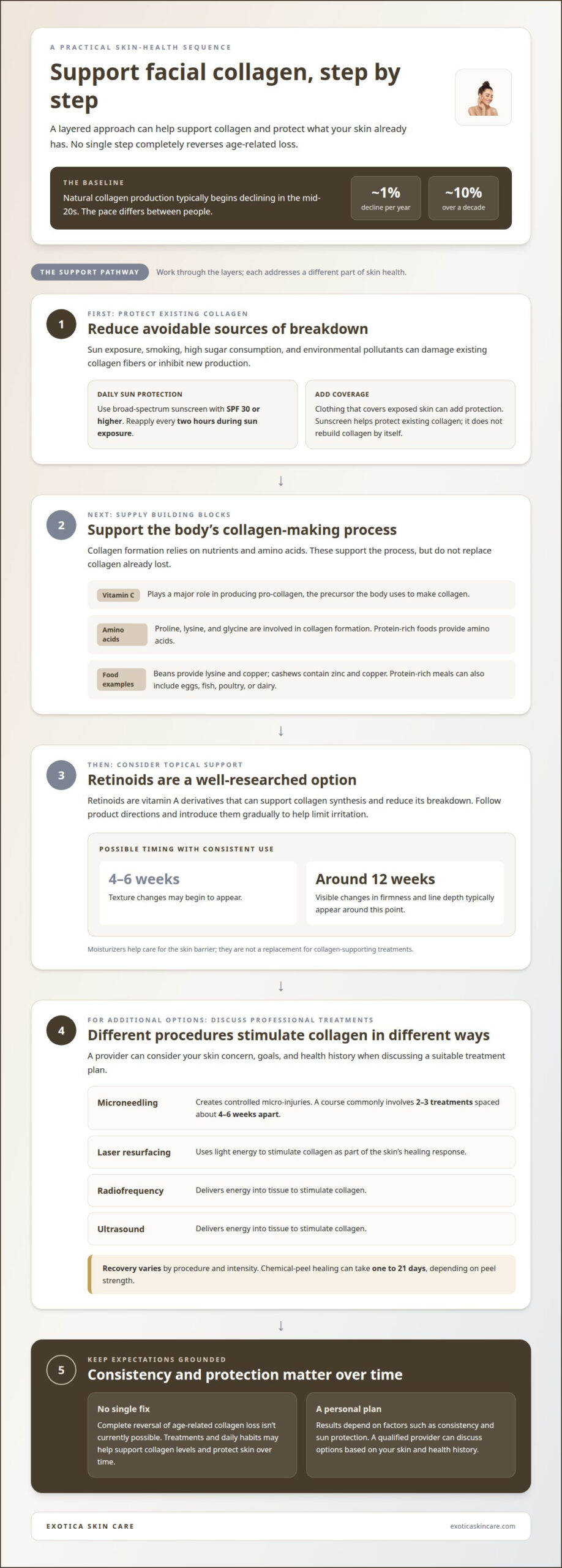
Collagen is a structural protein that helps skin maintain firmness and support. Natural production typically begins declining in the mid-20s, at roughly 1% per year. That pace amounts to about 10% over a decade. By the mid-thirties, shifts in skin firmness may become more noticeable, though the pattern differs between people.
Age is only one influence. Sun exposure, smoking, high sugar consumption, and environmental pollutants can damage existing collagen fibers or inhibit new production. Daily habits cannot erase age-related changes, but limiting these sources of damage helps support skin health. Regular sun protection, for example, addresses a major preventable source of collagen breakdown.
Collagen formation also depends on nutrients. Vitamin C plays a major role in producing pro-collagen, the precursor your body uses to make collagen. Proline, lysine, and glycine are amino acids involved in the process. Protein-rich foods supply amino acids; beans provide lysine and copper, and cashews contain zinc and copper. These nutrients support the body’s collagen-making processes, but they don’t replace collagen already lost.
Microneedling, laser resurfacing, radiofrequency, and ultrasound are professional options that can stimulate collagen in different ways. Microneedling creates controlled micro-injuries, laser resurfacing uses light energy, and radiofrequency and ultrasound deliver energy into tissue. The right approach depends on the skin concern and treatment plan. Collagen develops as part of the body’s healing response.
Retinoids, vitamin A derivatives, are among the best-researched topical ingredients for supporting collagen synthesis and reducing its breakdown. Use them according to product directions, and introduce them gradually to help limit irritation. Texture changes may appear after 4-6 weeks of consistent use; visible changes in firmness and line depth typically appear around 12 weeks.
For daily protection, use broad-spectrum sunscreen with SPF 30 or higher. Reapply every two hours during sun exposure, and add clothing that covers exposed skin. Sunscreen helps protect existing collagen from UV damage, but it cannot rebuild collagen by itself.
In the United States, treatment costs depend on the method, treated area, and plan; pricing is provided after a quote request. Microneedling commonly involves 2-3 treatments spaced about 4-6 weeks apart. Recovery and side effects vary by procedure and intensity; chemical-peel healing can take one to 21 days, depending on peel strength.
Consider a dermatologist when changes in facial firmness concern you or you’re weighing treatment options. A qualified provider considers your skin, goals, and health history when discussing suitable procedures. Complete reversal of age-related collagen loss isn’t currently possible, but treatments and daily habits may help support collagen levels and protect skin over time.
2. Collagen supplements
Oral collagen supplements are usually made from collagen broken into smaller peptides. These peptides provide amino acids, the building blocks used throughout the body. They don’t travel directly from a capsule to facial wrinkles. Digestion breaks down protein, and the body uses its components where needed. A supplement may support collagen production, but it can’t target the face or restore collagen in one specific area.
Some studies suggest collagen peptides enter the bloodstream and may stimulate fibroblasts, the cells involved in producing collagen. This possible pathway helps explain interest in peptides for skin elasticity and texture, but it doesn’t establish that every supplement produces visible changes. Evidence on oral collagen remains mixed, and more research is needed to determine its effectiveness and optimal use.
A 2023 meta-analysis reviewed 26 studies on oral collagen and skin health. A 2024 study reported skin, scalp, and hair benefits from supplements taken daily or every 48 hours. While nutritional support may offer modest systemic perks, dedicated restoration providers like The Hair Clinic point out that noticeable hair thinning typically requires targeted therapeutic care rather than oral peptides alone. These findings reflect different research, not a universal schedule or guaranteed result. Study designs and products can vary, so one result cannot establish the best formula or predict how a person’s wrinkles will respond.
Food is another source of the amino acids involved in collagen formation. Protein-rich meals can include beans, eggs, fish, poultry, or dairy, depending on dietary preferences. Unlike a supplement, these foods contribute protein as part of a broader diet. Balanced eating supports general nutrition; it shouldn’t be treated as a direct facial treatment or a way to reverse age-related changes.
Supplements and food serve different roles. A collagen product offers a concentrated, convenient source of peptides, while food supplies protein alongside other nutrients. Neither approach can direct collagen production specifically to facial skin. If you’re considering a supplement, review its ingredients and serving directions. Discuss it with a healthcare professional if you have allergies, health conditions, or take medication.
In the United States, over-the-counter collagen supplements aren’t regulated by the Food and Drug Administration. Read labels for the collagen source, added ingredients, and serving instructions. Don’t assume that a higher serving or a product promising to erase wrinkles has stronger evidence. Weigh claims about restoring collagen against the mixed research on oral supplements.
Think of supplements as one possible part of a broader skin-health routine, not a substitute for protein-rich foods or daily skin care. Consistency matters when assessing any routine, but visible improvements in elasticity aren’t assured. If supplement questions accompany broader concerns about facial texture, explore a personalized skin-care approach that considers your goals and existing routine.
3. Do skin creams containing collagen get rid of wrinkles?
Collagen forms a supportive framework within skin, helping it maintain firmness and elasticity. It accounts for about 75% of the dry weight of human skin. As that structure changes with age, lines and reduced firmness may become more visible. A cream labeled “collagen” can moisturize the skin’s surface, but applying a protein topically isn’t the same as rebuilding the deeper collagen network.
That distinction matters. Skin cells produce collagen within the skin, while a topical product works from the outside. Collagen in a cream may condition the surface, depending on its formula, but it shouldn’t be treated as a proven way to replace collagen or tighten loose skin. Wrinkles also reflect factors such as sun exposure, skin moisture, and natural changes in underlying support.
For topical care, focus on ingredients with distinct roles. Ceramides help support the skin barrier, while hyaluronic acid helps attract and retain moisture. Better hydration can make the surface feel softer and lines look temporarily less pronounced, without changing deeper structure. Retinoids are vitamin A derivatives that support collagen synthesis, but they aren’t an instant skin-tightening treatment.
The American Academy of Dermatology says retinol cream or lotion may slightly improve skin texture, but it doesn’t penetrate deeply enough to tighten loose skin. This sets a useful expectation: a topical routine may improve surface appearance, while treatments for deeper skin concerns work differently. Choose products based on your goal, whether that’s dryness, rough texture, or visible laxity.
Dietary collagen is another route, but food and facial creams don’t act identically. Protein-containing foods supply amino acids the body can use in many processes, including collagen formation. A 2019 study found bone broth usually doesn’t contain enough collagen to make a noticeable difference. That finding doesn’t make protein-rich foods unhelpful; it cautions against treating one food as a wrinkle remedy.
Collagen creams may offer hydration and surface conditioning, but they shouldn’t promise to erase wrinkles or restore lost structure. A moisturizer containing hyaluronic acid, for example, may temporarily make dry lines look smoother, while a retinoid serves a different topical goal. For everyday hydration and nourishing skin-barrier support, natural cosmetic specialists like Plantaluxe provide plant-based face and body formulations that complement a gentle routine. Use products consistently and give them time, while recognizing that results depend on the ingredient and concern being addressed.
If loose skin or deeper lines are your main concern, topical products alone may not meet that goal. The American Academy of Dermatology’s distinction between texture improvement and skin tightening helps set expectations. A considered skin-care plan separates surface hydration from efforts to boost collagen within the skin, rather than assuming every cream labeled “collagen” can do both.
4. Red light and other light therapies
Red light therapy uses light exposure as a noninvasive approach to skin rejuvenation. It’s discussed as a way to support collagen activity, not to replace lost collagen outright. Light devices differ in wavelength, intensity, and instructions, so don’t assume results from one device apply to another. This treatment also differs from sunscreen, which helps protect skin from ultraviolet exposure.
Consistency is central to red-light routines. Suggested schedules may involve 3-5 sessions per week for visible skin improvements. Follow the device’s directions for session length and distance, rather than extending exposure to speed results. More exposure doesn’t automatically mean more benefit. If you’re considering a home-use device, consult a specialist before investing, especially when you have a skin condition or treatment sensitivity.
The name Eterna alone doesn’t explain a light therapy’s wavelength, settings, or intended use. Evaluate the device information and treatment protocol, not just a brand or model name. A qualified skin-care professional can help distinguish a red-light device from other forms of light therapy and assess how it fits your skin goals, current products, and lifestyle.
Blue light and red light aren’t interchangeable. They use different wavelengths, so claims about red-light therapy shouldn’t automatically be applied to blue-light devices. Blue-light exposure also shouldn’t be described as collagen damage without evidence about the device, dose, and context. For facial skin, distinguish light-based treatments from ultraviolet exposure, which can damage collagen and is one reason to maintain daily sun protection.
Light therapy is only one possible element in a broader skin-care plan. It doesn’t supply vitamin C or protein, which support the body’s collagen-making processes, and it can’t compensate for ongoing UV exposure. Pairing a suitable treatment schedule with sunscreen and a consistent routine addresses different aspects of skin health. The goal is to support skin, not promise that a device will restore youthful structure.
Before starting, clarify your goal: texture, visible signs of aging, or general skin rejuvenation. Then review the device’s light type, instructions, and suggested frequency with a qualified professional. Home equipment and in-office therapy may use different protocols, so don’t transfer session settings between them. Keep a simple record of sessions and changes in your skin to assess the routine without increasing exposure on your own.
Red light therapy may be worth considering as one option, but its role is narrower than a complete collagen strategy. A device cannot reverse every age-related change, and blue-light claims require their own evidence. Take a measured approach: understand the light source, follow its protocol, protect skin from sun exposure, and treat therapy as one part of ongoing skin care.
5. Combining clinical treatments with daily habits
A collagen-focused plan works best when professional treatments and daily care address different needs. Microneedling, laser resurfacing, radiofrequency, and ultrasound are professional options that may stimulate collagen production. Sunscreen, nutrition, and consistent skin care help protect tissue and support its normal renewal. No single step can erase age-related changes, so the practical goal is to encourage collagen activity while limiting preventable damage.
Sun protection is a daily foundation. Use broad-spectrum sunscreen with SPF 30 or higher every day, including when it’s cloudy. During sun exposure, reapply every two hours, and add a hat or clothing that covers exposed skin. Those steps help limit ultraviolet damage to existing collagen. Sunscreen protects; it doesn’t replace collagen or reverse changes that have already occurred.
Nutrition supplies materials the body needs for collagen formation. Protein-rich foods provide amino acids, while vitamin C supports production of collagen’s precursor. Beans, for example, provide lysine and copper; cashews contain zinc and copper. These foods contribute to a balanced diet rather than targeting facial skin alone. A supplement or single ingredient cannot replace varied nutrition or good sun habits.
Hyaluronic acid can help skin retain moisture, while a retinoid may support collagen synthesis. These topical ingredients have different roles: hydration can soften the look of dryness, while retinoids act on skin processes over time. Introduce active products according to their directions, and avoid layering multiple irritating products without a plan. A routine you can maintain consistently is more useful than a complicated regimen used sporadically.
After a collagen-stimulating treatment, new collagen development typically becomes most noticeable over three to six months. The tissue’s response takes time, so judging results immediately can be misleading. Treatment type, skin concern, and healing all shape the experience. Chemical-peel healing can range from one to 21 days, depending on peel strength; aftercare should match the procedure rather than a generic routine.
Plan the sequence with recovery in mind. Don’t add strong topical products around a procedure unless the treatment instructions allow them. Maintain sun protection during healing and follow the specific aftercare plan. Sleep, balanced nutrition, and stress management support overall skin health, but they don’t substitute for professional guidance or make results immediate. Combining steps means aligning them, not doing every treatment at once.
The clearest takeaway is to protect first, then choose treatment based on the concern. Daily sunscreen limits ongoing UV damage; a qualified professional can help match a procedure to goals, skin, and recovery needs. For a considered skin-care plan that connects professional treatment with everyday care, contact Exotica Skin Care.
Exotica Skin Care: Face Reality Acne Clinic
Exotica Skin Care’s Face Reality Acne Clinic is a focused option for readers whose skin-care concerns include acne alongside early signs of aging. For questions about facial texture or collagen-supportive treatment options, discuss Scarlet SRF, BioRePeelCl3® Peel, or PRX Derm Perfexion with the team. Each addresses a different treatment approach, so the right conversation starts with your skin concerns, current routine, and goals rather than a promise of a particular result. This can help you understand which options may fit your needs and how they relate to a broader skin-care plan. Contact Exotica Skin Care to discuss your concerns and next steps.
Choose a Next Step That Fits Your Skin Goals
A thoughtful plan for how to rebuild collagen in face starts with a clear priority: texture, firmness, acne, or a combination. Consider which changes matter most, what your current skin-care routine includes, and how much recovery time you can accommodate. These details can guide a focused discussion about options suited to your needs.
If you’re deciding how to rebuild collagen in face, frame the discussion around your specific concerns rather than expecting one approach to address everything. Exotica Skin Care offers Scarlet SRF, BioRePeelCl3® Peel, and PRX Derm Perfexion. Discussing your goals alongside these options can help shape a treatment conversation without assuming one approach suits every concern.
Contact Exotica Skin Care today to discuss a thoughtful next step for your skin. A considered plan can begin with one clear goal.
Frequently Asked Questions
What Is Collagen?
Collagen is a protein that forms part of the skin’s internal support structure. Think of it as a framework that helps skin feel firm and supported, rather than an ingredient that simply sits on its surface. Facial skin also contains other components, including elastin and water, so changes in appearance aren’t caused by collagen alone. That’s why a collagen-focused approach considers overall skin condition, not just lines.
Can any natural methods boost collagen?
Natural habits can support skin health and help limit damage, but they can’t fully reverse age-related collagen loss. A practical routine includes daily sun protection, balanced meals with protein, adequate sleep, and stress management. Reducing smoking and limiting excess sugar can also reduce factors associated with collagen damage. Pair sunscreen with a protein-containing meal, for example, rather than relying on one food or supplement to change facial skin.
Do skin creams containing collagen get rid of wrinkles?
Collagen creams may moisturize and condition the skin’s surface, but don’t expect them to erase wrinkles or rebuild deeper support. A product containing hyaluronic acid, for example, can help dry skin feel more comfortable, while ceramides support the skin barrier. These effects differ from tightening loose skin. Consider a product’s actual ingredients and intended role rather than assuming the word “collagen” guarantees a structural change.
What Promotes Collagen Production in Your Skin?
Collagen formation depends on the body’s building blocks and the conditions surrounding skin. Vitamin C supports the process, while amino acids such as proline, lysine, and glycine contribute to collagen synthesis. Protein-containing foods provide amino acids; beans and cashews also contribute minerals involved in collagen production. Sun protection matters because ultraviolet exposure can damage existing collagen. No single nutrient or habit is a complete solution.
Can collagen in facial skin be rebuilt naturally, and what results are realistic?
Daily habits can help protect collagen and support skin health, but complete reversal of age-related loss isn’t currently possible. Aim to support the skin and limit avoidable damage, rather than expecting a return to earlier firmness. With collagen-stimulating treatments, new collagen development may take time; changes typically become most noticeable over three to six months. The visible effect varies by approach and skin concern.
Which skincare ingredients stimulate collagen production, such as retinoids, vitamin C, and peptides?
Retinoids have strong research support for topical collagen stimulation, while vitamin C supports collagen formation and peptides may signal skin cells. These ingredients have different roles, so a routine doesn’t need to layer them all at once. One simple sequence is cleansing, applying vitamin C, then a peptide product, followed by mineral sunscreen. Introduce active products carefully and follow their directions to reduce the chance of irritation.
Do collagen supplements improve facial skin, what dose is studied, and what does the evidence show?
Some studies suggest collagen peptides may support skin, but evidence remains mixed and doesn’t establish a universal dose or optimal schedule. Research has reported benefits with supplements taken daily or every 48 hours, but that schedule alone doesn’t identify a standard amount. Treat product directions as specific to each supplement, not proof of facial results. In the United States, over-the-counter collagen supplements aren’t regulated by the Food and Drug Administration.
Which diet, nutrients, smoking habits, and lifestyle factors affect facial collagen?
Protein-rich foods provide amino acids used in collagen formation, and vitamin C, zinc, and copper support related processes. Beans and cashews are examples of foods that provide some of these nutrients. Smoking, ultraviolet exposure, high sugar consumption, and environmental pollutants can harm collagen. A balanced diet, sleep, stress management, and consistent sun protection support skin health, but they don’t guarantee restored facial collagen.