
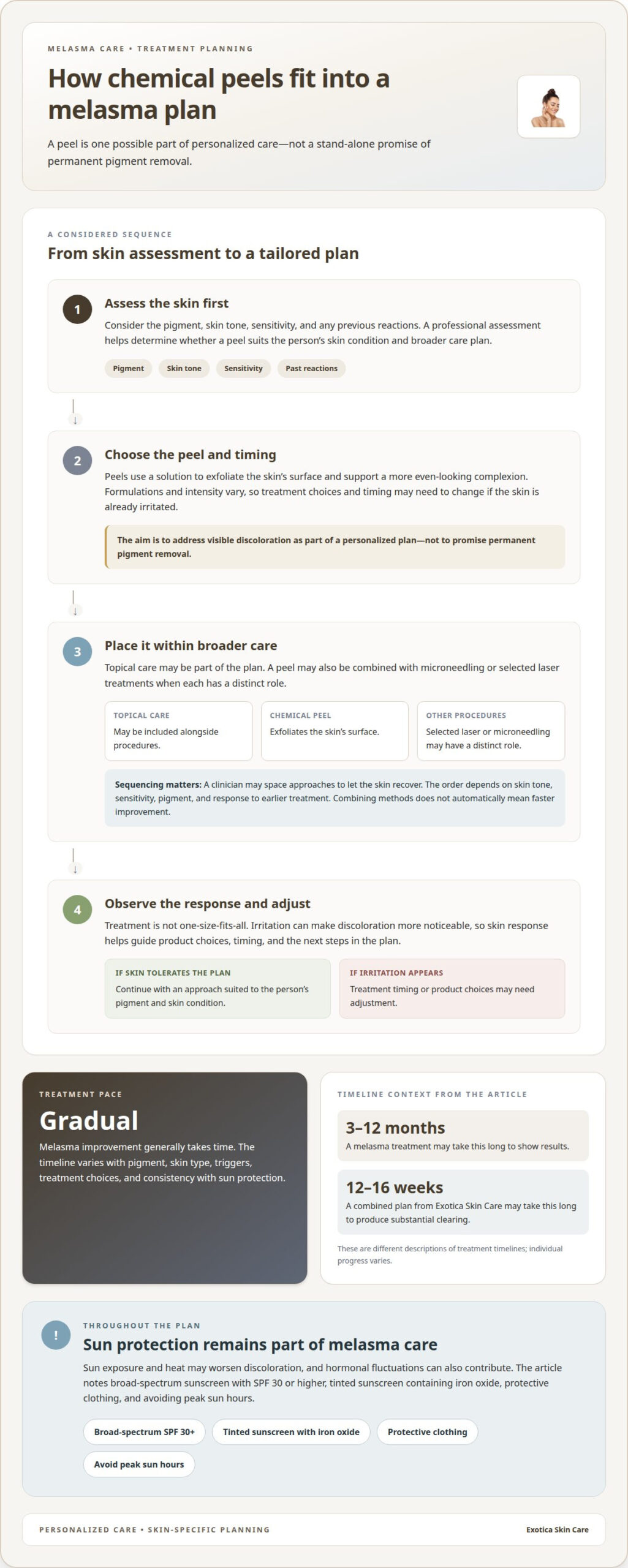
Melasma usually fades gradually, not overnight. A treatment for melasma Las Vegas may take 3 to 12 months to show results, while a combined plan from Exotica Skin Care may take twelve to sixteen weeks to produce substantial clearing. The timeline depends on factors such as pigment depth, skin type, treatment choices, triggers, and consistency with sun protection.
It’s understandable to want a clear sense of the commitment before choosing a treatment. Progress varies from person to person, and protecting your skin from sun exposure is an important part of managing melasma, especially in a sunny climate like Las Vegas.
This article explains how lasers, chemical peels, and prescription creams fit into treatment plans at Exotica Skin Care, and how hormonal changes can affect melasma and its course. You’ll also learn why treatment is often a gradual process and what factors can influence how long it takes to see improvement.
Key Takeaways
- Melasma improvement is gradual, and the timeline depends on pigment, skin type, triggers, treatment choices, and consistent sun protection.
- Laser treatment calls for careful patient selection because heat and inflammation may contribute to recurrence or post-inflammatory hyperpigmentation.
- Chemical peels may be one part of a broader plan rather than a stand-alone approach to managing melasma.
- Prescription creams can help address excess pigment, while the choice of medication depends on the individual treatment plan.
- Hormonal changes, medications, and environmental factors can influence melasma, so identifying potential triggers can help shape ongoing care.
Is laser treatment safe for melasma?
Laser treatment may help selected cases, but it is not appropriate for every melasma pattern or skin tone. Heat and inflammation can reactivate pigment or contribute to post-inflammatory hyperpigmentation, making treated areas darker. A safe plan considers the type and depth of discoloration, skin tone, previous irritation, and likely triggers before choosing a device or energy level.
Professional assessment comes first. Melasma often appears as flat brown patches on the cheeks, forehead, nose, chin, or upper lip, but other skin conditions can look similar. A dermatologist may use a Wood’s lamp or dermatoscope to assess pigment depth. During an office visit, a skin biopsy may be performed if another condition needs to be ruled out.
Darker skin tones need particular care because inflammation can leave visible discoloration. Improperly used IPL can worsen melasma in skin types IV-VI. This does not mean every light-based option is unsuitable. It means treatment selection and settings need to account for skin tone, pigment, and history. The safest plan may prioritize topical care and sun protection before considering a laser.
Topical skin-lightening products are an important part of melasma treatment, not an optional afterthought. They address pigment while a procedure targets selected areas, and a professional can tailor product choices to the skin condition. Irritating products can make dark spots more noticeable. The American Academy of Dermatology recommends gentle, fragrance-free skincare if a product stings or burns.
Sun protection also matters before and after laser treatment. The American Academy of Dermatology recommends broad-spectrum sunscreen with SPF 30 or higher, plus tinted sunscreen containing iron oxide because visible light can worsen melasma, particularly in darker skin tones. Daily sunscreen, protective clothing, and avoiding peak sun hours help reduce worsening or recurrence. Henderson Nevada averages more than 290 sunny days a year, making consistent protection especially relevant.
Even brief, unprotected sun exposure can reactivate pigment cells, so a laser session alone does not address the factors that drive melasma. Sunlight and heat may worsen discoloration, and hormonal fluctuations can also contribute. A plan combining light protection, appropriate topical products, and carefully selected procedures addresses more than visible pigment.
After a procedure, ongoing redness, stinging, or darkening deserves attention because irritation can trigger further pigmentation. Gentle, fragrance-free care helps limit avoidable irritation. A professional assessment can distinguish expected recovery from a reaction that may call for a change in treatment. For recurring melasma, long-term light protection and skin-specific maintenance remain part of care.
Does insurance cover melasma treatment in Henderson Nevada? Most insurers don’t cover melasma treatment because it isn’t considered medically necessary. Coverage depends on the insurance plan, so cosmetic treatment is generally an out-of-pocket consideration.
Chemical peels
Chemical peels may be included in a broader melasma plan alongside topical care or selected procedures. Their role depends on the pigment, skin condition, and how the skin responds to treatment.
Chemical Peels for Melasma
A chemical peel applies a solution to exfoliate the skin’s surface and support a more even-looking complexion. For people with melasma, the aim is to address visible discoloration as part of a personalized plan, not to promise permanent pigment removal. Peel selection should account for skin tone, sensitivity, and previous reactions, since irritation can make discoloration more noticeable.
Peels vary in formulation and intensity, so treatment is not one-size-fits-all. A professional assessment helps determine whether a peel suits the person’s skin condition and broader care plan. If the skin is already irritated, treatment timing and product choices may need adjustment. The key question is not simply whether a peel can brighten skin, but whether its potential benefits suit the person’s pigment and tolerance.
Peels Alongside Other Treatments
Peels may be combined with microneedling or selected laser treatments when each procedure has a distinct role in the plan. A clinician may sequence treatments rather than perform them together, allowing the skin to recover between approaches. The order depends on skin tone, sensitivity, pigment, and response to earlier treatment. Combining methods does not automatically mean faster improvement.
Light-based treatments and chemical peels address discoloration through different mechanisms, while microneedling creates controlled channels in the skin. These differences make careful selection important. For example, a plan may begin with topical medication, then consider a procedure if pigment remains. SQT Bio-Microneedling is a microneedling offering, but the right method depends on individual goals and skin response.
Treatment Effectiveness and Costs
The most suitable approach varies with a person’s pigment, skin tone, triggers, and consistency with the plan. Topical medications, chemical peels, and selected laser treatments may each play a role, but no single procedure suits every case. Improvement is generally gradual, and combining treatments can address different aspects of melasma management.
In Henderson Nevada, the cost of a consultation, prescription cream, peel, or laser treatment depends on the treatment plan, products, and number of procedures. Those factors explain why one person’s total may differ from another’s, even when both seek care for facial discoloration.
For a personalized overview of chemical peel and microneedling options, consider how each approach fits your skin goals and treatment plan. A measured plan prioritizes appropriate methods over adding procedures without a clear purpose.
Prescription topical medications
Topical medication can address excess pigment directly and often forms one part of a wider melasma plan. First-line melasma treatment uses bleaching agents containing 2-4% hydroquinone, according to the U.S. Army Center for Health Promotion and Preventive Medicine (USACHPPM). The concentration matters because treatment needs to suit the person’s skin condition and tolerance, not simply the shade of a dark patch.
Hydroquinone is one option among several topical treatments considered for hyperpigmentation. Providers compare hydroquinone, tretinoin, azelaic acid, and tranexamic acid based on the treatment goal, skin response, and how each fits the overall plan. There is no single medication choice for every person. Diagnosis, previous irritation, pregnancy status, and other medications help shape the discussion.
Tranexamic acid may be prescribed for stubborn melasma as a pill or applied to the skin. When prescribed as a pill, it is usually taken twice per day. The route matters, as do the person’s circumstances. Patients should share relevant medication and pregnancy information during treatment planning rather than starting or stopping a prescription independently.
Topical medications also need to work alongside daily skincare. Products that sting or burn can cause irritation and make dark spots more noticeable, so gentle, fragrance-free care is useful when sensitivity occurs. Sun protection remains important because exposure can worsen melasma and contribute to recurrence. A cream alone cannot address that environmental trigger.
Chemical peels and other procedures may be considered as part of a broader approach that includes topical treatment. Sequencing matters: the plan should account for how the skin responds to medication before adding a procedure. If redness, stinging, or new darkening develops, the approach may need reassessment. Careful monitoring helps distinguish expected changes from irritation that could intensify visible hyperpigmentation.
Prescription topical treatment can take time because pigment fades gradually, and the response depends on consistency, skin condition, and triggers. A professional plan identifies the medication’s role, how it fits with skincare, and how progress will be assessed. This structure is especially useful when melasma returns after earlier improvement or when several treatments are being considered.
For patients weighing hydroquinone, tretinoin, azelaic acid, and tranexamic acid, the choice depends on the diagnosed pigment pattern, tolerance, pregnancy status, and whether topical or oral treatment fits the plan. No single ingredient is automatically best for every skin condition. Individual response and the possibility of irritation guide how a provider selects and adjusts treatment.
Hydroquinone is described as a first-line bleaching agent, while tretinoin and azelaic acid are options chosen according to treatment goals and skin response. Tranexamic acid may be considered for stubborn melasma and can be applied to the skin or prescribed as a pill. The choice among these medications depends on the person’s circumstances and overall plan.
Do Hormones Cause Melasma?
Hormonal changes can trigger or aggravate melasma, but they are only one possible factor. Pregnancy, oral contraceptive use, sun exposure, and heat can all influence how discoloration develops or changes.
Hormonal Triggers
Hormonal triggers are changes in the body’s hormone levels that may contribute to melasma or worsen existing patches. Pregnancy and oral contraceptive use are linked with these changes. Melasma that begins during pregnancy may fade after delivery, although the timing and degree of fading vary. For dermatology planning, noting when patches appeared in relation to pregnancy or contraceptive changes provides useful context.
Hormones don’t act alone. Sun exposure and heat may aggravate melasma alongside hormonal fluctuations, so worsening during sunny or hot conditions is worth noting. Patches may appear on the cheeks, forehead, or upper lip. Sharing when discoloration began, whether it changed during pregnancy, and whether sunlight or heat seems to affect it can help clarify possible triggers.
Genetic, Medication, and Environmental Triggers
Genetic factors, medications, and environmental exposures are possible considerations during a professional assessment of melasma. A family history of similar facial patches is useful to share, but it does not establish the cause by itself. The assessment also considers where pigment appears, such as on the cheeks, and whether it changes with sun exposure, heat, or hormonal events.
Prescription medications deserve careful discussion if you suspect a medicine is contributing to discoloration. Don’t stop a prescribed medication on your own. Instead, tell the prescribing professional when the patches began and describe any changes in medication, pregnancy, or oral contraceptive use. This helps the care team assess timing without disrupting treatment for another condition.
Environmental triggers can persist after melasma first appears. Sun exposure and heat may worsen pigment, so noticing whether patches deepen after time outdoors or in hot conditions can help identify patterns. Consistent light protection remains relevant even when hormonal or medication-related factors are also present. Addressing one trigger does not necessarily remove the influence of another.
What should patients avoid during melasma treatment, including pregnancy-related medications? Avoid changing or stopping prescription medicines, including hormonal medication, without guidance from the prescriber. Share pregnancy status and medication changes during treatment planning, and limit unprotected sun exposure and excessive heat that may aggravate pigment.
Melasma treatment in Henderson Nevada
A treatment for melasma in Henderson Nevada should account for local sun exposure, individual triggers, and gradual pigment changes. A clear plan considers more than visible patches: it also accounts for daily routines, skin response, and ongoing care that may help preserve improvement.
Melasma care may combine topical medication, gentle skincare, sun protection, and selected procedures such as chemical peels or laser treatment. The approach depends on pigment depth, skin tone, irritation history, and possible triggers. Henderson Nevada averages more than 290 sunny days a year, so protection from light remains a practical part of managing recurring discoloration.
Timing depends on the treatment plan and the skin’s response. Dermatologist-led treatment may take 3 to 12 months to show results. A laser approach may involve 6-10 treatments, while a typical combined plan may take twelve to sixteen weeks to produce substantial clearing. These timelines describe different approaches, not a guaranteed schedule. Pigment, consistency, skin type, and sun exposure can all affect progress.
Maintenance is relevant because melasma may return after improvement. Maintenance treatments are often recommended every 3-6 months. The broader plan may also include consistent light protection, protective clothing, and gentle skincare. If patches change after starting a prescription or birth control, share the timing with the prescribing professional. Don’t stop prescribed medication independently.
Melasma treatment in Henderson Nevada is available through dermatology offices and aesthetic practices. Board certification applies to individual physicians, not a clinic as a whole, and should not be inferred from a business name. A practice’s services and a physician’s credentials are separate considerations, especially when a plan includes prescription medication or medical procedures.
During an office assessment, a dermatologist can distinguish melasma from other causes of discoloration and consider skin tone and triggers. A Wood’s lamp or dermatoscope may help assess pigment depth. The assessment informs whether topical care should come first, whether a procedure is suitable, and how progress will be monitored. It is useful if patches change, past treatment caused irritation, or pregnancy and medication history may affect care.
Choosing treatment for melasma in Henderson Nevada means looking for a plan that connects treatment selection with protection and maintenance, rather than relying on a single session. Explore personalized skin care options as you consider your next step.
Exotica Skin Care
Exotica Skin Care offers aesthetic skin-care options for readers considering their next step after learning about melasma treatment. Scarlet SRF, BioRePeelCl3® Peel, PRX Derm Perfexion, and AquafirmeXS are among its offerings. These services are not interchangeable with prescription care, and the right option depends on your skin goals and treatment plan.
If you’re considering a peel or another aesthetic service alongside a professional melasma plan, discuss how it may fit your needs. A measured approach focuses on suitability, skin response, and ongoing care rather than adding procedures without a clear purpose.
Contact Exotica Skin Care to discuss your skin-care goals.
Choose a thoughtful next step for your skin
Melasma care is personal, and the next step is a plan that fits your skin, priorities, and daily routine. A treatment for melasma in Henderson Nevada should account for more than visible discoloration; ongoing care and realistic expectations matter, too. Bring your questions about pigmentation, treatment options, and how aesthetic services might fit your broader skin-care goals.
Exotica Skin Care offers Scarlet SRF, BioRePeelCl3® Peel, and PRX Derm Perfexion as aesthetic services. These offerings aren’t a substitute for prescription care, and their suitability for your pigmentation concerns depends on your individual needs. A thoughtful conversation can help you understand which options align with your goals.
Contact Exotica Skin Care today to discuss your skin-care goals and consider a considered next step.
Frequently Asked Questions
How long does treatment take?
Melasma treatment may take 3 to 12 months to show results, depending on pigment, skin type, triggers, and consistency with the plan. A combined approach may take twelve to sixteen weeks to produce substantial clearing. These timelines describe different treatment approaches, not a countdown to complete clearance. For example, someone using topical medication and sun protection may progress differently from someone whose plan also includes procedures.
Can melasma be cured permanently?
Melasma can improve substantially, but it may return, so treatment is better understood as ongoing management than a permanent cure. Pigment can persist for years or even a lifetime, and improvement does not remove contributing triggers. A practical goal is to reduce visible discoloration and maintain progress with an individualized plan. If patches darken again, changes in sun exposure, heat, hormones, or skincare may help explain why.
Is Heat a Trigger?
Yes, heat may aggravate melasma, including when sun exposure also contributes. For example, someone may notice darker patches after time outdoors in hot conditions, even while using a treatment cream. Heat can matter beyond direct sunlight, so mention recurring patterns during treatment planning. Recognizing a possible trigger helps explain why pigment may continue to change despite treatment focused on discoloration.
What About Lasers?
Laser treatment may be considered for selected patients, but careful selection is essential because heat and inflammation may worsen pigment or cause post-inflammatory hyperpigmentation. A clinician weighs skin tone, pigment, and individual circumstances before choosing an approach. Improperly used IPL can worsen melasma in skin types IV-VI. A laser is not automatically the right choice simply because patches remain visible after topical care.
What Exactly is Melasma?
Melasma is a skin condition that causes flat, darker patches, commonly on the cheeks, forehead, nose, chin, or upper lip. The pigment differs from surrounding skin and can affect more than one facial area. Melasma itself is not dangerous, but other conditions can look similar. A professional assessment helps distinguish the cause of discoloration before treatment focuses on reducing visible pigment.
Why Does Melasma Keep Coming Back, Even After Treatment?
Melasma may recur because improvement does not remove its triggers. Sun exposure, heat, hormonal changes, and some medication-related factors can continue to influence pigment after a treatment course. For example, patches may become more noticeable during a period of increased sun exposure. Ongoing light protection and individually tailored maintenance can help manage recurrence, while new or changing discoloration deserves reassessment.
How long does melasma treatment take, and how often are follow-up visits needed?
Results may take 3 to 12 months, while the timing of follow-up visits depends on the treatment plan and skin response. Laser care may involve 6-10 sessions, and maintenance treatments are often recommended every 3-6 months. Those intervals serve different purposes: sessions form part of a treatment course, while maintenance helps manage recurrence. The plan’s progress and any skin irritation help guide follow-up timing.
What are the risks and side effects of melasma treatments, including chemical peels and lasers?
Potential concerns include irritation and inflammation, which can make discoloration more noticeable or contribute to post-inflammatory hyperpigmentation. Lasers require particular caution because heat may aggravate pigment, and improperly used IPL can worsen melasma in skin types IV-VI. Chemical peels also need to suit the person’s skin condition and tolerance. Discuss new stinging, burning, or darkening during treatment with the treating professional.