
A chemical peel may help improve uneven skin tone, but lasting care starts with protecting skin from further UV-related discoloration. If you’re wondering how to improve uneven skin tone in Las Vegas, build the plan around daily broad-spectrum sunscreen with SPF 30 or higher, then consider professional treatments suited to the cause and pattern of pigmentation at Exotica Skin Care.
It’s understandable to want dark marks to fade quickly. But discoloration can have several causes, including sun exposure, past acne, inflammation, and hormonal changes, so the right approach depends on your skin. Sunscreen can help prevent discoloration from worsening, though it may not directly even existing pigmentation.
This guide covers how sun protection and daily skincare habits can support a more even-looking complexion, and how professional treatments at Exotica Skin Care may fit into a plan. You’ll learn why assessing the cause matters and what to consider before choosing a treatment for uneven skin tone in Las Vegas.
Key Takeaways
- Uneven tone can stem from sun exposure, acne marks, inflammation, or hormonal changes, so identifying its likely cause helps guide treatment.
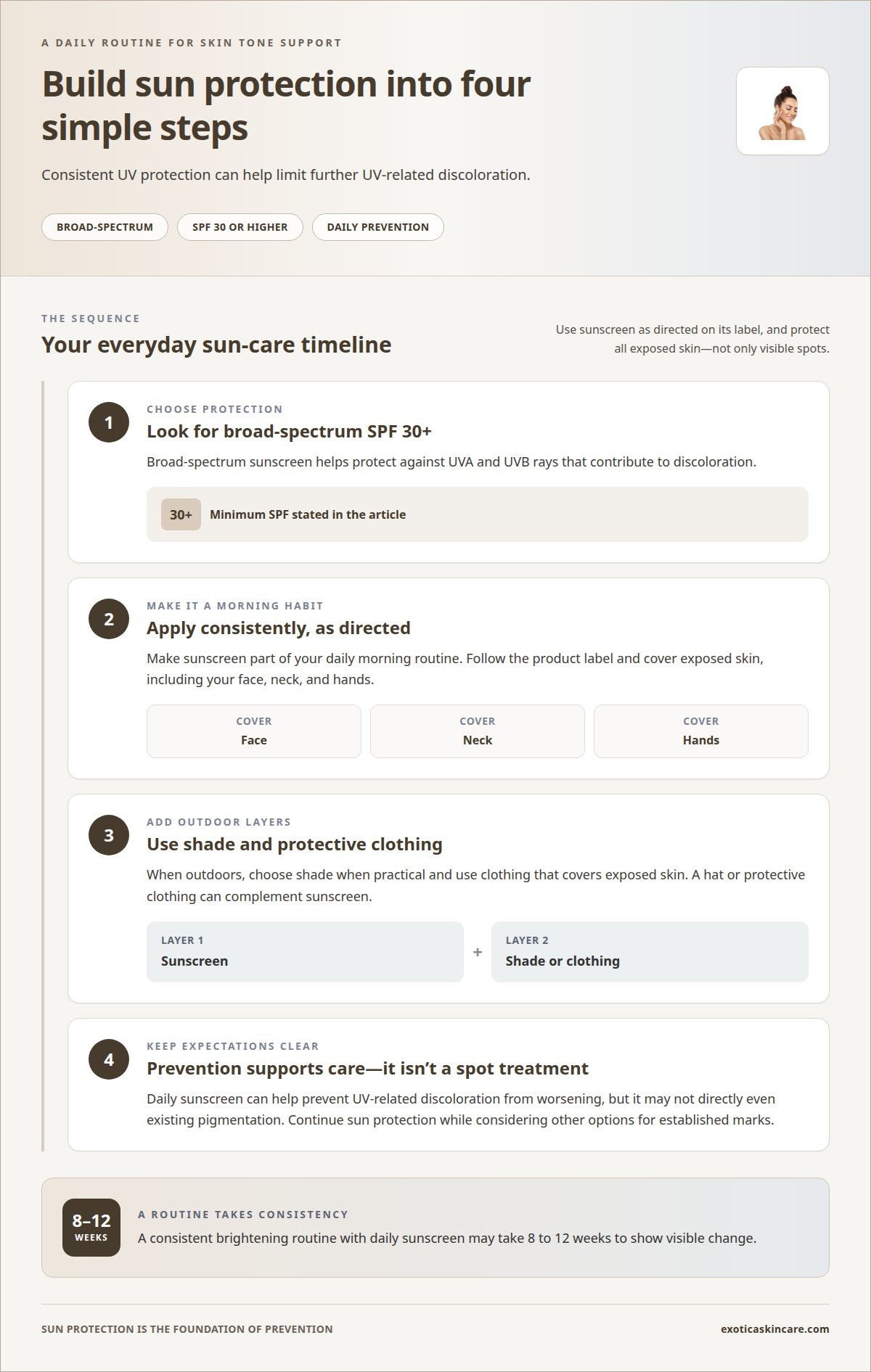
- Use broad-spectrum sunscreen with SPF 30 or higher daily, and add shade and protective clothing to help limit further UV-related discoloration.
- Professional treatment plans may include procedures or chemical peels, selected according to the type and pattern of pigmentation.
- Avoid over-exfoliation and unsupervised treatment choices, since irritation or an unsuitable procedure can worsen discoloration.
- Exotica Skin Care offers options including BioRePeelCl3® Peel and Scarlet SRF for a professional approach to concerns about skin tone and texture.
What is uneven skin tone?
Uneven skin tone describes areas of discoloration that make complexion look less uniform. A consistent brightening routine with daily sunscreen may take 8 to 12 weeks to show visible change; professional treatment may take weeks or even months, depending on the cause and severity.
Identify Common Causes of Uneven Tone
Start by noting where the discoloration appears and what happened beforehand. Sun exposure, inflammation, past acne, and environmental stressors can all contribute to uneven tone. A dark mark left after a breakout, for example, may have a different trigger from broader patches across the cheeks. Avoid picking scabs, which can injure skin and leave marks.
Understand Causes of Hyperpigmentation
Describe the color, location, and pattern of each area to a dermatologist. Hyperpigmentation occurs when excess pigment creates darker patches or spots, while uneven tone can also include redness or other color differences. Melasma often appears symmetrically on the cheeks, forehead, and upper lip. Its prevalence varies by population, affecting between 1.5% and 33% of people.
- Track the pattern before choosing a treatment. Note whether a spot follows acne, appears where skin was inflamed, or forms broader patches. Record when it first appeared and whether it changes after sun exposure. These details help a skin-care professional assess whether discoloration may be linked to acne, inflammation, melasma, or another cause.
- Distinguish dark marks from redness and texture changes. Discoloration can remain after acne settles, while scar texture may persist alongside darker marks. These concerns can overlap, but they aren’t the same. Describe each feature clearly so treatment planning considers both pigment and texture, rather than focusing only on visible color.
- Share relevant skin history during an assessment. Mention past acne, recurring irritation, hormonal changes, and areas that get the most sun exposure. A skin-care professional can use the pattern and history to guide next steps. This matters because melasma can be difficult to treat, and overly aggressive treatment may worsen pigmentation.
- Protect healing areas from avoidable trauma. Don’t pick scabs or squeeze blemishes, since skin injury may contribute to lasting uneven tone. Keep track of products or habits that seem to irritate your skin, and mention them during a professional assessment. The goal is to distinguish the original trigger from marks that developed afterward.
Prolonged sun exposure, environmental stressors, and post-breakout marks are possible causes of uneven skin tone, with each potentially contributing to discoloration.
Daily broad-spectrum sunscreen and sun protection
Make daily UV protection part of a plan for more even-looking skin. Broad-spectrum sunscreen with SPF 30 or higher helps protect against UVA and UVB rays that contribute to discoloration. For readers considering how to fix uneven skin tone in Henderson Nevada, consistent sun care is an important prevention step.
Apply Sunscreen Daily
Choose broad-spectrum sunscreen labeled SPF 30 or higher, then use it every day as directed. Consistent use helps limit UV-related skin damage, including pigmentation changes. Apply it as part of your morning routine, covering exposed skin rather than only visible spots. Sunscreen supports prevention; it may not directly lighten discoloration already present.
Use Sun Protection to Prevent Discoloration
Pair sunscreen with shade and protective clothing, especially when you’re outdoors. These measures help reduce UV exposure that can deepen existing pigmentation or contribute to new uneven patches. Think of sunscreen as part of prevention, not a treatment that changes skin texture or removes established marks.
- Choose broad-spectrum protection. Look for SPF 30 or higher and broad-spectrum wording. Broad-spectrum products are recommended to protect against UVA and UVB rays. Make this the daily sunscreen step in your routine, whether you’re preventing discoloration or addressing a visible spot.
- Apply it consistently each morning. Use sunscreen as directed on its label, covering exposed areas such as your face, neck, and hands. These areas can get sun exposure during everyday activities. Don’t apply sunscreen only to dark patches; protect the surrounding skin too to support a more even-looking complexion.
- Add shade and clothing outdoors. Choose shade when practical and wear protective clothing as another barrier against UV exposure. A hat or clothing that covers exposed skin can complement sunscreen. These measures are especially useful when you’re outdoors for more than a quick trip, since sunscreen alone doesn’t eliminate exposure.
- Keep prevention in perspective. Daily sunscreen can help prevent UV-related discoloration from worsening, but it may not directly even existing pigmentation. Continue protecting your skin from the sun while considering other options for established marks. If you’re exploring how to fix uneven skin tone in Henderson Nevada, the cause and pattern of the discoloration help guide suitable professional treatments.
Think of sunscreen as the foundation beneath other complexion treatments, not a substitute for them. A consistent brightening routine may take 8 to 12 weeks to show a visible difference, with daily sunscreen supporting that approach. Continue protecting your skin while assessing changes in pigmentation; a new mark or a changing pattern deserves professional attention.
Dermatologist-recommended procedures for discoloration
Choose a professional approach based on the type, pattern, and depth of discoloration. A dermatologist assesses the skin before procedures because the wrong treatment can worsen pigmentation, especially with melasma or darker skin tones.
- Arrange a skin assessment before treatment. Describe when the dark spots appeared, where they are, and whether they followed acne or irritation. A professional can use this history and the visible pattern to guide treatment selection. This matters because melasma can be difficult to treat, and careful treatment helps reduce the risk of rebound pigmentation.
- Discuss procedures that address tone and texture. Microneedling and nano-needling stimulate collagen and can improve skin texture while addressing discoloration. They aren’t interchangeable with every pigment-focused approach. A professional considers the area, skin condition, and treatment goal before deciding whether collagen stimulation fits your concern.
- Review resurfacing and peel options. Professional treatments for discoloration may include laser resurfacing, microdermabrasion, or an in-office peel. These options work differently, so the choice depends on the appearance and cause of the marks. Discuss how a proposed treatment addresses your concern, whether scattered dark spots or broader areas of uneven pigment.
- Ask whether prescription ingredients are appropriate. A doctor may prescribe stronger topical treatments, including retinoids or hydroquinone. Hydroquinone is a prescription skin-brightening treatment and should only be used on a health-care professional’s advice. It isn’t a general-purpose ingredient; a clinician considers the discoloration pattern and your skin’s response when selecting a regimen.
- Set a treatment goal before starting. Explain whether you want to address pigment, acne-related marks, uneven texture, or several concerns together. A professional can match your goal to an approach, such as a peel for discoloration or microneedling for texture and pigment concerns. Bring a list of your current skincare products so the assessment accounts for your routine.
For a more informed next step, use a professional skin assessment to discuss the discoloration pattern and appropriate options. Keep the focus on a treatment plan that targets the cause, not simply the most visible spot.
Melasma can be difficult to treat, so careful intervention is important to avoid worsening or rebound pigmentation. Keep that risk in mind when discussing procedures or prescription treatments with a dermatologist. The goal isn’t simply to treat visible pigment, but to choose an appropriately cautious approach for the discoloration being assessed.
Chemical peels
A professional peel may be one option for discoloration, with the approach guided by its cause and your skin’s response.
- Define the concern before selecting a peel. Identify whether you want to address scattered dark spots, broader hyperpigmentation, or uneven-looking texture. These concerns can overlap, but they don’t always call for the same treatment plan. A professional assessment helps match the peel to the visible pattern instead of treating every type of discoloration alike.
- Ask how the peel addresses pigmentation. Treatments for pigmentation may work at different depths to break up excess melanin, help prevent new pigmentation, and support skin renewal. The approach depends on the discoloration being treated. Discuss the intended target and expected changes, rather than assuming every peel works the same way.
- Keep expectations tied to the cause and severity. Visible improvement in discoloration may take weeks or months. The timeline depends on what caused the uneven tone and how pronounced it is. A peel can support a treatment plan, but it won’t make every type of hyperpigmentation disappear immediately. Track changes in the treated areas over time.
- Protect the skin barrier during treatment planning. Avoid over-exfoliating, which can disrupt the skin barrier and contribute to irritation. Don’t add repeated exfoliating steps in an attempt to make a peel work faster. Discuss your current routine and skin type with a professional so the plan accounts for your products and avoids unnecessary irritation.
- Support skin comfort with consistent hydration. Moisturizing helps maintain the skin barrier, and the right moisturizer depends on your skin type. A hydrating routine supports a softer, smoother feel as skin renews. Vitamin C may help improve the appearance of uneven tone with consistent use, but it should suit your overall skincare plan.
- Maintain sun protection as your complexion improves. A peel doesn’t replace daily protection from UV exposure. Continue using broad-spectrum sunscreen while treating discoloration, since sun exposure can contribute to pigmentation. This supports a more even-looking appearance and complements professional care without adding aggressive exfoliation.
The key takeaway: choose a peel for a defined concern, protect your skin barrier, and allow time for gradual change. The cause and severity of discoloration, your skin type, and consistent aftercare all shape the plan.
Risks and Recovery for Uneven Skin Tone Treatments
Before a procedure, have a dermatologist assess your skin and the discoloration. The cause, treatment method, and your skin’s response all affect the risks and recovery.
- Complete an assessment before choosing a procedure. A dermatologist should assess your skin before treating discoloration. Describe the pattern, how long it has been present, and any previous procedures. This helps distinguish concerns such as melasma from other dark marks. Treatment selection should account for your skin’s condition, not just the darkest visible area.
- Discuss pigmentation risks openly. The wrong treatment can worsen pigmentation, particularly for people with melasma or darker skin tones. Ask how the proposed procedure may affect your specific discoloration pattern and what informs its selection. A careful plan matters because an approach that targets one concern may not suit another.
- Clarify what recovery depends on. Recovery doesn’t follow one timeline for every treatment. The procedure, area treated, cause of discoloration, and your skin’s response all affect how it unfolds. Ask the dermatologist what to expect after your procedure and which signs should prompt follow-up.
- Set practical expectations for visible change. Improvement in discoloration may take weeks or months, depending on its cause and severity. Recovery and pigment improvement are related, but they aren’t the same measure. Discuss both separately: how your skin may respond at first, and when the uneven tone may begin to look different.
- Follow the treatment-specific plan. Use the aftercare instructions for your procedure rather than adding extra exfoliation or new active ingredients on your own. Don’t treat early changes as a reason to repeat or intensify treatment without professional guidance. A dermatologist can assess your skin’s response and adjust the approach if pigmentation changes.
- Keep sun protection in your recovery plan. UV exposure can contribute to discoloration, so maintain daily broad-spectrum sunscreen while addressing uneven tone. Ask how sun care fits your procedure and recovery plan. This is especially relevant when treating melasma or darker skin tones, since the wrong treatment can worsen pigmentation.
For a treatment-focused discussion, request guidance on treatment planning before proceeding.
Exotica Skin Care
Exotica Skin Care can help you explore professional options for uneven tone through a personalized skin-care approach. A discussion of the discoloration’s pattern, your skin concerns, and your goals can help shape a suitable treatment plan. Depending on the concern, options include Scarlet SRF, BioRePeelCl3® Peel, PRX Derm Perfexion, and AquafirmeXS. Each option serves a different role in aesthetic skin care, so the appropriate choice depends on the concern being addressed.
Consider professional guidance if discoloration persists, affects your confidence, or you’re unsure which approach suits your skin. Daily sun protection remains important alongside professional treatments. For a personalized discussion of your skincare goals in Henderson Nevada, contact Exotica Skin Care.
Choose a thoughtful next step for your skin
A more even-looking complexion starts with a plan that respects your skin’s needs, rather than a rushed attempt to change every mark at once. If you’re considering how to improve uneven skin tone in Henderson Nevada, focus your next conversation on the concern that matters most and the approach that fits your goals.
Exotica Skin Care offers Scarlet SRF, BioRePeelCl3® Peel, and PRX Derm Perfexion as professional skin-care options. A discussion can help connect your concerns with a suitable direction, while keeping your priorities and comfort in view.
Take the next step at your own pace. Contact Exotica Skin Care to discuss your skin-care goals and treatment options. With thoughtful guidance, you can move forward with greater clarity and care.
Frequently Asked Questions
Are dark circles considered hyperpigmentation?
Dark circles can involve hyperpigmentation, but their appearance alone doesn’t establish the cause. Consider whether the area looks like a brown patch or differs in color and contour from nearby skin. A professional can assess the pattern and distinguish pigment concerns from other under-eye changes. Avoid applying strong brightening ingredients close to the eyes without professional guidance, since this delicate area needs careful product selection.
What causes discoloration?
Discoloration can follow sun exposure, inflammation, or a past acne breakout. A mark left after a blemish, for example, may have a different trigger from patches appearing across several areas. Hormonal changes can also be associated with pigmentation concerns. Noting where marks appear and what happened beforehand gives a skin-care professional useful context for considering the likely cause and next steps.
What causes uneven skin tone and hyperpigmentation?
Uneven tone can include darker patches, red marks, or differences in color and texture. Hyperpigmentation specifically means excess pigment has created darker areas. Melasma is one example, often appearing symmetrically on the cheeks, forehead, and upper lip. Acne-related marks are another. These patterns can overlap, so noting whether discoloration is localized, symmetrical, or linked to a breakout helps guide assessment.
How can a professional help improve uneven skin tone safely?
A professional can assess the discoloration pattern, skin type, and treatment history before recommending a procedure or topical approach. This matters especially for melasma and darker skin tones, since the wrong treatment can worsen pigmentation. Share your current products and any past irritation during the assessment. That context helps the professional consider how to address your concern without adding unsuitable treatments to your routine.
Which ingredients may a skin care professional recommend to help fade dark spots and uneven skin tone?
Vitamin C may help improve the appearance of uneven tone with consistent use. Niacinamide supports the skin barrier and hydration, while a doctor may prescribe topical retinoids or hydroquinone for some concerns. Hydroquinone should only be used on a health-care professional’s advice. The right ingredient depends on the discoloration and your skin’s needs, so avoid combining strong active ingredients without professional guidance.
How can a skin care professional help me use sunscreen to prevent uneven skin tone from getting worse?
A professional can help fit daily broad-spectrum sunscreen into your existing routine and explain how it supports other pigmentation treatments. Choose SPF 30 or higher, and use protective clothing or shade as additional measures outdoors. Sunscreen helps protect against UV-related discoloration, though it may not directly even existing pigment. Tell the professional about your usual outdoor activities and current products for tailored guidance.
When should I see a dermatologist for uneven skin tone?
See a dermatologist before undergoing a procedure for discoloration, especially if you suspect melasma or have darker skin and are considering treatment. A dermatologist can assess the pattern and help avoid an approach that could worsen pigmentation. Professional input is also useful when you’re unsure whether marks relate to acne, inflammation, or another trigger, since the cause influences which treatment options make sense.
What professional treatments help uneven skin tone, and how do they compare?
Options may include in-office peels, laser resurfacing, microdermabrasion, microneedling, or nano-needling. Peels, laser resurfacing, and microdermabrasion may target discoloration, while microneedling and nano-needling stimulate collagen and can address texture alongside tone. These treatments aren’t interchangeable. A dermatologist weighs the pigment pattern, skin type, and concern being targeted to choose an approach suited to the individual.