
A rosacea flare-up is more than a cosmetic concern, and redness alone doesn’t tell the whole story. Effective rosacea flare-up treatment in Las Vegas starts with identifying whether redness, visible blood vessels, bumps, or eye symptoms are involved. Care may include avoiding personal triggers, medical treatment, and laser or light procedures for selected cases of persistent redness and visible vessels.
If your skin flushes without warning or stays red after a flare, it makes sense to look beyond a quick cover-up. Rosacea is a chronic condition, but treatment can help manage symptoms. Recognizing triggers such as sun and heat can also guide day-to-day care.
This guide explains rosacea, how its symptoms can change, and why diagnosis helps shape an appropriate plan. You’ll also learn what lasers and light treatments may do for visible redness, what they don’t address, and how thoughtful skin care can support rosacea management in Las Vegas with Exotica Skin Care.
Key Takeaways
- Notice which foods, weather conditions, activities, or skin-care products coincide with flare-ups so you can identify potential triggers.
- Laser and light treatments may reduce visible vessels or background redness, but they don’t necessarily prevent trigger-related flushing.
- Different symptoms call for different approaches: bumps may need medical therapy, while visible vessels may respond to vascular laser treatment.
- A diagnosis helps distinguish rosacea from other causes of facial redness and guides a plan around your symptoms, skin, and medication history.
- Eye redness, itching, eyelid swelling, or styes call for evaluation by an eye-care professional.
Lasers and lights: How well do they treat rosacea?
Laser and light procedures can reduce persistent facial redness and visible vessels, but they don’t prevent every flare. In Las Vegas, managing triggers remains important because sun, wind, and temperature extremes may provoke symptoms. Vascular lasers target distinct vessels, while intense pulsed light may suit diffuse background redness. The right approach depends on whether flushing, visible vessels, or bumps are the main concern.
Start by looking for patterns. Hot or spicy foods, dairy, caffeine, and alcohol can trigger flares for some people. Other possible triggers include heat, vigorous exercise, sweating, stress, sun, wind, and certain blood-vessel-dilating medications. Note what happens before facial redness appears, then discuss patterns and medication history with a clinician. Don’t stop a prescribed antibiotic or another medication on your own.
- Note whether hot drinks or spicy food precede flushing.
- Watch for symptoms after sun, wind, or temperature changes.
- Notice whether vigorous exercise, sweating, or stress coincides with redness.
- Review irritating personal-care products and switch to gentle, fragrance-free options.
Las Vegas weather makes sun protection a practical part of trigger management. Use broad-spectrum sunscreen with SPF 30 or higher every day, and reapply every two hours. Reapply more often when swimming or sweating. A hat and shade during midday sun add physical protection. These habits help limit sun-triggered flares and can support longer-lasting laser results.
Choose skin care that reduces irritation instead of adding another trigger. Fragrance-free, dye-free products intended for sensitive skin may be gentler choices. Wash with a mild cleanser, moisturize regularly, and avoid hot baths if heat brings on flushing. Less intense exercise may help limit overheating and sweating. These steps can help manage triggers, but they don’t replace medical treatment for persistent symptoms.
For visible vessels or baseline redness, laser or light treatment may improve appearance over a series of sessions. Rosacea laser treatment commonly involves 2-4 sessions spaced several weeks apart, with maintenance as needed. Some unfiltered intense pulsed light devices can aggravate rosacea, so device selection matters. Treatment is generally postponed when an active flare involves significant burning, stinging, or a compromised skin barrier. Laser treatment may also cause temporary redness, swelling, bruising, pigment changes, blistering, or scarring. It usually reduces baseline redness, not trigger-driven flushing.
Costs for dermatology visits and laser therapy vary according to the case. Factors may include the evaluation, treatment area, device, and recommended sessions. Ask the treating practice about its fees and what the proposed plan includes.
Laser and light treatments for redness and visible vessels
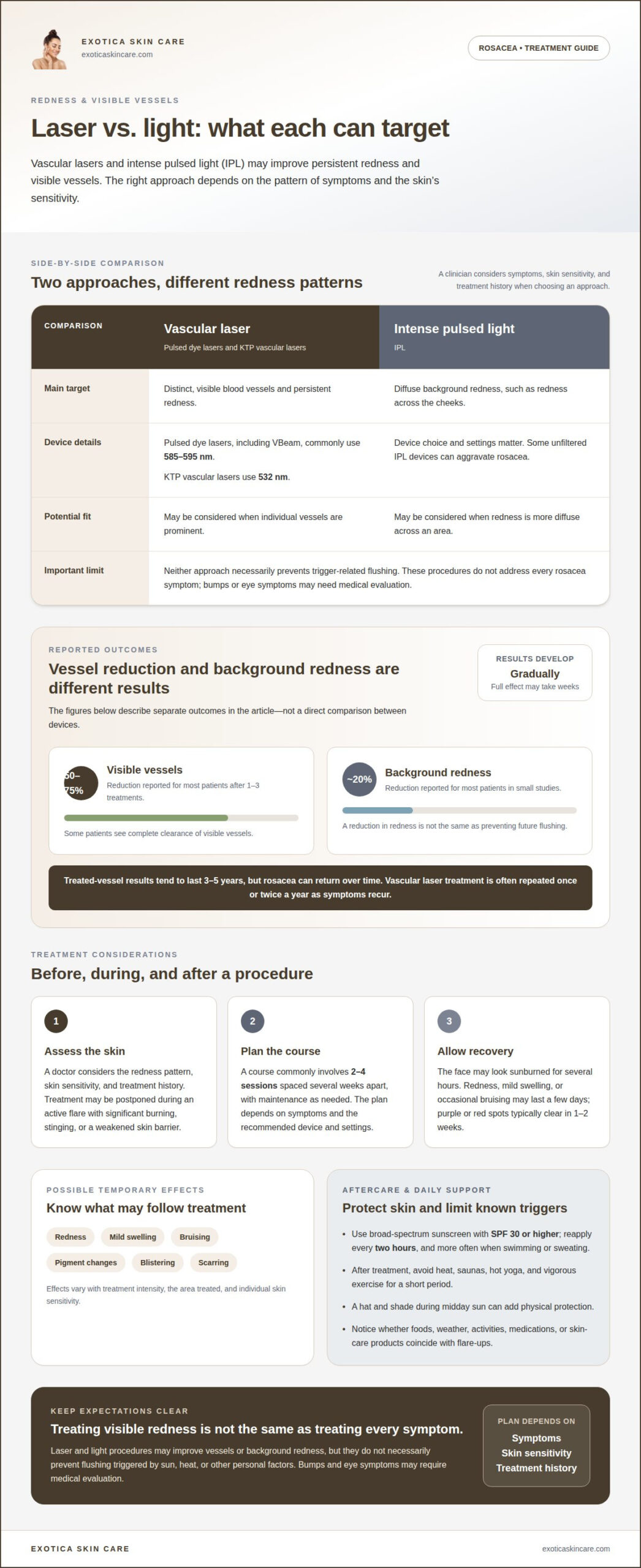
Laser and light procedures target visible blood vessels and persistent background redness, but they don’t treat every rosacea symptom in the same way. Vascular lasers are generally suited to distinct vessels, while intense pulsed light may help with diffuse redness across the cheeks. A doctor considers the pattern, skin sensitivity, and treatment history when deciding which approach may fit.
Pulsed dye lasers, including VBeam, are commonly used for rosacea redness and visible vessels. These lasers typically use wavelengths from 585 to 595 nm. KTP vascular lasers use a 532 nm wavelength. The device and settings matter because the treatment must target superficial vessels while limiting unwanted effects on surrounding skin.
For visible vessels, most patients see a 50% to 75% reduction after 1 to 3 treatments. Some see complete clearance of visible vessels. Small studies of laser treatment for background redness report about a 20% reduction for most patients. These findings describe different outcomes: clearing individual vessels isn’t the same as removing diffuse redness or preventing future flushing.
Results develop gradually. The full effect may take weeks to appear, and rosacea can return over time. Results for treated blood vessels tend to last 3 to 5 years, while vascular laser treatment is often repeated once or twice a year because symptoms may recur. Maintenance depends on how quickly visible redness returns and which symptoms remain.
Expect temporary changes after a procedure. The face may look sunburned immediately afterward, and that appearance usually fades within several hours. Redness, mild swelling, or occasional bruising can last a few days. Purple or red spots typically clear in 1 to 2 weeks. These effects vary with treatment intensity, the area treated, and individual skin sensitivity.
After treatment, avoid heat, saunas, hot yoga, and vigorous exercise for a short period. Daily broad-spectrum sunscreen and a hat help protect treated skin from further sun exposure. A doctor may postpone treatment during an active flare involving significant burning, stinging, or a weakened skin barrier. Laser treatment can also carry risks, including pigment changes, blistering, or scarring, particularly if skin characteristics and device settings aren’t carefully considered.
These procedures focus on redness and vessels, not every rosacea concern. For bumps or eye symptoms, medical evaluation remains important. If you’re exploring supportive facial care alongside medical management, review facial skin-care options as part of a broader plan.
Medical diagnosis and treatment planning
A medical evaluation helps distinguish rosacea from other causes of facial redness. A dermatologist reviews symptoms, medication history, lifestyle, and recent sun exposure. Redness, visible vessels, bumps, and flushing can point to different treatment needs. A skin biopsy may help rule out other conditions if the diagnosis remains uncertain. The plan also considers skin tone, sensitivity, and whether symptoms involve the eyes.
Treatment targets the symptoms that affect you most. Topical options may include azelaic acid, metronidazole, ivermectin, brimonidine, or oxymetazoline. Azelaic acid and metronidazole for rosacea pimples may take 2 to 6 weeks to show results. Brimonidine or oxymetazoline may temporarily reduce flushing. These medicines address different symptoms, so they aren’t interchangeable.
Inflammatory bumps may need a different approach from visible vessels. According to Dove Medical Press Limited, silicone-encapsulated benzoyl peroxide gel in 1% and 5% strengths can reduce inflammatory rosacea lesions while avoiding irritation. Oral antibiotics in the tetracycline family may also be used for inflammatory symptoms. Isotretinoin is another possible oral treatment for selected cases. A clinician weighs the symptoms and medication history when planning therapy.
Laser treatment can address persistent redness or visible blood vessels, but it doesn’t replace medical management of bumps. A weakened skin barrier or active burning and stinging can affect treatment timing. For papulopustular rosacea, medical therapy and barrier repair may be more appropriate first steps. Laser procedures can cause temporary redness, swelling, or bruising, and pigment changes are a consideration for darker skin tones.
Improvement often takes patience. Prescription topical and oral therapies usually need several weeks to work, and some rosacea treatments show gradual changes within 4 to 6 weeks. Significant clearing may take 8-12 weeks after starting treatment. Because rosacea is chronic, maintenance may continue for an extended period or permanently. Symptoms can return after skin calms, so treatment planning also considers ongoing care.
Some symptoms need care beyond a facial treatment plan. Red, itchy eyes, eyelid swelling, or styes may indicate ocular rosacea, which needs evaluation by an eye-care professional. Thickening around the nose or cheeks can signal phymatous rosacea and merits medical assessment. Sharing medication changes, sun exposure, and flare patterns helps the dermatologist adjust treatment as symptoms evolve.
Rosacea care in Las Vegas and Henderson Nevada
In Las Vegas and Henderson Nevada, a useful rosacea plan connects everyday exposures with symptoms and treatment goals. Sun, wind, heat, and temperature extremes can trigger facial flushing. A consultation can clarify whether redness, visible vessels, bumps, or irritation is the main concern. For rosacea flare-up treatment in Las Vegas, that distinction matters: a cosmetic procedure for vessels doesn’t replace medical care for inflammatory bumps or eye symptoms.
Track patterns that fit your routine, not just dramatic flares. Note whether redness follows outdoor errands, a hot bath, a spicy meal, or exercise. Record the product you used if stinging or irritation appears after cleansing. These details can reveal possible triggers and give a dermatologist useful context. Rosacea is chronic, so symptoms may return after the face calms.
Sun protection is a practical daily step in Nevada. Use broad-spectrum sunscreen with SPF 30 or higher, then reapply every two hours. Reapply more often after swimming or sweating. A hat and shade during midday sun add physical protection. For patients planning laser treatment, consistent sunscreen and a hat also help protect skin and support lasting results.
Keep your cleansing routine simple. Use a mild, soap-free cleanser twice a day, followed by moisturizer. Rinse with lukewarm water and gently pat your face dry with a clean, soft towel. Fragrance-free, dye-free products intended for sensitive skin can reduce exposure to potential irritants. Avoid hot baths if heat triggers flushing, and consider less intense workouts if overheating brings on redness.
- Connect a flare with a specific exposure, such as wind or a hot drink.
- Note which facial products cause burning, stinging, or increased redness.
- Keep sunscreen, a hat, and moisturizer in your regular routine.
Local care also means knowing which symptoms need medical attention. Red, itchy eyes, swollen eyelids, or styes need evaluation by an eye-care professional. Persistent bumps may need medical therapy and skin-barrier care rather than a cosmetic procedure. Distinct visible vessels and diffuse background redness can lead to different discussions about light or laser options. A dermatologist can weigh symptoms, medication history, recent sun exposure, and skin tone when planning treatment.
For Las Vegas and Henderson Nevada residents, the clearest takeaway is to pair trigger awareness with consistent skin care. A rosacea flare-up treatment plan in Las Vegas should account for daily exposures as well as medical and cosmetic goals. Sunscreen, gentle cleansing, and moisturizing support everyday care, while dermatology guidance can help distinguish symptom management from cosmetic treatment.
When should you see a dermatologist for a rosacea flare-up?
Arrange a dermatology evaluation if facial redness, flushing, or bumps persist, recur, or disrupt daily comfort. Rosacea flares can last weeks to months, and symptoms may return after skin calms. A dermatologist can assess whether redness, visible vessels, inflammatory bumps, or another skin condition needs attention. Diagnosis matters because similar-looking facial changes can have different causes and treatment needs.
Seek medical guidance if your current routine isn’t controlling symptoms or products repeatedly cause burning and stinging. A clinician can review skin-care products, medication history, lifestyle, and recent sun exposure. These details help identify possible triggers and determine whether topical medication, oral treatment, or another approach may fit. Don’t stop prescribed medication without discussing it with the prescriber.
Have persistent or increasingly noticeable inflammatory bumps assessed, especially if they accompany ongoing redness. Rosacea bumps may need medical therapy and skin-barrier care rather than laser treatment as the first step. Topical options can include azelaic acid, metronidazole, or ivermectin, while oral antibiotics may be considered for some symptoms. The choice depends on the pattern and severity of the skin changes.
Eye symptoms need evaluation by a different professional. Red, itchy eyes, eyelid swelling, or recurring styes can occur with ocular rosacea. Facial laser treatment doesn’t replace medical management for this condition. An eye-care professional should assess these symptoms, especially if they persist or affect comfort. Mention them during a dermatology visit too, so the overall plan accounts for both facial and eye concerns.
Arrange an evaluation for thickening around the nose or cheeks, as these changes can occur with phymatous rosacea. A dermatologist may examine the affected skin and, when needed, take a biopsy to rule out other causes of redness. Treatment planning also considers skin tone, medication use, and recent sun exposure. These factors can influence whether a topical treatment, oral medicine, or procedure is appropriate.
Before an appointment, note when symptoms began, where they appear, and what seems to precede them. For example, record redness after sun exposure, bumps following a product change, or stinging after cleansing. Bring the names of the topical products and medications you use. This focused history helps the dermatologist distinguish a flare pattern from irritation or another condition.
Medical evaluation should guide treatment before cosmetic procedures are considered, particularly during active burning or stinging. For additional cosmetic skin-care support alongside medical care, explore skin-care options.
Exotica Skin Care
Exotica Skin Care can support your broader skin-care and aesthetic goals once you understand your rosacea symptoms and medical needs. Its offerings include Scarlet SRF, BioRePeelCl3® Peel, PRX Derm Perfexion, and AquafirmeXS. These are skin-care and aesthetic options, not substitutes for diagnosing rosacea or managing an active flare medically.
If redness, burning, or sensitivity is active, prioritize medical guidance before considering a cosmetic treatment. For other skin goals, discuss how your symptoms and current routine may affect treatment planning. A thoughtful conversation can clarify which aesthetic options align with your priorities.
Contact Exotica Skin Care to discuss your skin-care goals.
Choose a thoughtful next step for your skin
Let your next step reflect the concern you want to address, whether that means seeking medical care for rosacea symptoms or exploring a separate aesthetic goal. For rosacea flare-up treatment in Las Vegas, keep diagnosis and symptom management distinct from cosmetic services. That clarity helps you focus on care suited to your needs.
For aesthetic skin-care goals, Exotica Skin Care offers Scarlet SRF, BioRePeelCl3® Peel, and PRX Derm Perfexion. These offerings are not substitutes for medical diagnosis or rosacea treatment. A conversation can help you discuss your goals and understand which direction may suit them.
Contact Exotica Skin Care to discuss your skin-care goals. With clear priorities and informed guidance, you can take your next step with greater confidence.
Frequently Asked Questions
What is Rosacea?
Rosacea is a long-term skin condition that can affect the central face, including the nose, cheeks, and forehead. It may appear as persistent redness, flushing, visible vessels, or acne-like bumps. Symptoms vary from person to person and may change over time. A dermatologist can assess the pattern and distinguish rosacea from other causes of facial redness.
What results are typical with laser or light therapy?
Laser and light results depend on whether treatment targets visible vessels or broader redness. Most patients treated for visible rosacea blood vessels see a 50% to 75% reduction after 1 to 3 treatments. Small studies of laser treatment for general redness report about a 20% reduction for most patients. These outcomes measure different concerns, so treatment expectations should match the specific area being addressed.
What are the best treatments for a rosacea flare-up?
The most suitable treatment depends on the symptoms. A flare with inflamed bumps may call for medical therapies, while persistent redness or distinct vessels may lead to a discussion of light or laser procedures. Eye symptoms need evaluation by an eye-care professional. For example, a plan for bumps shouldn’t assume that a redness-focused procedure will address them. Diagnosis helps match treatment to the concern.
What should you avoid during a rosacea flare-up, including skincare ingredients and triggers?
Avoid exposures that reliably precede your symptoms, such as hot or spicy foods, alcohol, sun, wind, overheating, or irritating skin-care products. There isn’t one universal ingredient list that suits everyone with rosacea. If a product stings or worsens redness, pause it and keep your routine simple with gentle, fragrance-free, dye-free products. Avoid adding several new products during a flare, which can make reactions harder to identify.
What treatments are available for severe rosacea redness or visible blood vessels?
Persistent redness and visible vessels may be treated with vascular lasers or intense pulsed light, depending on their pattern. Pulsed dye lasers, including VBeam, are used for redness and vessels; KTP lasers are another vascular option. Diffuse background redness and individual vessels are different treatment targets. A dermatologist can also consider prescription topical medicines for temporary redness control and assess whether bumps need separate medical treatment.
Can heat, sun exposure, or dry desert weather in Las Vegas worsen rosacea, and how can you protect your skin?
Sun, wind, heat, and temperature extremes can trigger rosacea symptoms, making outdoor exposure and overheating important considerations in Las Vegas. Use broad-spectrum sunscreen with SPF 30 or higher, reapply every two hours, and reapply more often after swimming or sweating. A hat adds physical sun protection. For dry-feeling skin, regular moisturizing and a gentle cleanser can support a less irritating routine.
What are the risks and side effects of common rosacea treatments?
Laser or light treatment can cause temporary redness, swelling, or bruising. Other possible risks include pigment changes, blistering, and scarring. Some intense pulsed light devices can aggravate rosacea, so device choice matters. Products can also irritate sensitive skin, while applying nasal decongestants or redness-relief eye drops to the face may lead to rebound redness or blotchiness. Report persistent or worsening reactions to a medical professional.