
Radiofrequency skin tightening works from beneath the skin’s surface, using controlled heat in the dermis to stimulate collagen remodeling. In simple terms, understanding how radiofrequency skin tightening works starts with this response: the tissue warms, and the skin gradually builds support that can create a firmer appearance.
If you’re looking for tighter-looking skin without the dramatic change of a surgical lift, it helps to understand how radiofrequency skin tightening works and what it can and can’t do. Results develop gradually, and the right approach depends on your skin and goals.
This article explains how radiofrequency energy heats tissue, who may be a candidate, what gradual improvement can look like, and how the treatment compares with surgery. You’ll get a clearer sense of the process and whether its measured approach aligns with your goals.
Key Takeaways
- Radiofrequency energy heats tissue in the dermis, prompting collagen remodeling that can support firmer-looking skin over time.
- The treatment is generally intended for mild to moderate skin laxity, not dramatic lifting.
- Visible changes develop gradually over weeks and months rather than appearing like an immediate surgical result.
- Your skin condition and the device used help determine the treatment approach and number of sessions.
- Understand the difference between gradual tightening and a surgical lift so your expectations align with the type of change you want.
What is radio frequency (RF) skin tightening?
Radiofrequency (RF) skin tightening delivers energy into the dermis, where controlled heat prompts tissue remodeling. The goal is firmer-looking skin through collagen changes that develop over time.
Dermal Heating and Collagen Stimulation
Dermal heating is the controlled warming of tissue beneath the skin’s outer layer. RF systems use alternating currents, with reported frequencies between 0.3 and 10 MHz, to generate heat in targeted tissue.
Some systems heat deeper skin layers to 122-167°F (50-75°C). That warmth creates a controlled healing response while leaving the epidermis intact. For the reader, the key distinction is depth: energy is directed below the surface rather than relying only on surface-level warming.
Collagen and Elastin Production
Collagen and elastin are structural proteins that help skin maintain support and flexibility. RF heat stimulates the skin’s repair response, activating fibroblasts, the cells involved in producing these proteins.
That response also supports skin-cell activity as tissue repairs itself. Maintaining skin temperature above 115°F for more than three minutes can prompt heat-shock protein release, which participates in cellular stress responses. The intended benefit is gradual improvement in skin appearance, not an instant replacement of lost support.
Collagen Remodeling and Fiber Tightening
Collagen remodeling is the process by which the body reorganizes and produces collagen after controlled heating. Fibroplasia describes the formation of connective tissue, including collagen fibers, during this response.
Heat can cause existing collagen fibers to contract, while later remodeling supports longer-term changes in tissue structure. These effects happen at different stages: contraction occurs during heating, while new collagen develops through healing. Together, they explain why results appear gradually rather than like a surgical lift.
RF differs from ultrasound, laser, and microneedling in how it delivers energy and interacts with tissue: RF uses electrical energy to heat tissue, ultrasound uses sound energy, lasers use light, and microneedling creates controlled punctures. Their targets and protocols vary, so the appropriate method depends on the concern being addressed. In modern aesthetic medicine, specialized centers like Clínica Corpórea evaluate these distinct modalities to determine which energy-based technology best aligns with a patient’s skin goals.
In the United States, a qualified provider should explain the device, treatment plan, expected effects, and relevant risks, then assess your skin and goals. Mention implanted active devices, such as a pacemaker or defibrillator, because they affect candidacy.
The average cost depends on the treatment area, device, and individual case; pricing is provided after a quote request.
Before treatment, share relevant health information, including implanted devices, and follow the provider’s preparation instructions. Afterward, follow the personalized care guidance and report persistent redness or swelling; mild redness, tingling, or soreness can occur during the first 24 hours.
Candidates and expected skin-tightening effects
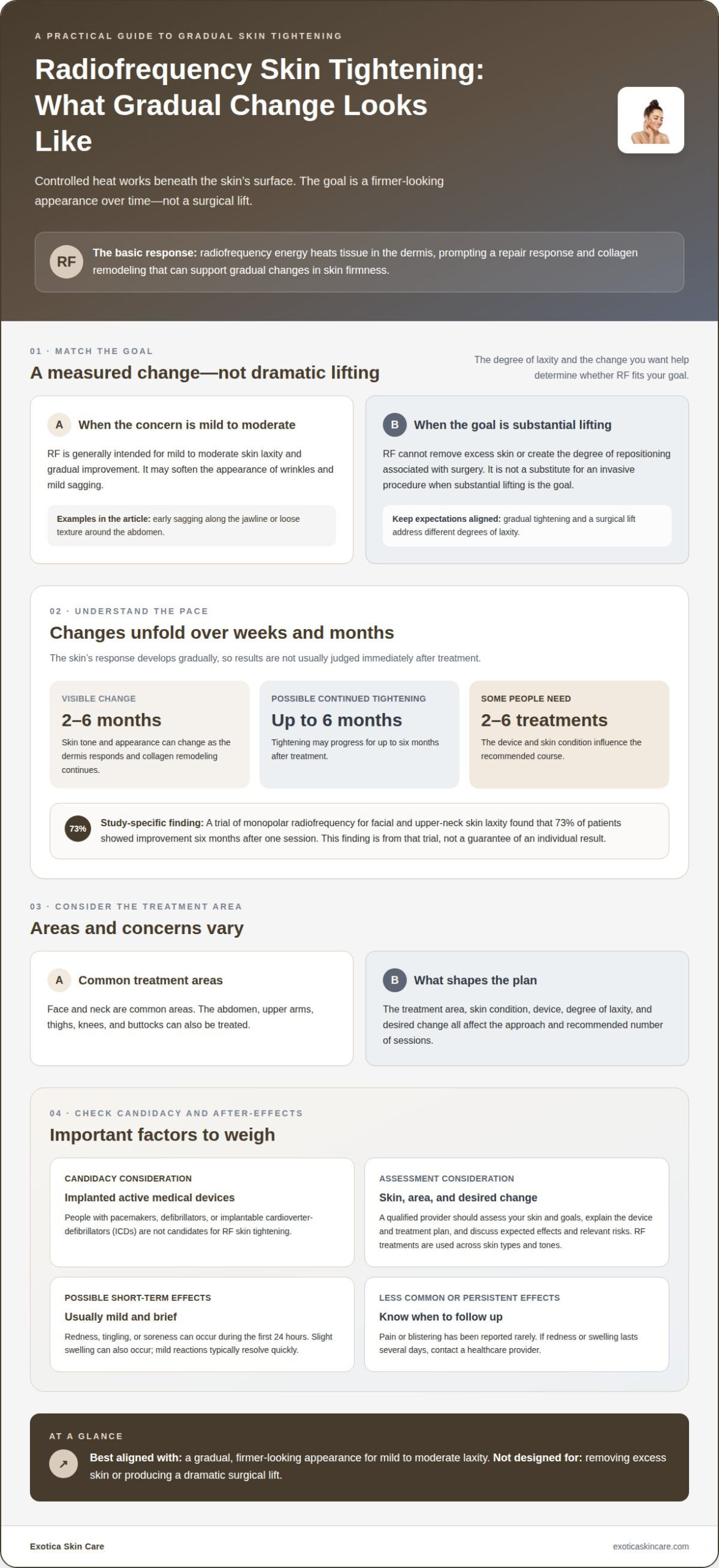
Radiofrequency skin tightening is generally suited to people with mild to moderate skin laxity who want gradual improvement rather than a dramatic lift. Common treatment areas include the face and neck; the abdomen, upper arms, thighs, knees, and buttocks can also be treated. Concerns might include early sagging along the jawline or loose texture around the abdomen.
Skin tone and appearance can change over two to six months as the dermis responds and collagen remodeling continues. Tightening may progress for up to six months after treatment, so results are not usually judged immediately. Some people need two to six treatments to reach their desired effect; the device and skin condition influence the recommended course.
Radiofrequency stimulates collagen production through controlled heating, but it cannot remove excess skin or create the degree of repositioning associated with surgery. It may soften the appearance of wrinkles and mild laxity, but it is not a substitute for an invasive procedure when the goal is substantial lifting.
Active implanted medical devices are an important consideration when assessing candidacy. People with pacemakers, defibrillators, or implantable cardioverter-defibrillators (ICDs) are not candidates for radiofrequency skin tightening. An assessment should also account for the treatment area, skin condition, and desired change. Radiofrequency treatments are used across skin types and tones.
Possible side effects include redness, tingling, or soreness during the first 24 hours after treatment. Slight swelling can also occur, and mild reactions typically resolve quickly. Pain or blistering has been reported rarely. If redness or swelling lasts several days, contact a healthcare provider. These details matter when planning treatment around work, events, or other commitments.
To set practical expectations, distinguish a subtle improvement in texture or firmness from a surgical lift. A facial treatment for mild jawline laxity has a different goal from treating loose skin on the upper arms. Discuss the area, degree of laxity, and pace of change you want; these factors shape the treatment plan and whether a nonsurgical approach fits your goal.
If you’re considering treatment, an individual skin assessment can help connect your concerns with an appropriate approach and clarify what gradual tightening can address.
A trial of monopolar radiofrequency for facial and upper-neck skin laxity found 73% of patients showed improvement six months after one session. Mild redness several hours after an RF face-slimming procedure was the only side effect observed.
Differences between gradual tightening and surgical lifting
Radiofrequency treatment and surgical lifting address different degrees of skin laxity. RF is generally intended for mild to moderate sagging, not dramatic repositioning. It does not provide surgical-level lifting or replace surgery. Someone seeking a subtle improvement in facial firmness has a different goal from someone seeking a major lift.
The distinction begins with the kind of change each approach can deliver. An RF device heats tissue and stimulates collagen production, supporting gradual changes in skin firmness. A surgical lift is a different type of intervention, and RF is not an equivalent alternative. Matching the method to the desired degree of change helps set realistic expectations.
Timing also differs. RF improvements can develop over several weeks, with continued change over months. Skin may continue tightening for up to six months after treatment. This timeline reflects the body’s collagen response, not immediate repositioning. Assess progress gradually rather than judging the outcome right after a session.
RF is intended for people whose concerns suit a measured, nonsurgical approach. Mild laxity around the jawline or neck illustrates this goal: the aim is a firmer appearance, not a dramatic change in facial structure. More pronounced sagging calls for a different discussion about treatment scope. RF cannot remove excess skin or create the degree of lifting associated with surgery.
Recovery expectations are another point of comparison. Noninvasive RF skin tightening generally requires no downtime, while surgery is invasive. That does not make RF suitable for every concern; its limited lifting capacity matters. When weighing options, consider the result you want, your tolerance for an invasive approach, and whether you’re comfortable waiting for gradual change.
Use these questions to clarify your goal before choosing an approach:
- Is the concern mild to moderate laxity, or a dramatic degree of sagging?
- Would gradual improvement over weeks and months suit your expectations?
- Are you seeking skin firmness, or a change that RF cannot provide?
These distinctions help frame a discussion around the result you want. RF is suited to gradual tightening, while surgical lifting addresses a different level of change. The device, treatment area, degree of laxity, and desired outcome all shape whether RF fits your goals. Clear expectations matter: collagen remodeling can improve firmness, but it cannot reproduce a surgical lift.
How radiofrequency energy heats tissue beneath the epidermis
Radiofrequency energy reaches tissue below the epidermis, the skin’s outermost layer. In a noninvasive procedure, the device applies energy that creates controlled heat beneath the surface while leaving the epidermis intact. This differs from surgery, which is invasive. The treatment aims to warm targeted tissue, not remove or cut away skin.
Radiofrequency devices deliver alternating electrical currents through tissue. As the current encounters tissue, electrical resistance converts energy into heat. Heating occurs beneath the surface, where the dermis contains structural components such as collagen and elastin. The intended response is in supportive skin tissue, while the epidermis remains intact.
Device design influences how energy is delivered and where heat is concentrated. RF systems may heat deeper skin layers to 122-167°F (50-75°C). The specific delivery approach and treatment area shape the procedure, so facial skin and a broader body area are not identical treatment zones. A dermatology assessment considers the skin’s condition and the intended target.
Controlled heating is the bridge between energy delivery and tissue response. Maintaining skin temperature above 115°F for more than three minutes can prompt the body to release heat-shock proteins. These proteins participate in cellular responses to heat. The goal is a measured stimulus, not uncontrolled warming; the device and treatment settings are selected to apply energy to the intended tissue.
After energy reaches the dermis, the body’s repair response can stimulate collagen remodeling. Existing collagen fibers may contract with heat, while later tissue changes develop through healing. Collagen and elastin provide structural support, so changes in these components can affect skin firmness and appearance. The response is gradual, unlike a surgical lift that repositions tissue directly.
The RF radiation used for skin tightening releases about 1 billion times less energy than X-rays. This comparison describes energy, not an individual treatment outcome. It also helps distinguish RF from radiation types that use higher-energy photons. For a person considering treatment, the practical point is the device’s intended use, the treated area, and the professional’s control of energy delivery.
For example, a device applied to the face targets a defined area rather than heating the entire body. The procedure is planned around the treatment zone and skin response. A professional considers the skin’s condition, energy delivery method, and desired degree of tightening. These choices shape how the dermis is stimulated and what gradual change may follow.
How radiofrequency skin tightening works
A radiofrequency skin-tightening session combines targeted energy delivery with the skin’s gradual repair response. The device, treatment area, and plan shape what happens during the procedure.
Heating Tissue Beneath the Epidermis
Radiofrequency energy creates controlled heat in tissue beneath the epidermis while leaving the outer skin layer intact. The device delivers alternating currents, and tissue resistance converts that energy into heat.
This targeted approach matters because the intended response occurs in the dermis, where collagen remodeling takes place. Settings and treatment area influence energy delivery, so facial skin and a larger body area require different planning.
What Happens During Treatment
A professional assesses the treatment area, then applies the device to deliver RF energy in controlled sections. A session typically takes 30 to 90 minutes, depending on the area treated.
The reader’s role is to describe skin concerns and relevant health details before treatment. Discomfort, redness, or tingling can occur; redness, tingling, or soreness may arise during the first 24 hours. These details help set expectations for the procedure and immediate recovery.
After energy delivery, the body’s response develops over time rather than producing an instant lift. Visible improvement may emerge over several weeks, with continued change over a few months. This gradual timeline reflects tissue remodeling, so your appearance immediately after a session does not show the full effect.
The treatment plan depends on the device and skin condition. Some people need two to six sessions to reach their desired results, while the recommended number varies with those factors. For devices used in a series, treatments may be delivered 7 to 10 days apart. A treatment schedule should correspond to the area and the intended degree of improvement.
Specific precautions affect session planning. Radiofrequency skin tightening is not performed directly over tattoo ink. The treatment professional also considers the area and device when mapping the session, rather than applying energy uniformly across every part of the face or body.
Some radiofrequency skin-tightening devices have FDA clearance for noninvasive treatment of wrinkles and skin laxity. Clearance applies to particular devices and uses, not automatically to every RF system. The device’s intended use and the treatment area are important parts of an informed plan.
For a professional assessment of your skin concerns and treatment goals, request a radiofrequency skin assessment.
Exotica Skin Care
Exotica Skin Care can help you connect what you’ve learned about radiofrequency with your skin goals. If you’re exploring professional RF treatment, Scarlet SRF combines radiofrequency and microneedling to increase skin density, reduce sagging, and improve firmness. The right approach depends on your concerns, treatment area, and desired degree of change. A personalized conversation can clarify how treatment may fit your goals and how it differs from a surgical lift. Contact Exotica Skin Care to discuss your questions and book your next step.
Choose a next step that fits your goals
Understanding how radiofrequency skin tightening works can help you have a more useful conversation about your priorities. Consider the change you want, the areas that concern you, and whether a gradual approach suits your expectations. These preferences can guide a personalized discussion about skin treatments, since each option serves a different purpose.
Exotica Skin Care offers Scarlet SRF, BioRePeelCl3® Peel, and PRX Derm Perfexion. These are distinct offerings, so the best starting point is a conversation focused on your skin concerns and desired outcome. You can ask how an option aligns with your goals and what to expect from its approach.
Take the next step at your own pace. Contact Exotica Skin Care to discuss your questions and explore an appropriate direction for your skin. A thoughtful plan begins with what matters most to you.
Frequently Asked Questions
Is RF safe for all skin types?
RF skin treatments can be suitable for all skin types and tones, but that doesn’t mean everyone is a candidate. An implanted active device, such as a pacemaker or defibrillator, is a key concern; people with these devices are not candidates for RF skin tightening. Share relevant health details before treatment. The treatment area, skin condition, and device also help determine whether the approach fits.
How Does Radiofrequency (RF) Work?
Radiofrequency uses electrical energy to warm targeted tissue and prompt a repair response. The device and treatment area influence where energy is delivered and how the session is planned. Treating facial laxity, for example, involves a different area than treating the abdomen. The aim is a gradual change in skin firmness, not an immediate change to facial or body shape.
How long until I see results from RF?
Visible changes may begin over several weeks, with improvement continuing over a few months. Skin can continue tightening for up to six months after treatment. Since change develops gradually, compare your appearance over time rather than judging it immediately after a session. Consistent lighting and similar angles can make personal progress photos more useful for noticing subtle changes.
Does RF Skin Tightening Actually Produce Results?
RF skin tightening can improve the appearance of mild to moderate laxity and wrinkles by supporting collagen remodeling. The change is gradual and generally aims for firmer-looking skin, not the dramatic repositioning of a surgical lift. Someone seeking a modest improvement in facial firmness has a different goal from someone seeking a substantial lift or removal of excess skin.
How many procedures are needed?
The number of RF sessions depends on the device, treatment area, and skin condition. Some people need two to six treatments to reach their desired results. A session plan is not fixed for everyone. The size of the area and degree of laxity help shape the plan, along with how the skin responds as treatment progresses.
What Can Radiofrequency Treatments Help?
RF skin tightening can address wrinkles and laxity on the face and neck, and may also be used on the abdomen, arms, thighs, knees, and buttocks. The goal is skin tightening, not a surgical lift. Other radiofrequency applications exist, including body contouring—featured by clinics such as bodytherapist.com.au—but the intended result depends on the treatment and area being addressed.
What are radiofrequency waves?
Radiofrequency waves are a form of electrical energy that changes direction at a particular frequency. Skin-tightening systems deliver alternating currents to tissue, with reported frequencies between 0.3 and 10 MHz. Tissue resistance converts the delivered energy into heat. In a skin treatment, the device uses that heating effect to prompt a controlled tissue response rather than cutting or removing skin.
What is an RF facial?
An RF facial is a radiofrequency treatment focused on facial skin. A professional applies the device to the planned treatment area to encourage gradual improvement in firmness and the appearance of wrinkles. It may suit someone concerned about mild facial laxity who prefers a nonsurgical approach. Planning considers the skin condition, target areas, and degree of change the person wants.