
The best wedding-week glow is built months earlier, not rescued at the last minute. A pre-wedding skincare plan in Las Vegas can begin six to 12 months before the ceremony, leaving time to build a routine, consider treatments and see how your skin responds. Start with consistency rather than a sudden lineup of new products or procedures.
In Las Vegas’s desert climate, hydration deserves a place in your pre-wedding skincare plan alongside concerns such as texture, breakouts, or uneven tone. Dry air, indoor heating, and travel can leave skin feeling tight or looking dull, so consistent moisturizing and daily sunscreen help support a comfortable complexion. More treatments aren’t automatically better: timing and your skin’s response matter.
This guide explains when to begin facials, how to plan hydrating care in Las Vegas, and where peels or microneedling may fit before your wedding. You’ll also find practical guidance for the final weeks, when familiar routines and gentle care can help you avoid last-minute surprises. The goal is a thoughtful timeline that supports your skin without adding stress to wedding preparation.
Key Takeaways
- Begin a targeted skincare routine well ahead of the ceremony so there’s time to assess how your skin responds and adjust treatment choices.
- Plan corrective treatments around recovery: intensive procedures need more lead time, while unfamiliar treatments are best avoided close to the wedding.
- Use regular facials as a way to support your skin over time, then choose a familiar, gentle approach as the ceremony approaches.
- In the final weeks, prioritize consistent moisturizing and daily sunscreen rather than adding aggressive products or exfoliation.
- Explore how Scarlet SRF or a peel may fit your goals and wedding timeline as part of a personalized treatment plan.
1. Corrective facials, peels, microneedling, and laser treatments
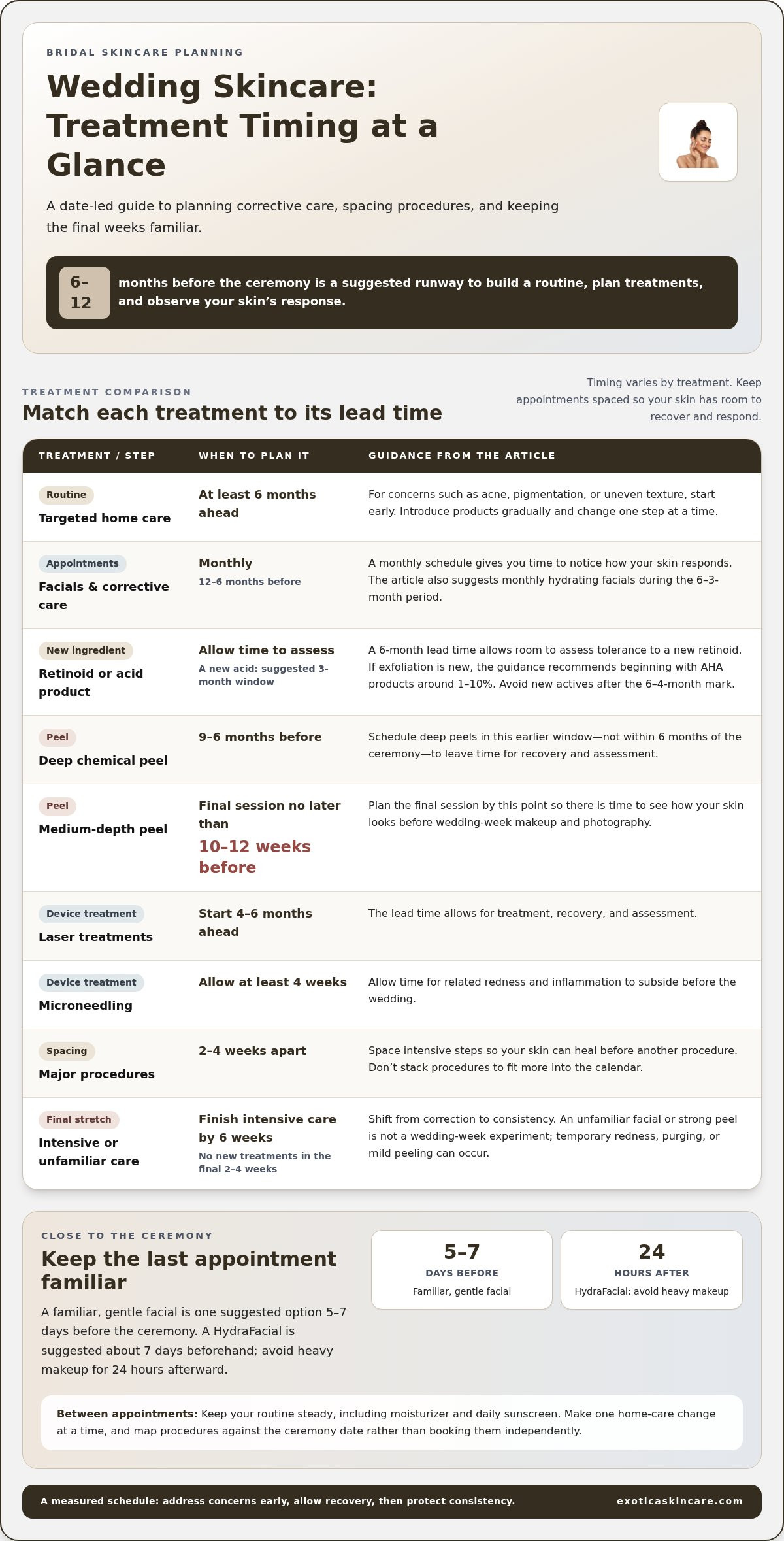
Start corrective care early enough to observe how your skin responds before wedding events begin. A targeted routine for concerns such as acne, pigmentation, or uneven texture can start at least six months before the ceremony. If you’re considering a new retinoid, that lead time also allows room to assess tolerance and adjust. Introduce products gradually rather than changing several steps at once.
For facials and corrective treatments, a monthly schedule during the 12-to-6-month period gives you time to notice how your skin responds. Keep the routine steady between appointments, including daily sunscreen. If exfoliation is new to your routine, the guidance recommends beginning with AHA products around 1 to 10 percent. Avoid adding new active ingredients after the 6-to-4-month mark, when the priority shifts to maintaining a familiar routine.
Peels need careful placement on the calendar. Deep chemical peels are generally scheduled 9 to 6 months before the wedding, not within six months of the ceremony. A medium-depth peel has a different timeline: plan the final session no later than 10 to 12 weeks before the wedding. These windows allow time for the skin to recover and for you to see how it looks before wedding-week makeup and photography.
Microneedling and laser treatments also need advance planning. Allow at least four weeks for microneedling-related redness and inflammation to subside before the wedding. Laser treatments are commonly started four to six months ahead, leaving time for treatment, recovery, and assessment. Space major procedures two to four weeks apart so your skin can heal before another intensive step. Don’t stack procedures just to fit more into the calendar.
As the ceremony approaches, shift from correction to consistency. Complete intensive skincare treatments by six weeks before the wedding, and avoid new treatments during the final two to four weeks. A facial close to the date can cause temporary redness, purging, or mild peeling, so an unfamiliar facial or strong peel isn’t a wedding-week experiment. If you’re considering a new acid product, the suggested three-month window allows time to assess your skin’s response. Don’t introduce it in the final stretch.
Think of the schedule as a sequence: address concerns early, space procedures, then protect the calm, smooth appearance you’ve established. For example, if you’re planning a laser series and a peel, map both against the ceremony date before starting rather than booking each treatment independently. This measured approach supports skin-focused wedding preparation and reduces the temptation to chase last-minute changes.
2. When Should I Start Getting Facials Before My Wedding?
Start a pre-wedding skincare plan in Las Vegas six to 12 months before the ceremony when possible. That runway gives you time to establish a routine, schedule facials, and observe your skin’s response. If your wedding is sooner, begin with familiar products and make appointments around the time remaining. A shorter timeline calls for a simpler approach, not a rushed series of unfamiliar treatments.
The right dermatologist or medical spa for bridal skincare is one that connects recommendations to your skin concerns and wedding date. In Las Vegas, consider how dry air, cooler weather, indoor heating, and travel affect your comfort. A useful consultation covers your current routine, past reactions, and treatment history. These details help shape a plan around your skin rather than a generic menu of facials.
Use early appointments to establish a baseline. Before your first facial, note whether your skin feels tight after cleansing, becomes shiny by midday, or reacts to particular products. Share those observations during the appointment. For example, someone with dry cheeks and an oily forehead may need a different home-care balance from someone experiencing dryness all over.
Keep daily care steady between appointments. A gentle cleanser, consistent moisturizer, and sunscreen provide a practical foundation, especially when Las Vegas weather or indoor heating leaves skin feeling uncomfortable. Introduce only one home-care change at a time. That makes it easier to identify which step suits your skin and distinguish a new serum’s effects from those of a recent facial.
Monthly facials during the six-to-three-month period can support ongoing assessment and hydration. Record how your skin looks and feels after each visit, then use those notes to plan the next appointment. If dryness increases after travel or cooler weather, adjust home care before adding stronger exfoliation. A pre-wedding skincare plan in Las Vegas should respond to your skin’s real patterns, not just the wedding countdown.
For the last appointment, favor timing and care your skin already knows. A familiar, gentle facial five to seven days before the ceremony is one suggested option. A HydraFacial is suggested about seven days beforehand; avoid heavy makeup for 24 hours afterward. Keep the rest of that week predictable, with familiar products and daily sunscreen, rather than adding a new active ingredient.
If you have only a few months, prioritize a consistent routine and carefully spaced appointments. Monthly hydrating facials are suggested during months six to three, while closer-spaced targeted sessions may fit six to 12 weeks before the wedding. For a pre-wedding skincare plan in Las Vegas, map those appointments against events, travel, and makeup trials so your schedule remains manageable.
Use your first consultation to discuss goals, sensitivities, and the ceremony date, then keep a simple record of product changes and facial responses. Pairing professional skincare guidance with those notes gives each appointment a clearer purpose and helps prevent a last-minute treatment scramble.
3. How Do Hydrating Facials Benefit Brides in a Desert Climate?
Monthly professional facials during wedding preparation can help address changing skin needs in Las Vegas. A hydrating treatment focuses on comfort and moisture, while a consultation can align each appointment with your skin goals. Track tightness, flaking, or dullness after each visit. These observations help guide the next facial instead of repeating a routine that no longer fits.
Desert dryness, indoor heating, and cooler weather can leave skin feeling tight. A facial may complement, but shouldn’t replace, simple barrier-supporting care at home. After cleansing, apply moisturizer consistently and use sunscreen daily. If your skin feels more sensitive after exfoliation, pause aggressive steps and return to gentle products. A calm routine helps prevent layering new treatments onto already uncomfortable skin.
Build your bridal facial timeline around your skin goals and recovery. Monthly hydrating and nourishing facials during the six-to-three-month period provide regular opportunities to assess your skin. During the six-to-twelve-week window, closer-spaced sessions and targeted treatments may suit your plan. Make a note after each appointment, such as whether your skin felt comfortable the next day or needed extra moisturizer.
For the final appointment, choose the timing and treatment based on what your skin already knows. One suggested window is a gentle, familiar facial five to seven days before the wedding; another guideline places the final facial one week before. Either way, avoid experimenting near the ceremony. Facials close to the wedding can cause temporary redness, purging, or mild peeling, so a new treatment is a poor last-minute trial.
After a HydraFacial, avoid heavy makeup for 24 hours. Keep post-facial care simple: cleanse gently, moisturize, and protect your skin with sunscreen. During the final week, use SPF 50 and maintain familiar products rather than adding a new serum or exfoliant. If a facial leaves your skin feeling dry, focus on moisturizer instead of trying to correct it with stronger exfoliation.
The day before the wedding is for routine, not experimentation. Avoid new skincare and prioritize hydration and sleep. In the final two weeks, stop potentially irritating acids and exfoliants, and keep only products your skin has already tolerated. This measured approach helps preserve comfort through makeup application and photography while allowing your established routine to support a smooth, refreshed appearance.
Use a simple timeline: record your skin goals at the first consultation, note your response after each monthly facial, and choose a familiar final treatment. Your notes can reveal whether dryness follows cooler weather, travel, or a particular product. Adjusting the plan to these patterns makes each appointment more purposeful and keeps post-facial care consistent leading up to the ceremony.
4. Calming and moisturizing skin in the final weeks
In the final two to four weeks, keep skincare familiar and focus on comfort. Use a gentle cleanser, moisturizer, and daily sunscreen to support the skin barrier. Las Vegas dryness, cooler weather, indoor heating, and travel can all contribute to tight-feeling or dull-looking skin. A simple routine is easier to maintain than several new products, especially before long makeup days and wedding events.
For sensitive skin or bridal party members, choose familiar products and avoid copying the bride’s active ingredients or treatments. Keep each person’s routine gentle and consistent, with cleanser, moisturizer, and sunscreen as the core steps. A consultation can review individual skin concerns, current products, and makeup plans, then shape recommendations for each person rather than applying one routine to everyone.
AHAs and BHAs can support exfoliation, but stronger or more frequent use can irritate and sensitize skin. Over-the-counter AHA and BHA products range from 1 to 20 percent; BHA guidance suggests beginning around 0.5 to 1 percent. Don’t add acids to solve a last-minute texture or pigmentation concern. Stop potentially irritating acids and exfoliants during the final two weeks, then prioritize hydration.
Include makeup in your timeline. Gentle exfoliation can lift dry, flaky skin and create a smoother surface for foundation, while over-exfoliation can leave skin irritated. Test familiar makeup with your usual skincare routine before the wedding rather than introducing a new product minutes before photographs. Daily sunscreen remains part of the plan, particularly before outdoor events in Las Vegas.
If a breakout or reaction appears right before the ceremony, stop using newly introduced products and strong exfoliants. Cleanse gently, moisturize, and avoid picking or layering multiple spot treatments. Don’t try a new peel or facial to correct the change. Keep the remaining routine simple, and follow the care instructions for any product or treatment you’ve already used.
Schedule the final facial according to your skin’s history, not just the calendar. One suggested option is a hydrating facial without extractions two weeks before the wedding; a gentle, familiar appointment can also fit five to seven days before. Choose the approach that matches what your skin has tolerated. A facial can cause temporary redness, purging, or mild peeling, so don’t treat the final appointment as a last-minute makeup fix.
For a custom skin analysis, bring the products you use and note what triggers dryness, sensitivity, or pigmentation concerns. This practical record helps identify which steps to keep and which to pause. In the final week, avoid experiments, maintain hydration, and use familiar sunscreen. The goal is a healthy-looking, comfortable base for bridal makeup, not a sudden overhaul.
5. Microchanneling and chemical peel series
If you’re considering microchanneling or a peel series, map treatments backward from the wedding date. First, identify the main goal, such as uneven texture or visible pigmentation. Then record planned procedures, recovery windows, and any changes in your skin’s response. A custom timeline helps prevent overlapping treatments and leaves time to assess each step before starting another.
Microchanneling isn’t interchangeable with every microneedling protocol. The technique and recovery experience depend on the treatment plan, so discuss the exact procedure and expected aftercare during a skin consultation. If your plan includes microneedling, allow at least four weeks for redness and inflammation to subside before the wedding. This gives your skin time to settle before makeup trials and photographs.
Chemical peel timing depends on peel depth. Deep peels belong nine to six months before the wedding and should not be scheduled within six months of the date. A medium-depth peel follows a different schedule: complete the final treatment no later than 10 to 12 weeks before the ceremony. These windows are not interchangeable, so identify the peel depth before reserving dates.
Space major procedures two to four weeks apart to allow healing between appointments. For example, don’t schedule a peel and a microneedling-based procedure close together just to fit both into a short timeline. Track redness, peeling, sensitivity, and dryness after each session. These observations create a practical record to help you decide whether the next planned treatment still fits.
Use a wedding-date calendar to set boundaries: plan deep peels nine to six months out, finish the final medium-depth peel at least 10 to 12 weeks ahead, and complete intensive skincare treatments by six weeks before the wedding. Allow at least four weeks after microneedling for redness and inflammation to subside. During the final two to four weeks, avoid new treatments and stick with familiar products.
Plan a treatment series around your skin type, treatment history, and the concern you want to address, not a promise of perfect skin. With several months available, you can assess one treatment before committing to another. If you have less time, avoid compressing recovery intervals. Choose the sequence first, then protect recovery time around every appointment.
Bring your wedding date, current routine, and treatment history to a consultation with an esthetician. Ask for the proposed sequence and recovery windows in writing, including which appointment will be your final peel or procedure. A shared timeline makes it easier to pursue a considered result without adding last-minute treatments. Schedule a treatment-planning consultation before beginning a series.
Exotica Skin Care: Scarlet SRF
Exotica Skin Care offers Scarlet SRF for brides considering an aesthetic treatment as part of wedding preparation. Discuss your skin goals, treatment history, and ceremony date, then consider how this option fits your overall plan. Bringing your current skincare routine and a clear description of your concerns can help make the conversation focused and useful.
Treatment timing matters: allow enough space in your calendar to plan care thoughtfully and avoid last-minute changes. If you’re comparing options, Exotica Skin Care also offers BioRePeelCl3® Peel, PRX Derm Perfexion, and AquafirmeXS. Each can be discussed in relation to your priorities and timeline, without treating every service as the right choice for every bride.
Contact Exotica Skin Care to discuss Scarlet SRF and your wedding skincare goals.
Make your next step a thoughtful one
Your wedding skincare plan should support how you want to feel in your own skin, not become another source of pressure. A pre-wedding skincare plan in Las Vegas works best when treatment choices reflect your priorities, comfort, and timeline. Keep those goals at the center of your next conversation.
At Exotica Skin Care, Scarlet SRF, BioRePeelCl3® Peel, and PRX Derm Perfexion are options to discuss in relation to your skin goals and wedding timeline. A personalized conversation can help you consider which approach makes sense for your plans and how it may fit alongside your established routine.
Contact Exotica Skin Care to discuss your bridal skincare goals and next steps. You can move forward with clarity, care, and a plan that feels right for you.
Frequently Asked Questions
How Do Hydrating Facials Benefit Brides in a Desert Climate?
Hydrating facials can help skin feel more comfortable when Las Vegas’s dry air or indoor heating leaves it feeling tight. They also give you a chance to see how your skin responds to professional care before important events. For example, note whether makeup applies smoothly after a familiar facial. That observation can guide your next appointment and home-care choices without adding unnecessary steps.
How Many Facials Should I Get Leading Up to the Big Day?
Monthly facials are a practical starting point for wedding preparation, with the schedule adjusted to your skin goals and treatment timeline. If you have a year before the ceremony, regular appointments let you assess changes gradually. With fewer months, prioritize a consistent routine and appointments that fit your remaining recovery time rather than compressing a long treatment series.
What Are the Different Types of Facials for Brides in Las Vegas?
Bridal facial options include hydrating and nourishing facials, corrective facials, and appointments with extractions. The right choice depends on your skin goals and what your skin has already tolerated. For example, a bride focused on dryness may prioritize hydration, while someone addressing congestion may discuss corrective care earlier in the schedule. Keep the final appointment familiar rather than testing a new facial near the ceremony.
What Facial Options Should Brides Consider for Healthy, Glowing Skin?
Consider options according to your main concern, such as dryness, acne, uneven texture, or pigmentation, and fit them to your wedding calendar. Exotica Skin Care offers AquafirmeXS, BioRePeelCl3® Peel, and PRX Derm Perfexion among its skin-treatment options. These names are starting points for a treatment discussion, not interchangeable choices. Your skin history and the time available before the wedding help shape a suitable plan.
What Is the Best Time to Schedule My First Facial for Wedding Prep?
Schedule your first facial as early as possible, ideally when wedding preparation begins six to 12 months before the ceremony. An early appointment lets you learn how your skin responds before deciding whether to continue with the same approach. Bring a list of your current products and any past reactions. Those details make it easier to plan future appointments around your routine and priorities.
When Should I Start Getting Facials Before My Wedding?
Begin a regular facial routine six to 12 months before the wedding when you can. If you’re addressing a specific concern, starting earlier leaves more room to assess your response and make measured adjustments. With a shorter timeline, focus on familiar, gentle care instead of introducing a sequence of unfamiliar treatments. Avoid turning the final weeks into a catch-up period for appointments you couldn’t schedule earlier.
What is a month-by-month skincare timeline before a wedding?
From 12 to six months out, monthly facials and corrective care can form the early phase. Deep peels are placed nine to six months before the wedding, while monthly hydrating facials can continue from six to three months out. Complete a final medium-depth peel no later than 10 to 12 weeks beforehand. Finish intensive treatments by six weeks out, then keep the final weeks focused on familiar care.
Which skincare treatments are safe to schedule before a wedding, and when?
Choose treatment timing according to the procedure and its recovery needs rather than assuming every option suits every date. Deep chemical peels belong nine to six months before the wedding; microneedling needs at least four weeks for redness and inflammation to subside. Laser treatments are generally started four to six months ahead. Space major procedures two to four weeks apart, and avoid new treatments close to the ceremony.