
Stretch marks can become less noticeable, but treatment does not erase them completely. They form when rapid stretching or shrinking damages collagen and elastin fibers in the skin. If you are considering microneedling for stretch marks in Summerlin, expect sessions to be spaced several weeks apart, with changes developing gradually. The number of sessions and degree of improvement depend on the marks and your skin characteristics.
It is understandable to want a clear picture of treatment before deciding whether it suits your goals. This guide explains why stretch marks form, how professional microneedling works, how sessions are spaced, and how long results may last. It also compares professional treatment with at-home care, so you can weigh your options with realistic expectations.
Key Takeaways
- Stretch marks form when skin stretches or shrinks rapidly and collagen and elastin fibers break; their color and texture can change over time.
- Microneedling sessions are typically spaced several weeks apart, and the treatment plan depends on the marks and individual skin characteristics.
- Collagen remodeling takes time, so visible changes develop gradually rather than appearing immediately after a session.
- Results may last several months to a year, while maintenance needs vary with the skin and treatment response.
- At-home rollers aren’t equivalent to professional microneedling and may irritate skin without providing the same controlled treatment.
Treatment sessions and spacing
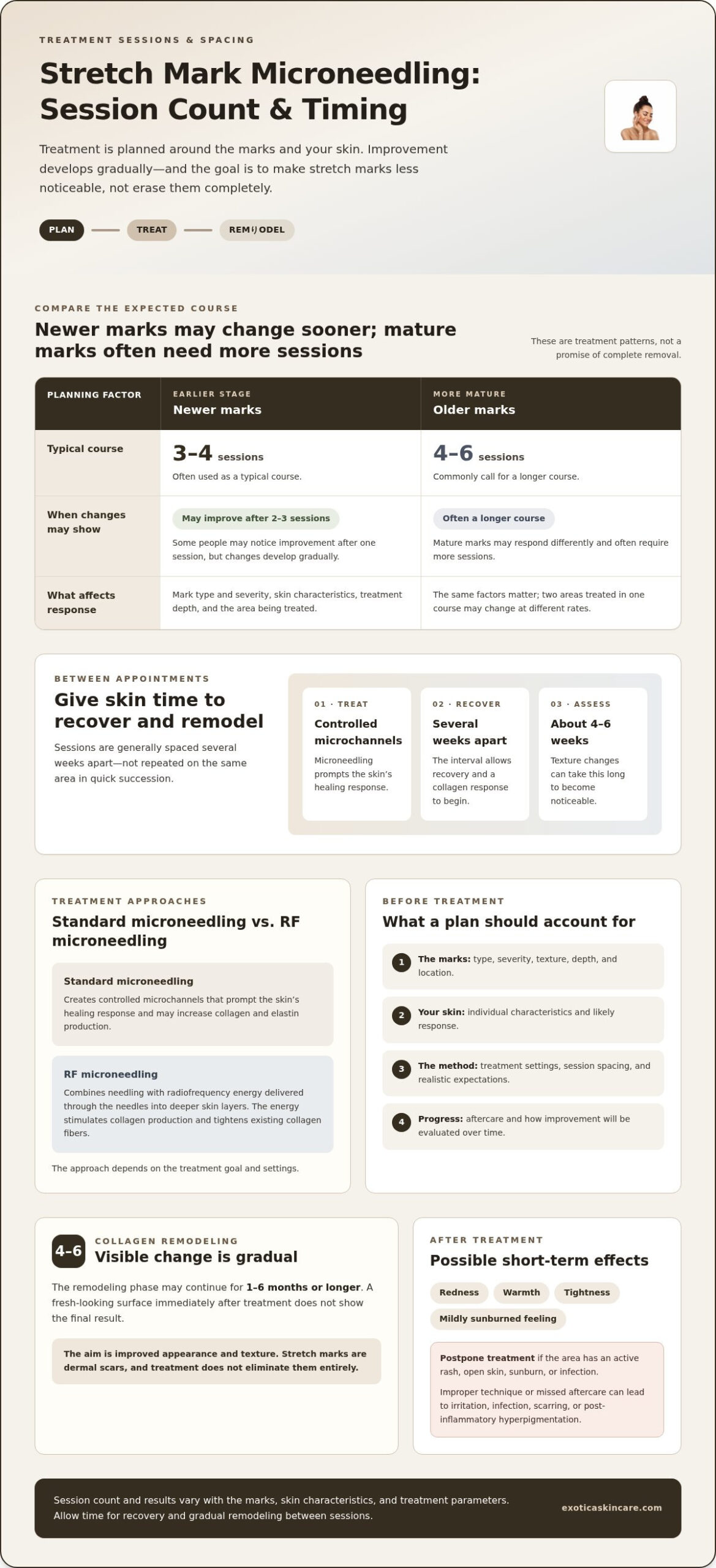
Microneedling plans account for the type of stretch marks, your skin characteristics, and the treatment method. Sessions are generally spaced several weeks apart to allow for recovery and gradual remodeling.
Session Frequency and Spacing
Spacing means leaving several weeks between sessions rather than treating the same area repeatedly in quick succession. This interval gives the skin time to recover and begin its collagen response before the next treatment. Texture changes can take about 4 to 6 weeks to become noticeable, so assessing results immediately after a session can be misleading. Treatment depth and the area being treated also shape the plan.
Expected Improvement and Session Count
Session count describes the course planned to address the marks, while improvement refers to changes in their appearance. Newer stretch marks may show visible improvement after 2-3 sessions, with 3-4 sessions often used as a typical course. Older marks commonly call for 4-6 sessions. These figures describe treatment patterns, not a promise of complete removal; stretch marks are dermal scars, and response varies with their type, severity, and individual skin characteristics.
Which types respond best? Newer marks may show changes sooner, while mature marks often require a longer course. Some people may notice improvement after one session, but results develop gradually as collagen remodeling continues.
Treatment Options and Planning
Before sessions begin, planning should cover the treatment method, expected course, likely skin response, and practical considerations. RF microneedling combines needling with radiofrequency energy delivered through the needles into deeper skin layers. This stimulates collagen production and tightens existing collagen fibers. Standard microneedling and RF microneedling are different approaches, and the choice depends on the treatment goal and settings.
PRP may come up during a consultation. Ask what role it would have in your plan, how it relates to microneedling, and what evidence supports the proposed approach. Combination treatments may also be discussed. Microneedling paired with laser treatments or chemical peels may offer benefits, but the methods and sequence should suit the treatment area and your skin’s needs.
What should you look for in a Nevada provider? Choose a medically based team that assesses the stretch marks, your skin characteristics, and treatment settings, then explains realistic expectations. Ask how sessions will be spaced, what aftercare involves, and how progress will be evaluated.
What is the average cost in Summerlin, Las Vegas? The price depends on the case and is provided after a quote request. Factors include the treatment area, method, and planned sessions.
What are the risks and side effects? Temporary redness, warmth, tightness, or a mildly sunburned feeling can follow treatment. Improper technique or missed aftercare can lead to irritation, infection, scarring, or post-inflammatory hyperpigmentation. Active rash, open skin, sunburn, or infection in the area are reasons to postpone treatment.
What Are Stretch Marks?
Stretch marks form when rapid skin stretching or shrinking damages collagen and elastin fibers. Pregnancy, puberty, hormonal changes, genetics, and rapid weight fluctuations can contribute. They commonly appear on the abdomen, thighs, hips, breasts, buttocks, and upper arms. Early marks may look pink, red, or purple and feel slightly raised. Over time, they often fade to white or silver and become flatter. These changes reflect alterations in the dermis, the skin layer where stretch marks form.
Microneedling creates controlled microchannels that prompt the skin’s healing response. As the skin repairs these tiny openings, collagen and elastin production can increase. These structural proteins help support firmness and elasticity. For stretch marks, this response may gradually improve the appearance of uneven texture. RF microneedling also delivers radiofrequency energy through the needles into deeper skin layers, stimulating collagen production and tightening existing collagen fibers. Unlike ordinary skincare, which acts mainly on the surface, microneedling creates controlled channels in the skin.
Collagen remodeling takes time, so a fresh-looking surface immediately after treatment does not show the final result. The remodeling phase may continue for 1-6 months or longer. During that time, newly stimulated collagen can change the feel and appearance of treated skin. The goal is improvement, not complete removal: stretch marks are dermal scar tissue, and no treatment eliminates them entirely. Individual response depends on mark type and severity, skin characteristics, and treatment parameters. Those factors help explain why two areas treated during the same course may change at different rates.
A device name alone does not explain how a treatment works. For a device described as Collagen P.I.N., useful points to understand include whether it creates microchannels, delivers radiofrequency energy, and how its treatment settings are selected. These are features to ask about, not specific claims about that device’s specifications. Ask how the chosen method relates to the stretch marks’ depth and location. For example, RF energy delivered through needles targets deeper layers than surface skincare. A clear explanation connects the device’s features to the intended collagen response.
Microneedling for stretch marks in Summerlin should be considered in light of the marks’ color, texture, and location. Red or purple lines are an earlier form, while white or silver marks are more mature. Both may be treated, but their responses can differ. During planning, discuss whether the approach uses microneedling alone or RF, what changes are realistic, and how progress will be assessed as the skin remodels. This helps align the treatment goal with your skin concerns and the intended collagen response.
How Long Do Results Last and What About Maintenance?
Microneedling results can last several months to a year, according to the Center for Aesthetic Medicine. That range is a general estimate, not a fixed expiration date for every stretch mark. The treated area, the marks’ age and depth, skin characteristics, and treatment response all affect how long texture changes remain noticeable. A series also takes time to show its full effect: the skin continues to remodel after the final session, so judging results too early may underestimate the change.
The timeline for full results differs between newer and mature marks. For new stretch marks, full results may take 3-4 months after the final session. For older marks, the full result may take 4-6 months after the final session. These periods begin after the course ends, not after the first appointment. For example, someone completing a series should consider both the treatment schedule and the months of continued change afterward when planning an event or evaluating progress.
Maintenance is a separate decision from the initial series. Sessions every 6-12 months are commonly recommended to maintain microneedling results. The interval depends on the appearance of the treated area and how the skin responds over time. A return visit can assess whether texture changes remain stable or whether another session fits the goal. Maintenance doesn’t replace the initial course, and it shouldn’t be scheduled before the skin has had time to show its post-treatment response.
Keep progress comparisons consistent. Record the treatment date and photograph the same stretch mark under similar lighting and positioning. Compare images after the expected remodeling period instead of focusing on immediate changes. Note differences in texture, width, and contrast with surrounding skin. Pigment changes and surface texture are separate observations, so tracking them independently can make progress easier to assess. A mark may look softer even if its color changes at a different pace.
After each session, follow the specific aftercare instructions for the treated area. Avoid direct sun exposure and use broad-spectrum SPF 30+ sunscreen daily during the first week after treatment. For one or two days, avoid friction, strenuous exercise that causes heavy sweating, hot tubs, and pools. These steps help protect recovering skin while the treatment response develops. Topical products should follow the aftercare plan, rather than being added immediately without guidance. The needles create controlled openings, so gentle care matters during early recovery.
Set expectations around milestones: the final appointment, the 3-4- or 4-6-month assessment point, and any maintenance review. This timeline gives skin time to change before decisions about further treatment.
Professional versus at-home microneedling
Professional microneedling and at-home rollers differ in control, treatment design, and the depth targeted. Professional treatment uses a planned technique for the stretch mark and surrounding tissue. At-home devices generally have needle depths of 0.25-0.5 mm, and they aren’t equivalent to medical microneedling. A roller may create surface irritation without producing the controlled treatment needed for meaningful collagen remodeling. That distinction matters when the goal is to change the appearance of dermal marks, not simply exfoliate the skin.
Fresh stretch marks often appear red, pink, or purple, while mature marks tend to look white or silver, flatter, and less prominent. These differences help describe a mark’s stage, but color alone does not determine a treatment plan. A provider also considers location, texture, skin characteristics, and the intended method. Newer marks generally respond better than mature marks, although older marks can still be addressed. The expected degree and pace of change depend on the mark and treatment settings.
Professional treatment allows for controlled application across the treatment area. With RF microneedling, radiofrequency energy travels through needles into deeper skin layers. This differs from an at-home roller, which does not deliver the same medically controlled treatment. A qualified professional can assess whether the skin is suitable, tailor settings to the area, and explain aftercare. These details matter because improper technique or missed aftercare can contribute to irritation, infection, scarring, or post-inflammatory hyperpigmentation.
At-home devices put more responsibility on the user to maintain safe technique and clean equipment. Repeated passes over a stretch mark can irritate the tissue, especially if pressure or coverage varies. Needle depth alone does not establish that a device can remodel a dermal scar. A roller, for example, may cause temporary redness without producing the controlled micro-injury needed for meaningful structural change. Do not use a device over open skin, an active rash, sunburn, or infection.
Professional treatment is not automatically appropriate for everyone or every appointment. A history of keloid scarring, poor wound healing, recurring skin infections, or active eczema or psoriasis in the treatment area calls for professional evaluation. Darker skin may need additional treatments to reduce the risk of post-inflammatory hyperpigmentation. These considerations help determine whether microneedling is suitable and how treatment should be planned.
For a practical comparison, ask a provider to explain the method, treatment settings, expected recovery, and how progress will be assessed. Discuss the difference between fresh red or purple marks and mature silver or white marks. If you are considering at-home care, understand that a short needle length does not make a roller equivalent to professional treatment. Controlled application and appropriate aftercare are central to reducing avoidable tissue irritation.
Microneedling services in Summerlin, Las Vegas
If you are considering treatment in Summerlin or elsewhere in Las Vegas, the key is matching the method to the stretch marks and treatment area. Microneedling uses dozens of microscopic needles to create tiny openings at the skin’s surface. With RF microneedling, energy passes through the needles into deeper layers. The aim is to stimulate collagen and support tissue remodeling, not to erase marks completely. A useful treatment discussion connects the device, treatment area, and goal instead of relying on the device name alone.
Skin type and the marks’ characteristics shape treatment planning. Red or purple marks are newer; white or silver marks are mature, and their responses can differ. The treatment area matters too: the abdomen, thighs, hips, and upper arms have different contours and surface needs. A medically based team considers these details alongside your skin history and treatment settings. For darker skin, additional sessions may be considered to reduce the risk of post-inflammatory hyperpigmentation. This assessment helps shape a treatment series for the individual area.
Ask how the treatment is expected to improve the appearance of stretch marks, how sessions will be spaced, and what changes will be tracked. A clear plan distinguishes texture from color, since a mark can feel smoother even if its pigmentation changes at a different pace. Ask what recovery may look like for the treated area and which signs require follow-up. Active rash, open skin, sunburn, or infection are reasons to postpone microneedling. A history of keloid scars or poor wound healing also warrants professional evaluation before treatment.
Plan around recovery, not just appointment time. Treated skin may look pink or slightly swollen for 24 to 48 hours, and body-area redness can take a few days to settle. For the first day or two, avoid friction, heavy-sweat exercise, hot tubs, pools, and direct sun exposure. During the first week, use broad-spectrum SPF 30+ sunscreen daily and avoid direct sun. These steps matter in Las Vegas, where outdoor plans can expose treated skin to sunlight. Follow the aftercare instructions for your specific treatment area.
Microneedling for stretch marks in Summerlin is best approached as a planned course, with expectations tied to the mark, skin type, and method. Progress develops gradually, so compare consistent photographs rather than judging the surface immediately after treatment. RF microneedling may make scars and stretch marks less noticeable, but it isn’t a complete eraser. If you’re exploring professional skin care options, explore personalized skin treatment options as a next step.
Exotica Skin Care: Scarlet SRF
Scarlet SRF is Exotica Skin Care’s radiofrequency microneedling option for people exploring professional care for the appearance of stretch marks. It combines microneedling with radiofrequency energy, an approach that stimulates collagen remodeling in deeper skin layers. A personalized discussion can consider the marks’ age, location, your skin characteristics, and your goals, then clarify whether this approach is suitable. Expect realistic planning for gradual changes, not complete removal of stretch marks.
If you’re weighing professional treatment against at-home care, Scarlet SRF offers a focused next step for discussing a medically guided approach. Exotica Skin Care also offers BioRePeelCl3® Peel, PRX Derm Perfexion, and AquafirmeXS for other skin care goals. To explore Scarlet SRF and discuss your stretch mark concerns, contact Exotica Skin Care.
Choose a Next Step That Fits Your Skin Goals
Deciding whether to pursue microneedling for stretch marks in Summerlin starts with a clear personal goal. You may want to soften the texture in a particular area, feel more comfortable in certain clothing, or understand which approach suits your skin. Bring those priorities into a conversation about treatment options. They keep the discussion focused on what matters to you, rather than an idealized outcome or a one-size-fits-all plan.
At Exotica Skin Care, Scarlet SRF is one option to discuss alongside BioRePeelCl3® Peel and PRX Derm Perfexion. Each is a distinct offering, so the next step is understanding which treatment aligns with your concerns and expectations. The right conversation should leave you with a clearer sense of your options and a considered path forward, without pressure to make an immediate decision.
Contact Exotica Skin Care to discuss your skin goals and explore a thoughtful next step.
Frequently Asked Questions
What is Automated Micro-Needling?
Automated microneedling uses a powered handpiece to move multiple fine needles across the skin in a controlled way. The needles create tiny openings that prompt a healing response. Unlike a manual roller, a motorized device supports consistent movement across an area. For stretch marks, the approach and settings are selected according to the treatment area and skin characteristics, rather than applying one setting everywhere.
What Happens During a Treatment?
Treatment starts with an assessment of the area and the stretch marks’ appearance. A topical numbing agent is applied before microneedling, according to the Center for Aesthetic Medicine. The practitioner then moves the device over the selected skin, creating tiny openings. With RF microneedling, radiofrequency energy is delivered through the needles. Afterwards, the skin may feel warm or tight, so follow the aftercare instructions provided.
Does Treatment Vary by Body Part?
Yes. The body area affects how treatment is planned because skin thickness, contours, and stretch mark patterns differ. For example, abdominal stretch marks may require a different needle depth from marks on the thighs or upper arms. Treatment for abdominal stretch marks typically uses depths of 1.5-2.0 mm. A professional assessment considers the area’s skin and the marks’ characteristics before selecting treatment parameters.
How Many Sessions Will You Need?
The number of sessions depends partly on whether marks are newer or mature. Newer marks may show visible improvement after 2-3 sessions, while older marks may need 4-6 sessions for the best results. Typical courses are 3-4 sessions for newer marks and 4-6 for older marks. Sessions are generally separated by several weeks, allowing time to assess how the skin responds before planning further treatment.
How do I know if Microneedling is right for me?
Microneedling may suit someone who wants to soften the appearance or texture of stretch marks, provided the treatment area is suitable. Active rash, open skin, sunburn, or infection are reasons to postpone treatment. A history of keloid scars, poor wound healing, recurring skin infections, or active eczema or psoriasis in the area calls for professional evaluation. Discuss your skin history and goals during treatment planning.
How is the procedure done?
After assessing and preparing the skin, a practitioner uses a needling device to create controlled micro-openings across the selected stretch marks. The device’s movement and settings are adjusted to the area. With RF microneedling, radiofrequency energy travels through the needles into deeper skin layers. The procedure prompts a healing response, while collagen remodeling continues after the appointment. Follow the specific aftercare guidance for the treated skin.
Is Microneedling Safe for Every Skin Tone?
Microneedling is not planned identically for every skin tone. According to the Center for Aesthetic Medicine, people with darker skin may need additional treatments to reduce the risk of post-inflammatory hyperpigmentation. Skin tone, treatment area, and individual skin characteristics should be considered together. During your assessment, share any history of pigment changes after skin irritation or procedures so the treatment settings and follow-up can reflect your skin’s needs.
How does microneedling treat stretch marks?
Microneedling prompts the skin’s repair response by creating tiny channels, encouraging collagen and elastin production. These structural changes can help improve the feel and visibility of stretch marks over time. RF microneedling also delivers radiofrequency energy through the needles into deeper skin layers. The aim is to make marks less noticeable, not erase them completely. Results depend on the marks’ characteristics, your skin’s response, and treatment settings.