
The best sunscreen for post-peel skin isn’t simply the one with the highest SPF. Choose a broad-spectrum formula with SPF 30 or higher, and follow your peel aftercare instructions on when to begin applying it. Protect healing skin by avoiding direct sun for at least 48 hours, then continue limiting sun exposure for at least two weeks.
It makes sense to focus on sunscreen, but timing and consistent reapplication matter just as much. Once your aftercare instructions allow sunscreen, reapply it every two hours and more often when you’re outdoors. A gentle formula can help keep freshly treated skin comfortable while protecting it.
This guide explains what to look for in the best sunscreen for post-peel skin, including broad-spectrum coverage and ingredients suited to sensitive skin. You’ll also learn how often to reapply, how to limit sun exposure, and why skin may be more reactive after a peel or another resurfacing treatment.
Key Takeaways
- Protect healing skin from direct sun for at least two weeks, and use shade and protective clothing to reduce exposure.
- Choose a broad-spectrum sunscreen; David J. Myers advises an SPF of at least 15, while recovery guidance commonly recommends SPF 30 or higher.
- Once sunscreen is appropriate for your recovery stage, plan to reapply it every two hours and more often outdoors.
- Keep your routine gentle while skin heals, avoiding potentially irritating ingredients such as retinol, exfoliants, fragrance, and alcohol.
- Skin can remain more sensitive after a peel or other resurfacing treatment, so tailor sun protection and skincare to the procedure and healing stage.
1. How long should I avoid sun exposure after a chemical peel?
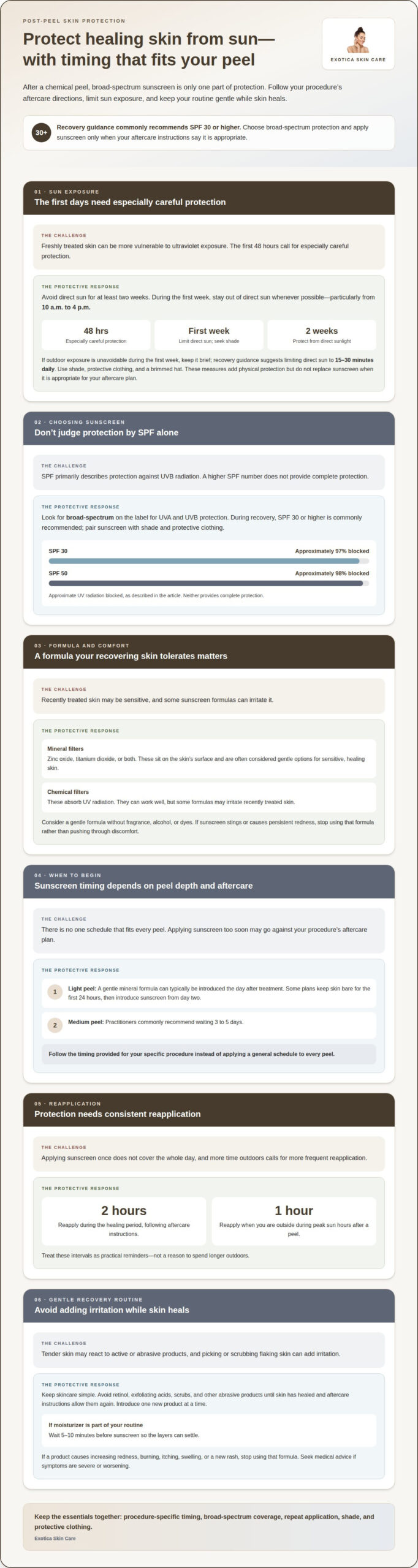
Avoid direct sunlight for at least two weeks after a chemical peel. The first 48 hours call for especially careful protection, while the skin begins its early recovery. Even after that initial period, freshly treated skin can be more vulnerable to ultraviolet exposure. Follow the aftercare instructions for your specific peel, since deeper treatments may involve a different healing course.
During the first week, stay out of direct sun whenever possible, particularly between 10 a.m. and 4 p.m., when UV intensity peaks. If outdoor exposure is unavoidable, keep it brief; recovery guidance suggests limiting direct sun to 15–30 minutes daily during that first week. Choose shade, cover treated skin with clothing, and wear a brimmed hat. These steps add physical protection, but they don’t replace sunscreen when it’s appropriate for your aftercare plan.
Skip tanning beds during recovery. Their intense UV exposure can add irritation while the skin heals. Avoid deliberate sunbathing, long periods beside sunny windows, and outdoor activities with little access to shade. When possible, plan necessary errands outside peak UV hours, and keep a hat and protective clothing ready.
Keep skincare simple. Avoid retinol, exfoliating acids, scrubs, and other abrasive products until your skin has healed and your aftercare instructions allow you to use them again. Fragrance, alcohol, and dyes in sunscreen can irritate tender skin, so consider a gentle formula without these additions. Mineral sunscreens containing zinc oxide or titanium dioxide are commonly considered gentle options for sensitive, healing skin. Introduce one new product at a time so it’s easier to spot irritation.
You can use tinted sunscreen with iron oxides after a peel if your aftercare instructions allow sunscreen and the formula feels comfortable on healing skin. Iron oxides may also help protect against blue light, but tint does not replace broad-spectrum UV protection.
Pay attention to your skin’s response after applying a product. Increasing redness, burning, itching, swelling, or a new rash may signal irritation or a reaction. Stop using that formula, and seek medical advice if symptoms are severe or worsening. Blistering, significant pain, or signs of infection also warrant prompt medical attention, not more product experimentation.
Peeling and sensitivity can occur during recovery, but don’t pick or scrub flaking skin. Protect it from direct sun for at least two weeks, avoid tanning beds, and resume active ingredients only when your skin has healed and your aftercare guidance allows.
2. Broad-spectrum sunscreen after a chemical peel
Look for “broad-spectrum” on the label, which indicates protection against UVA and UVB radiation. To get the most protection out of sunscreen, choose a broad-spectrum sunscreen with an SPF of at least 15, according to David J. Myers. During recovery from a skin treatment, SPF 30 or higher is commonly recommended. The best sunscreen for post-peel skin should combine broad-spectrum coverage with a formula your recovering skin tolerates.
SPF primarily describes protection against UVB radiation, so it shouldn’t be your only selection criterion. SPF 30 blocks approximately 97 percent of UV radiation, while SPF 50 blocks approximately 98 percent. Neither provides complete protection. Shade and protective clothing remain useful alongside sunscreen, particularly when the skin is freshly treated.
Mineral sunscreens use zinc oxide, titanium dioxide, or both as filters. These ingredients sit on the skin’s surface and are often considered gentle options for sensitive, healing skin. Chemical sunscreens use filters that absorb UV radiation. They can work well, but some formulas may irritate recently treated skin. If a product stings or causes persistent redness, stop using it rather than pushing through discomfort.
When to begin applying sunscreen depends on peel depth and the aftercare plan. After a light chemical peel, a gentle mineral formula can typically be introduced the day after treatment. Some aftercare plans keep skin bare for the first 24 hours, then introduce sunscreen from day two. For medium peels, practitioners commonly recommend waiting 3 to 5 days. Follow the timing provided for your procedure instead of applying a general schedule to every peel.
Apply the product gently when your aftercare instructions permit it. If moisturizer is part of your routine, wait 5–10 minutes before sunscreen so the layers can settle. Makeup should not take the place of sunscreen, and freshly treated skin may need a simpler routine while it heals. A comfortable formula can make consistent application easier. In choosing the best sunscreen for post-peel skin, prioritize broad-spectrum protection, tolerability, and the timing appropriate to your treatment.
In the United States, sunscreen costs vary by brand, formula, size, tint, and ingredients. Mineral or tinted options may cost more or less than other formulas. Choose based on your skin’s tolerance and the features you’ll use, not SPF alone.
For guidance that considers your treatment and recovery, explore personalized skin-care guidance.
3. Reapplication frequency
Reapply sunscreen every two hours during the healing period, following your treatment’s aftercare instructions. Treat that interval as a practical reminder, not a reason to spend longer outdoors. After a chemical peel, consistent protection supports skin as its barrier recovers. Apply daily and reapply as the day goes on.
Outdoor conditions may call for more frequent reapplication. During peak sun hours after a peel, reapply every hour when you’re outside. If you’re walking between appointments, gardening, or sitting at an outdoor table, use the hour as your cue. Seek shade too, since shade and sunscreen work together to reduce direct exposure.
Swimming and sweating require another application right away. Reapply after swimming, sweating, or towel drying, even if your next scheduled application is still some time away. Water, sweat, and wiping can disturb the layer on your skin. During travel after a peel, plan to reapply every 1.5–2 hours, or immediately after swimming or sweating.
Build sunscreen into your morning routine once your aftercare instructions allow it. Apply it before leaving home, then note the time on your phone or calendar. For example, an 8 a.m. application means your next reminder falls at 10 a.m. If you go outdoors during peak sun, set the reminder for one hour instead.
Apply sunscreen to all skin exposed to daylight, not just the center of your face. Include the hairline, ears, neck, and any areas not covered by clothing. A medium peel may have different timing instructions from a lighter treatment, so follow the guidance for your procedure. Apply gently over flaky, healing skin.
Keep the routine manageable. Take sunscreen with you when you leave home, and pair reapplication with a daily cue, such as lunch or a scheduled break. Near a window or outdoors, follow your aftercare plan; being indoors does not replace it. If you wear makeup, reapply carefully without scrubbing or disturbing tender skin.
Consistent coverage helps protect healing skin from UV exposure that may affect irritation and pigmentation. It doesn’t make prolonged sun exposure advisable. Use a two-hour reminder as your baseline, shorten it to every hour during peak outdoor sun, and reapply immediately after swimming or sweating. Match your routine to the conditions, not just your morning schedule.
4. What Should You Look for in a Post-Procedure Sunscreen?
Choose broad-spectrum sunscreen that feels comfortable on sensitive skin. For mineral options, look for zinc oxide, titanium dioxide, or both. These filters sit on the skin’s surface and are commonly considered gentle choices during healing. The best sunscreen for post-peel skin should suit your skin’s tolerance, so you can apply it without rubbing or discomfort.
A simple ingredient list can make choosing a product easier. Fragrance, alcohol, and dyes may irritate tender skin, so consider a formula without them during recovery. Check the label before applying, especially if you’ve reacted to skincare ingredients before. Introduce one new product at a time to make it easier to identify irritation.
Follow treatment-specific guidance on when sunscreen can be introduced. After a light peel, a gentle mineral formula can typically be used the following day. For medium peels, practitioners commonly recommend waiting 3 to 5 days. The appropriate timing depends on the peel and healing stage, so don’t assume one schedule fits every procedure.
Layer skincare with a light touch. Keep the routine simple: gentle cleanser, moisturizer, then sunscreen when permitted by your aftercare instructions. Wait 5–10 minutes after moisturizer before applying sunscreen, giving the layers time to settle. Spread it evenly without vigorous rubbing, particularly over flaky or sensitive areas.
During active healing, avoid retinol, exfoliating agents, and scrubs unless your aftercare plan allows them. They can aggravate irritation and inflammation. If sunscreen causes persistent stinging, redness, or a rash, stop using it. Seek medical advice if symptoms worsen or become severe.
Wait to use makeup until your aftercare instructions allow it. Mineral makeup is generally considered acceptable around day three when applied with a clean brush over fully absorbed sunscreen. Don’t use makeup to cover skin that remains irritated, and avoid pressing or dragging a brush across tender areas.
Before spending a day outdoors, plan your skincare layers. Apply moisturizer first and let it settle, then use sunscreen as directed. A hat and shade provide added protection without requiring more products on healing skin. Keep your routine gentle and uncomplicated.
Ultimately, the best sunscreen for post-peel skin is a broad-spectrum formula that suits your sensitivity and follows your recovery instructions. Choose a texture you can apply evenly, and follow the timing guidance for your treatment.
5. Why skin is more sensitive after peels, laser treatments, and microneedling
A chemical peel, laser session, or microneedling treatment can leave skin more reactive during recovery. Each procedure works differently, but the treated area needs time to heal. Sunlight may feel harsher, and products that once felt comfortable may sting. Match sun protection and skincare to your treatment and stage of healing.
After a peel, exfoliation affects the skin’s surface. That temporary change can make newly treated skin more sensitive to ultraviolet exposure. During healing, skin is reported to be 3–5 times more photosensitive than normal skin. Newly healed skin may remain sensitive for up to three months after healing from a chemical peel. These facts support continued care beyond the first days of visible peeling.
Laser treatments use targeted energy, while microneedling creates controlled micro-injuries. These treatments differ, but both can leave the treated area temporarily sensitive. Heat, friction, active skincare ingredients, and direct sunlight may feel more irritating during recovery. Avoid exfoliants and retinol until your aftercare plan allows you to use them again.
Sun exposure matters because healing skin is more vulnerable to irritation and pigment changes, including hyperpigmentation. This applies whether you’re outside for a long time or briefly walking between errands. Use broad-spectrum sunscreen once your aftercare instructions allow it, and combine it with shade, clothing, and a brimmed hat. Protection is a routine, not a single morning application.
Timing depends on the procedure. For a chemical peel, peel depth affects how long the skin needs before resuming products or normal exposure. After microneedling, many practitioners suggest waiting about 24 hours before applying anything to the skin. Lighter laser sessions may allow sunscreen within a day or two. These examples show why one recovery schedule cannot fit every treatment.
Watch for changes beyond expected sensitivity. If redness intensifies, burning persists, or swelling worsens after applying a product, stop using it and seek medical advice if symptoms are severe or progressing. Blistering or signs of infection also need prompt attention. Don’t conceal worsening symptoms with makeup or try to manage them by adding more products.
For a thoughtful recovery plan, focus on gentle care, appropriate sunscreen timing, and protection from sunlight. If you’re considering microneedling, discuss treatment-specific skin preparation and aftercare before your appointment.
Exotica Skin Care
Exotica Skin Care can help you consider skin treatments and plan questions about sun protection and recovery. If you’re exploring a peel or another skin treatment, personalized guidance can help you understand how treatment choice and aftercare fit your skin’s needs. Offerings include BioRePeelCl3® Peel, PRX Derm Perfexion, Scarlet SRF, and AquafirmeXS.
For a chemical peel, ask about aftercare, including when to resume sunscreen and which skincare steps to pause during healing. The right timing depends on the procedure and your recovery, so clear instructions matter.
If you’re considering a treatment or need guidance on post-treatment skincare, contact Exotica Skin Care in Henderson Nevada to discuss your needs.
Plan your next step with confidence
Make your next skincare decision with recovery in mind. Before choosing another treatment or changing your routine, consider how it fits your skin goals and what care your skin may need afterward. The best sunscreen for post-peel skin is one part of that plan, alongside practical habits that protect skin as it heals.
Exotica Skin Care offers Scarlet SRF, BioRePeelCl3® Peel, and PRX Derm Perfexion. If you’re considering a treatment, discuss your goals and aftercare needs with the team so you can make an informed choice that feels right for you.
Contact Exotica Skin Care to talk through your skincare questions and next steps. Thoughtful planning can help you approach treatment and recovery with greater confidence.
Frequently Asked Questions
What Should You Look for in a Post-Procedure Sunscreen?
Choose broad-spectrum sunscreen with a comfortable texture and ingredients your healing skin tolerates. A mineral formula containing zinc oxide or titanium dioxide is one option; tinted formulas with iron oxides may also suit those seeking visible-light coverage. Check the label for fragrance, alcohol, or dyes if those ingredients tend to irritate your skin. A sunscreen you can apply evenly is more practical than one you avoid using.
When Can You Start Wearing Mineral Sunscreen Post-Facial?
The start time depends on what your facial included. After a light chemical peel, a gentle mineral sunscreen can typically be introduced the following day; some aftercare plans keep skin bare for the first 24 hours. Medium peels may require waiting 3 to 5 days. If your facial did not include a peel, follow its specific aftercare instructions rather than assuming peel timing applies.
How Can You Make the Most of Your Treatment Results?
Follow your aftercare plan and avoid adding new active products while your skin recovers. For example, don’t restart retinol just because visible flaking has stopped; your skin may still feel sensitive. Cleanse and moisturize gently, protect treated skin outdoors, and don’t pick at peeling areas. If you’re planning another cosmetic treatment, allow time for recovery and discuss timing with your practitioner.
How long should I avoid sun exposure after a chemical peel?
Avoid direct sunlight for at least two weeks after a chemical peel. During the first 48 hours, be especially careful to stay out of direct sun. In the first week, limit unavoidable direct exposure to 15–30 minutes daily and seek shade during peak UV hours. For outdoor plans in Henderson Nevada, use covered routes or shaded areas, and keep protective clothing available.
What Should You Avoid Putting on Healing Skin?
Avoid retinol, exfoliating acids, scrubs, and abrasive products until your skin has healed and your aftercare plan allows them. Don’t pick or scratch peeling areas, even if loose flakes catch on clothing, as this can further irritate sensitive skin. Cleanse gently, and introduce products one at a time once your aftercare guidance permits, so you can identify anything that causes discomfort.
What ingredients should I avoid in sunscreen after a skin procedure?
During early healing, avoid sunscreen with alcohol, synthetic fragrance, or dyes if these ingredients irritate your skin. They aren’t automatically a problem for everyone, but freshly treated skin may be less comfortable with them. Read the label and choose a simple formula with broad-spectrum coverage. If sunscreen causes persistent stinging, redness, or itching, stop using it and seek medical advice if symptoms worsen.
What SPF and broad-spectrum protection do dermatologists recommend after a chemical peel?
Choose broad-spectrum sunscreen with an SPF of at least 15 for general protection, as David J. Myers advises. During recovery from a skin treatment, SPF 30 or higher is commonly recommended. Broad-spectrum means the product protects against UVA and UVB radiation. SPF alone doesn’t cover the whole protection plan, so combine sunscreen with shade and clothing while skin heals.
Are zinc oxide or titanium dioxide sunscreens safer for freshly peeled skin?
Mineral sunscreens containing zinc oxide, titanium dioxide, or both are often considered gentle options for sensitive, freshly peeled skin. These ingredients sit on the skin’s surface and help protect against UV rays. What feels safe depends on individual tolerance, so choose a formula that doesn’t sting or irritate, and use it only when your peel aftercare instructions allow sunscreen. Stop using it if a reaction develops.