
Clear skin doesn’t require a ten-step routine. To learn how to get clear skin for men, start with three daily basics: cleansing, moisturizing, and sunscreen. If rough, bumpy, or acne-prone areas are your main concern, consider salicylic acid as a targeted addition rather than layering on several products at once.
Stronger scrubs and more products won’t necessarily clear skin faster. An overloaded routine can leave skin feeling dry or irritated. A simple, consistent approach makes it easier to see what suits your skin and adjust thoughtfully.
Choose a cleanser that suits your skin, then build a comfortable morning and evening routine. Apply sunscreen consistently, introduce exfoliation gradually, and use salicylic acid thoughtfully for blemish-prone or uneven-feeling skin. Small, steady steps can make skincare easier to manage and help you care for your complexion with confidence.
Key Takeaways
- Begin with a manageable routine of cleansing, moisturizing, and daily sun protection instead of adding many products at once.
- Choose a gentle cleanser based on how your skin feels, and avoid harsh washing that can leave it irritated or dry.
- The U.S. Food and Drug Administration recommends using a broad-spectrum sunscreen with an SPF of 15 or higher regularly and as directed.
- Introduce exfoliation gradually; too much can leave skin dry or sensitive.
- Learn where salicylic acid may fit when rough texture, bumps, or acne-prone skin are your main concerns.
What skincare routine steps should be included?
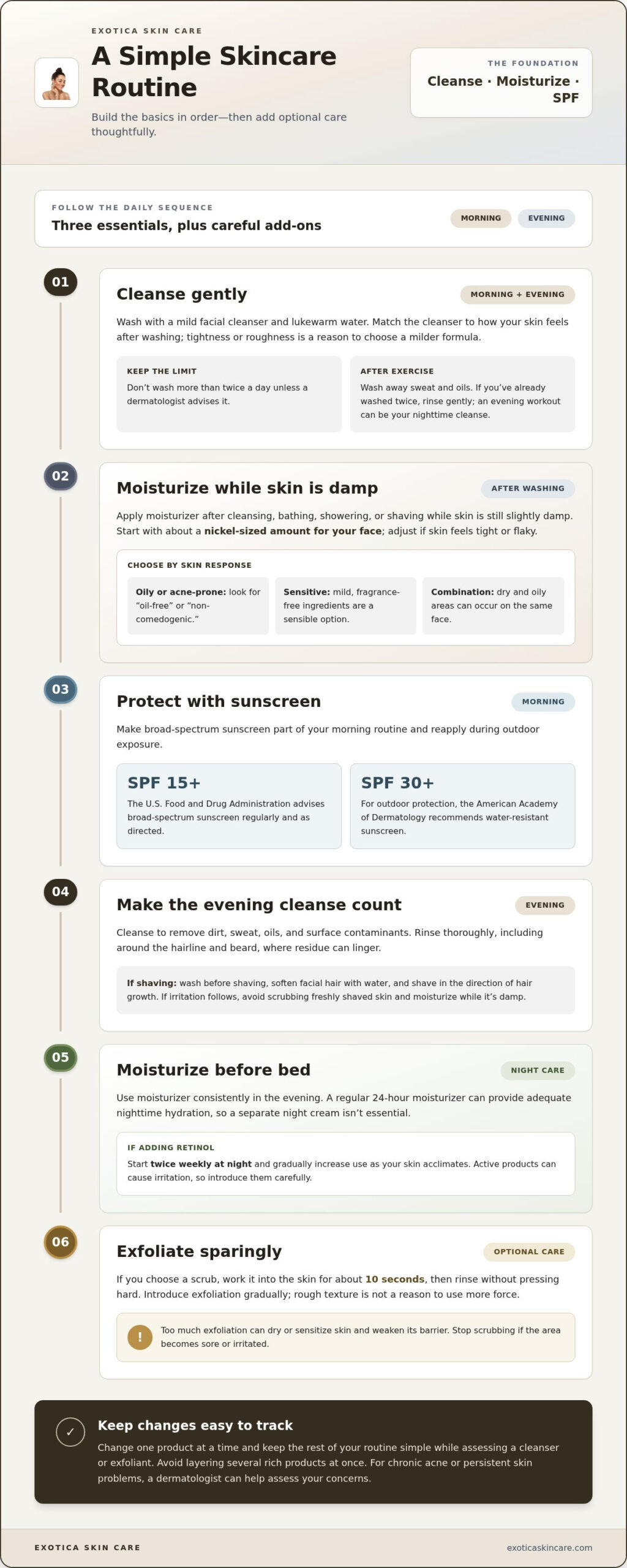
Start with three daily basics: cleansing, moisturizing, and SPF. Then choose a moisturizer and other products to suit your skin’s needs.
For a visual overview, watch Alex Costa’s video on men’s skincare:
-
Choose a Cleanser, Moisturizer, and Sunscreen
Choose a mild facial cleanser, a moisturizer suited to your skin, and broad-spectrum sunscreen. For outdoor protection, the American Academy of Dermatology recommends water-resistant sunscreen with SPF 30 or higher; the U.S. Food and Drug Administration advises using broad-spectrum sunscreen with SPF 15 or higher regularly and as directed.
For acne-prone skin, look for “oil-free” or “non-comedogenic” labels. In the US, over-the-counter acne treatment and dermatologist visit costs vary with product ingredients and quantity, insurance, and the care needed. Acne and blemishes can be linked to pore-clogging residue, dirt, bacteria, sweat, and oils.
-
Moisturize for Your Skin Type
Apply moisturizer to your face and body while skin is damp after bathing, showering, or shaving. Use about a nickel-sized amount for your face, then adjust if skin feels tight or flaky. Dry skin may feel rough, itchy, or flaky; oily skin often looks shiny or greasy. Combination skin can be dry in some areas and oily in others.
For oily or acne-prone areas, choose an oil-free or non-comedogenic formula rather than skipping moisturizer. Normal skin is typically clear and not sensitive, while stinging or burning after using products can signal sensitivity. Mild, fragrance-free ingredients are a sensible option for sensitive skin.
-
Support the Skin Barrier with Moisturizer
Use moisturizer consistently to help limit water loss and keep your skin comfortable. Apply it after cleansing, while skin is still slightly damp, and after shaving if your face feels dry. This supports the skin barrier, which helps protect against everyday irritation.
Facial oils and moisturizers aren’t interchangeable: moisturizer hydrates, while oil can help seal in moisture. If you try an oil, use a small amount over moisturizer and monitor how acne-prone areas respond. Avoid layering several rich products at once, so you can tell which ingredients suit your skin.
-
Add Nighttime Moisturizing
Apply moisturizer before bed as a consistent evening step. A regular 24-hour moisturizer can provide adequate nighttime hydration, so a separate night cream isn’t essential. Keep the routine simple, especially if you also use retinol: start retinol twice weekly at night and gradually increase use as your skin acclimates.
Retinol can support collagen and cell production, but introduce it carefully because active products can cause irritation. See a dermatologist for chronic acne, persistent skin problems, or concerns that aren’t improving with a basic routine. A dermatologist can also assess new spots or moles that itch, bleed, or change color.
Choosing cleansers for different skin types
Choose a cleanser based on how your skin feels after washing, and adjust your technique for shaving, exercise, and facial sensitivity.
- Match your cleanser to your skin’s response. If your face feels tight or rough after washing, choose a mild formula and avoid harsh, heavily fragranced products. For oily or acne-prone areas, use a gentle facial cleanser rather than a gritty scrub. If products make your skin sting or burn, it may be sensitive, so avoid fragrance. Even “unscented” products can contain masking fragrances.
Notice where dryness or shine appears. Combination skin can feel dry on the cheeks and oily around the nose, so use a gentle cleanser across your face instead of aggressively treating only shiny areas. A vitamin C product may support more even-looking pigmentation when used regularly, but it doesn’t replace cleansing or moisturizer.
- Cleanse consistently, not repeatedly. Wash your face morning and evening with lukewarm water; avoid hot water, which can leave skin feeling stripped. Daily cleansing helps remove dirt, bacteria, and other surface contaminants. Don’t wash more than twice a day unless a dermatologist advises it, since repeated cleansing can disrupt the skin barrier.
After exercise, wash away sweat and oils with a mild facial cleanser. If you’ve already washed twice that day, rinse gently rather than adding another cleansing session. For example, after an evening workout, make that your nighttime cleanse instead of washing both before and after exercise.
- Give your body the same attention as your face. Wash your face and body morning and evening with products suited to each area. Facial cleanser is formulated for the face, while body wash can be used on the body. Rinse thoroughly, especially around the hairline and beard, where residue can linger.
Include shaving in your cleansing routine. Wash your face before shaving to remove surface contaminants, then wet facial hair to soften it. Use moisturizing shaving cream and shave in the direction of hair growth. If irritation follows, avoid scrubbing freshly shaved skin and apply moisturizer while it’s damp.
- Use exfoliation sparingly and gently. If you choose a scrub, work it into the skin for about 10 seconds, then rinse without pressing hard. A rough texture doesn’t call for more force; excessive exfoliation can dry or sensitize skin and weaken its barrier. Stop scrubbing if the area becomes sore or irritated.
Keep the rest of your skincare simple while assessing a new cleanser or exfoliant. Change one product at a time, so you can identify what helps or triggers discomfort. If cleansing-related irritation continues, personalized skin care guidance can help you consider a more tailored approach.
Daily sunscreen and sun protection
Make sunscreen part of your morning routine, then reapply during outdoor exposure. Consistent use helps protect exposed skin and maintain a smooth, even-looking complexion.
-
Choose Broad-Spectrum Sunscreen with SPF
Choose a broad-spectrum sunscreen and follow its label directions. The U.S. Food and Drug Administration says men should use a broad-spectrum sunscreen with an SPF of 15 or higher regularly and as directed. For outdoor sun protection, the American Academy of Dermatology recommends broad-spectrum, water-resistant sunscreen with SPF 30 or higher.
Check both the broad-spectrum wording and the SPF number on the package. SPF indicates the product’s sun protection factor, while broad-spectrum labeling is a key feature to seek for routine sun protection. If you’ll be outside, choose a water-resistant formula and apply it before heading outdoors, rather than waiting until your skin is exposed.
-
Apply Sunscreen Daily
Apply sunscreen every morning to exposed skin, even if you’re only going outside briefly. Use it as the last step in your morning routine, after moisturizer, and follow the product’s directions. For the face, dermatologist Melanie Palm recommends at least two to three finger lengths of sunscreen.
Cover more than your cheeks and forehead. Before going outdoors, apply sunscreen to all exposed skin, including the scalp, ears, neck, and lips. A hat may cover part of the scalp, but it doesn’t replace sunscreen on skin that remains exposed. For the body, dermatologist Melanie Palm recommends an entire shot glass worth of sunscreen.
Pay attention around shaved areas, where missed patches can leave skin exposed. Apply sunscreen evenly along the hairline, jaw, and neck, then let it settle before getting dressed. Sunscreen is a practical daily protection step, not just for beach days.
-
Reapply Sunscreen
Reapply sunscreen every two hours while outdoors, following the product directions. Your morning application doesn’t provide all-day coverage, so plan to apply it again during extended time outside. Set a phone reminder if you tend to lose track during a walk, workout, or outdoor task.
Reapply immediately after swimming or sweating, even if two hours haven’t passed. Water and perspiration can reduce the sunscreen left on your skin. Dry off first, then reapply to exposed areas, including your face, ears, and neck. Keep sunscreen with your outdoor essentials to make reapplication easier.
For steady protection, pair sunscreen with shade, clothing, and a hat when practical. These steps complement, rather than replace, sunscreen application and reapplication. Building them into your routine makes sun protection easier to maintain on ordinary days and longer outdoor outings.
Exfoliating and avoiding over-exfoliation
Make exfoliation a measured part of your skincare routine, not a daily scrub. The best method and frequency depend on your skin type and how your complexion responds.
-
Set Exfoliation Frequency and Technique
Start by exfoliating once or twice a week with a gentle method and light pressure. Some guidance suggests two or three times a week, but more frequent exfoliation can dry or sensitize skin. If your face feels tight or looks irritated afterward, pause and let your skin settle before trying again.
For a scrub, gently work it over the skin for about 10 seconds, then rinse. Don’t press hard or scrub freshly shaved areas. A liquid exfoliant may be an alternative to abrasive particles, though its suitability can vary by skin.
-
Add Weekly Exfoliation and Hydrating Masks
Choose one exfoliation method per session instead of combining a scrub with a liquid exfoliant. A hydrating mask once a week can complement a simple routine, especially if skin feels dry after exfoliating. Follow the product directions, and don’t use a mask in place of moisturizer.
A smoother complexion doesn’t require a harsher scrub. If you have sensitive skin, prioritize gentle products and leave more time between exfoliation sessions. Adjust based on dryness, stinging, or discomfort rather than exfoliating more often to chase faster results.
- Introduce exfoliating products one at a time. For example, don’t start a glycolic acid exfoliant and a new scrub during the same week. Adding one product at a time makes it easier to spot irritation and identify what may be causing it.
Retinol is an active ingredient, not a physical scrub. If you already use retinol, avoid adding several new exfoliating products at once. A gradual routine makes it easier to see how your skin responds without layering multiple potentially irritating steps.
- Plan exfoliation around shaving. If shaving leaves your face tender, skip the scrub that day and wait until your skin feels comfortable. For example, keep your weekly schedule but move the session away from a close shave instead of rubbing freshly shaved skin.
After exfoliating, rinse thoroughly and apply moisturizer. If you have persistent irritation or chronic acne, consult a dermatologist before using harsh chemicals. A tailored plan can account for your skin’s sensitivity, current products, and shaving habits.
Salicylic acid for rough, bumpy, or acne-prone skin
If you’re exploring how to get clear skin for men, start by matching an acne treatment to your main concern. Salicylic acid may suit rough, bumpy, or acne-prone areas, but introduce it thoughtfully instead of adding several new products to your routine.
- Choose one salicylic acid product for your concern, and read its label before applying it. Acne products can serve different purposes and have different directions, so don’t assume a cleanser and a leave-on product should be used the same way. For example, follow facial-use directions when treating bumps around your nose or forehead.
Apply the product only to the areas, and as often, as the label directs. Avoid broken or already irritated skin, and keep it away from your eyes. Using more product or applying it more often won’t necessarily clear blemishes faster.
- Make salicylic acid the only new active in your routine. Keep your cleanser and moisturizer the same while you observe your skin. That makes it easier to notice dryness, redness, stinging, or peeling and determine whether the new product may be contributing.
If discomfort develops, stop using the product and simplify your routine while your skin settles. Don’t respond to persistent blemishes by increasing use or combining multiple acne treatments. A measured approach gives you a clearer sense of how your skin is tolerating the ingredient.
- Pair treatment with moisturizing care, following the moisturizer’s directions. If you already use retinol or an exfoliating acid, don’t introduce salicylic acid at the same time. Staggering product changes makes it easier to identify what causes irritation and keeps your routine manageable.
A practical answer to how to get clear skin for men is to make one targeted change, then assess your skin before adding another. Keep sunscreen in your daytime routine, and don’t treat an acne product as a substitute for basic skincare.
- Track where bumps appear and what your skin does after application. A simple note about the product, application area, and any discomfort can help you recognize patterns. If acne is chronic or painful, or skin problems persist, consult a dermatologist before using harsh chemicals. Personalized acne-care guidance can also help you consider which ingredients fit your skin and current regimen.
Exotica Skin Care: Scarlet SRF
Exotica Skin Care offers Scarlet SRF, a radiofrequency microneedling treatment. It may be a next step to discuss if a consistent at-home routine isn’t addressing your concerns or you’re considering professional treatment for uneven texture.
Continue cleansing, moisturizing, and protecting your skin from the sun every day alongside any professional skincare plan. Treatment doesn’t replace routine care, and the right approach depends on your skin and goals. If persistent acne is your main concern, seek a dermatologist’s guidance on managing it.
For a personalized conversation about whether Scarlet SRF suits your skin goals, book with Exotica Skin Care in Las Vegas.
Make Your Next Skin-Care Step Personal
Building a routine is just the beginning. Let your ongoing skin concerns guide what you adjust, rather than adding products simply because they’re popular. A thoughtful approach to how to get clear skin for men means choosing steps that suit your complexion and keeping your care manageable.
If at-home care isn’t addressing the concern you want to focus on, a professional conversation can help you explore a treatment path suited to your goals. Exotica Skin Care offers Scarlet SRF, BioRePeelCl3® Peel, and PRX Derm Perfexion. These are options to discuss as part of a personalized skin-care plan, rather than products to add to your routine without guidance.
Bring your questions and describe what you’d like to improve. Contact Exotica Skin Care to start a conversation about your skin-care goals. Consistent care and informed choices can help you move forward with greater confidence.
Frequently Asked Questions
Do I need all 10 steps, or can I start with fewer?
You can begin with less. A practical foundation is cleansing, moisturizing, and sunscreen, followed by one targeted product if you have a specific concern. For example, try salicylic acid for acne-prone or rough areas rather than starting with a ten-product routine. Track new products and changes in your skin to see what suits you and what may be causing irritation.
Does diet really affect how your skin looks?
Diet may affect skin appearance, but it’s only one part of skincare. High sugar intake has been connected to increased blemish risk and accelerated skin aging, so cutting back can be a sensible step. Look for patterns rather than expecting one food to explain every breakout. Sleep and stress also matter: sleep supports skin repair, while consistently high stress-induced cortisol can affect skin health.
How long does it take to get glowing skin?
Some men may notice a difference after following a consistent routine for 2-4 weeks. That’s a useful point to review whether your skin feels more comfortable and whether your routine is manageable. It isn’t a deadline for every concern to disappear. Keep notes about dryness, irritation, and blemishes, and avoid changing several products at once, which can make it harder to tell what’s helping.
What causes dull skin in men?
Dull-looking skin can accompany dryness, rough texture, or a buildup of sweat and oil after exercise. Poor sleep may also affect skin health because sleep supports skin repair. Look for patterns: note whether your complexion looks less fresh after workouts, shaving, or disrupted sleep. Gentle, consistent care and attention to these triggers can help you decide which habits to adjust.
Why should men invest in skincare?
Skincare gives you practical ways to support comfort, manage specific concerns, and protect exposed skin. It doesn’t need to mean an elaborate routine or a cabinet full of products. A repeatable routine also makes it easier to notice changes, such as persistent irritation or a new spot. If a mark itches, bleeds, or changes color, arrange a dermatology assessment rather than treating it as a cosmetic concern.
What is a simple morning and evening skincare routine for men?
In the morning, wash your face, apply moisturizer, then finish with sunscreen before going outside. In the evening, cleanse away the day’s sweat and surface residue, then moisturize. If you add a targeted acne product, introduce it separately and follow its label directions. For example, don’t start a new exfoliant and acne treatment together, since that makes irritation harder to trace.
How can men treat acne with benzoyl peroxide or salicylic acid?
Choose one acne treatment to start, and use it according to the product directions instead of layering treatments right away. Salicylic acid may suit rough, bumpy, or acne-prone areas; don’t increase use just because blemishes remain. Keep the rest of your routine simple as you observe your skin’s response. For chronic acne or before using harsh chemicals, consult a dermatologist about an appropriate plan.
How can shaving cause razor bumps, and how can men prevent them?
Shaving can contribute to bumps when hairs become trapped or grow back into the skin. Before shaving, wet your skin and facial hair, use moisturizing shaving cream, and shave in the direction of growth without stretching your skin taut. A single- or double-blade razor may help if bumps are a concern. Replace the blade after five to seven shaves if shaving irritation is common for you.