
A sensitive-skin Brazilian wax shouldn’t be rushed. There’s no single dependable appointment length for a Brazilian wax for sensitive skin in Las Vegas: timing depends on the area being treated, hair growth, and time needed to discuss your comfort and skin sensitivity. A first visit may take longer than a repeat appointment.
It’s understandable to want a time estimate before booking, especially when you’re planning around comfort, preparation, and your schedule. Allowing time for a careful approach is better than assuming every appointment is the same.
This guide explains what affects appointment time, how to prepare your skin and hair, and how Bikini Line, Bikini Full, and Brazilian services differ. You’ll also learn what to expect from soft cream wax and how to weigh it if your skin is sensitive, so you can arrive informed and at ease.
Key Takeaways
- Appointment time can vary with the waxing area and whether it’s your first visit, so understand the service scope before planning your schedule.
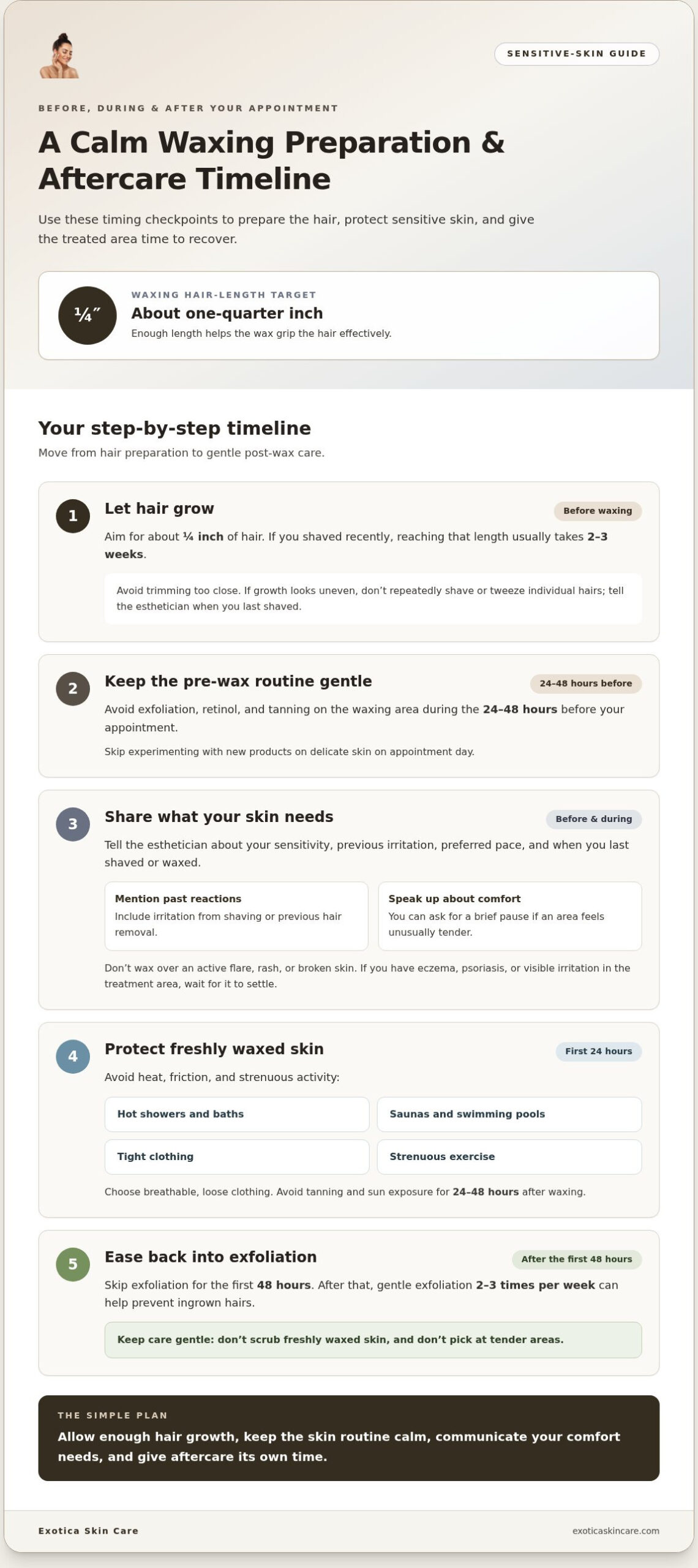
- For wax to grip effectively, let hair grow to about a quarter-inch before your appointment.
- Prepare thoughtfully: gentle exfoliation 24 to 48 hours beforehand can be part of your pre-wax routine.
- Compare Bikini Line, Bikini Full, and Brazilian coverage to choose an option that matches your comfort and grooming preferences.
- Learn what soft cream wax involves and follow aftercare guidance, including avoiding heat and strenuous exercise for 24 hours after waxing.
Waxing for sensitive skin
For sensitive skin, the choice between waxing and sugaring matters, as do technique and aftercare. In Las Vegas and Summerlin, consider the method, your skin’s current condition, and how often you plan to remove hair.
To understand how wax type and technique can affect a sensitive-skin appointment, watch this overview:
Waxing Frequency and Shaving Between Visits
Many clients schedule Brazilian or bikini waxing every four to six weeks. A bikini wax typically lasts three to four weeks, although individual hair-growth cycles affect regrowth. Plan your next visit around your own pattern and skin recovery, not just a fixed calendar. Shaving removes visible hair but doesn’t follow the same regrowth pattern as methods that remove hair from the root. If you shave, allow enough growth before your next wax for the product to grip the hair.
After the first 48 hours, gentle exfoliation two to three times per week can help prevent ingrown hairs. Avoid scrubbing freshly waxed skin.
Esthetician Experience and Waxing Technique
An esthetician’s technique can shape how controlled an appointment feels. Notice whether they explain each step, check your comfort, and work methodically rather than rushing through a delicate area. Clear communication lets you mention sensitivity, previous irritation, or your preferred pace before waxing begins. You can ask for a brief pause if an area feels unusually tender. A gentle approach involves attentive skin handling and clear aftercare guidance, not just a particular wax label.
For Brazilian waxing, communicate before the first application and throughout the service. Your feedback helps the esthetician respond promptly if you feel uncomfortable.
Skin Conditions, Side Effects, and Risks
Short-term reactions can include redness, tenderness, irritation, and ingrown hairs. Waxing can also aggravate skin that is already sensitive or inflamed. If you have eczema, psoriasis, or visible irritation in the treatment area, avoid waxing over an active flare, rash, or broken skin. Wait for the area to settle before considering hair removal.
Nevada waxing salons must follow applicable licensing and sanitation requirements, with details depending on the provider and facility. Clean work surfaces, fresh applicators, and careful product handling are practical signs of a hygiene-focused appointment. Ask how the esthetician prevents contamination before the service begins.
Client Experiences with Brazilian Waxing
Experiences vary with skin sensitivity, hair growth, and technique. One client may notice temporary redness that fades, while another may experience tenderness or ingrown hairs. That’s why it helps to describe past reactions and comfort preferences before your appointment. Share whether shaving has caused irritation, whether you’ve tried sugaring, and which areas feel most sensitive.
Sugaring is another root-removal option; hair should be at least 6 mm long before a sugaring appointment. Compare that preparation with waxing guidance, then choose the method and timing that suit your skin’s response.
Pre-wax hair length and skin preparation
Good preparation helps wax grip hair while limiting avoidable irritation. Plan around hair length, recent skin care, and your schedule after a bikini wax.
Hair Growth Before Your Appointment
For waxing, let hair grow to about one-quarter inch so the wax can grip it effectively. If you shaved recently, reaching that length usually takes 2-3 weeks. Avoid trimming too close beforehand; hair that’s too short can be harder to remove, while excessive length may make the service less comfortable.
Check the area in natural light before leaving for your appointment. If growth looks uneven, don’t repeatedly shave or tweeze individual hairs to even it out. Root-removal methods work best when enough hair is visible across the area. For a smoother result, tell the esthetician when you last shaved and whether you’ve waxed before. This context helps them understand your growth pattern and adapt their technique.
Preparing and Protecting Sensitive Skin
For a bikini wax, gently exfoliate the area 24 to 48 hours before your appointment. Avoid exfoliation, retinol, and tanning on the waxing area for 24-48 hours beforehand. On appointment day, skip experimenting with new products on delicate skin. These steps give you a simple routine without layering several potentially irritating treatments close together.
After a Brazilian wax, protect freshly treated skin for the first 24 hours: avoid hot showers, baths, saunas, swimming pools, tight clothing, and strenuous exercise. Skip exfoliation for the first 48 hours. After that, gentle exfoliation two to three times per week can help prevent ingrown hairs. Avoid tanning and sun exposure for 24 to 48 hours after waxing.
Choose breathable, loose clothing for the trip home, and keep your post-wax routine simple. For example, plan errands before the appointment if they involve a workout, pool, or sauna. If your skin feels tender, don’t scrub or pick at it. Consistent, gentle care supports recovery better than adding multiple active products. A confident appointment begins with a clear plan: allow hair to reach the recommended length, protect the area from irritating treatments, and reserve time for calm aftercare. For a more personalized approach to body waxing, keep your skin’s sensitivity and recent routine in view.
First-time Brazilian wax appointments
Your first Brazilian appointment involves more than hair removal. The service area, hair growth, questions, and comfort breaks all affect how much time to allow.
Appointment Length
There’s no reliable minute estimate that applies to every Brazilian wax. A first appointment may take longer because you’ll discuss coverage, skin sensitivity, and previous hair removal before the service. Hair growth and your preferred pace can also affect timing. Leave room in your schedule instead of planning a tight transition immediately afterward.
During the appointment, the esthetician works through the requested area in manageable sections. You can ask for a pause or an explanation before the next step. A repeat visit may feel more straightforward because you already know the process and preferred coverage. Still, every appointment can differ, since hair growth and comfort matter.
Booking and Walk-In Options
Booking gives the studio a chance to reserve time for your selected service. Walk-in availability depends on the schedule at that moment, so it may not work well if you have limited flexibility. For a first visit, choose a time when you can arrive without rushing and won’t have an immediate commitment afterward. Allow space for a brief conversation as well as the service.
Before booking, decide whether you want a full Brazilian or different bikini-wax coverage. Clear preferences help the studio reserve time for the right service. If you’re combining hair removal with another service, such as a full-body appointment, account for the added scope instead of assuming every option takes the same time. Avoid planning a workout or pool visit immediately afterward, as freshly waxed skin benefits from a calm routine.
Use the initial conversation to explain what you want removed and what you’d like to keep. You might prefer complete removal or request a specific shape. Mention past sensitivity, shaving irritation, or a waxing experience that affected your comfort. These details help the esthetician tailor the technique and pace instead of making assumptions.
Some studios specialize in intimate waxing, while others offer it alongside broader body-waxing services. Look for a clear explanation of the steps and attentive communication, not promises of a flawless outcome. If you feel uncertain during the appointment, speak up before continuing. A calm, informed first visit helps you understand your preferences for future appointments and plan around your hair-growth pattern.
Bikini Line, Bikini Full, and Brazilian wax options
Choose your preferred coverage first, then select a hair-removal method that suits you. Bikini Line, Bikini Full, and Brazilian services treat different areas, so clarify what you want removed before booking.
A Bikini Line wax focuses on hair visible outside the edges of underwear or swimwear. It’s a practical choice if you want a tidier outline while keeping most hair. Consider where your swimsuit sits and whether you want hair removed only along those edges. Service boundaries can vary, so describe your preferred result rather than relying on the label alone.
Bikini Full generally removes more hair than a basic bikini-line service, while a Brazilian typically includes more extensive removal from the front and intimate area. Some people prefer to leave a small strip or shape; others request broader removal. Explain what you want to keep as well as what you want removed. That helps prevent mismatched expectations and supports a more comfortable appointment.
For sensitive skin, compare the technique and product, not just the service name. Waxing and sugaring both remove hair from the root but use different materials and application methods. Sugaring uses a sugar-based paste; waxing uses wax. Neither method is guaranteed to feel gentler for everyone. Skin sensitivity, hair growth, and the esthetician’s technique all affect how the service feels. Explain past reactions and ask how the chosen method works before treatment begins.
Coverage also affects appointment planning. A narrow Bikini Line service treats a smaller area than a Brazilian, while a more extensive request involves more skin and hair. If you’re undecided, describe your grooming preferences, such as wanting a clean swimsuit line or keeping a particular shape. A licensed professional can explain the service boundaries and help match the appointment to your preference.
Pricing depends on the requested coverage and service details, and is provided after a quote request. Compare like with like: a Bikini Line and a Brazilian cover different areas, so the service names alone aren’t enough to judge value. Say whether you want hair fully removed or shaped, and mention any additional area you’re considering. Clear details make the quote and booking process more relevant to your needs.
For a confident choice, decide on coverage before your appointment, explain the result you want, and discuss wax or sugar in light of your skin’s history. Be specific: “Remove the sides, but leave a small shape in front” gives the esthetician clearer direction than asking for a “full” service without explaining your preference.
Soft cream wax for sensitive skin
Soft cream wax is spreadable and removed with a strip. “Cream” describes its consistency, not a guarantee that it will suit every person with sensitive skin. For a Brazilian wax for sensitive skin in Las Vegas, ask what the service involves and explain your past skin reactions before treatment begins.
With a typical soft-wax application, the esthetician spreads wax over a section of hair and removes it with a strip. This method can cover a broader surface efficiently, but intimate areas have delicate skin and different comfort needs. The sensation may vary with hair density, application technique, and individual sensitivity. A product’s texture alone can’t predict your response.
Ask the esthetician to explain the steps before starting. For example, clarify whether the wax is applied in small sections, how to request a pause, and what to expect when the strip is removed. Share whether facial waxing, skin-care products, or past hair-removal services have caused irritation. Specific examples help the esthetician understand your experience without assuming that all sensitive skin reacts alike.
Soft cream wax and hard wax are different methods. Soft wax is removed with a strip, while hard wax sets and is lifted without one. That distinction describes the removal technique; it doesn’t establish which option is more comfortable for everyone. Your skin condition, hair, and tolerance all matter. Ask how the chosen technique will be adapted for the bikini area instead of relying on claims that one type is universally gentle.
Before your appointment, mention active irritation, broken skin, or a known reaction to a wax product. “Sensitive skin” isn’t a single diagnosis. Stinging after a facial product, for instance, provides different context from a recurring rash in the waxing area. Clear information helps the esthetician assess whether the planned service suits your skin that day.
After waxing, follow the specific aftercare instructions for the area. Keep skin care simple, avoid picking at bumps, and watch for symptoms that worsen rather than settle. Persistent or severe reactions call for medical advice, not another hair-removal session over irritated skin.
Choose based on the application method, your skin history, and how clearly the esthetician explains the process. If you’re ready to discuss a body waxing appointment, share your sensitivity concerns and preferred coverage before the service begins.
Exotica Skin Care: Scarlet SRF
Scarlet SRF may be worth exploring if your goals extend beyond hair removal to broader aesthetic skin care. It’s different from waxing: a Brazilian wax removes hair, while Scarlet SRF is an aesthetic treatment. It doesn’t replace waxing or remove hair.
Consider discussing Scarlet SRF when you’re interested in skin-focused care separate from bikini grooming. Exotica Skin Care also offers BioRePeelCl3® Peel, PRX Derm Perfexion, and AquafirmeXS, each a separate treatment option. Choosing among services starts with identifying the concern you want to address, rather than expecting one treatment to meet every goal.
To discuss whether Scarlet SRF aligns with your aesthetic goals, contact Exotica Skin Care or visit exoticaskincare.com.
Plan Your Next Step with Confidence
Let your next appointment reflect your priorities rather than a rushed decision. Consider what helps you feel comfortable, what coverage you prefer, and how you want to discuss sensitive skin. A clear conversation can align expectations before the service begins.
If you’re considering a Brazilian wax for sensitive skin in Las Vegas, focus on an approach that respects your comfort and skin history. Share relevant concerns and describe the result you want. Those details can make your appointment feel more personal and considered.
For guidance about body waxing and your next step, contact Exotica Skin Care. A thoughtful plan starts with your needs, and you can move forward at a pace that feels right for you.
Frequently Asked Questions
How long do appointments usually take?
There’s no standard appointment length for every Brazilian wax. The time reserved depends on the service you book, so use the appointment details to plan. Arrive ready to explain your preferred coverage and any areas you want left untouched. If you have a time-sensitive commitment afterward, leave a buffer rather than relying on an assumed time estimate.
How long does my hair need to be for waxing or sugaring?
Hair needs to reach the minimum length for the method you choose. Waxing and sugaring have different thresholds, so don’t treat their preparation guidance as interchangeable. Avoid trimming or tweezing just before your visit, since this can leave some hairs too short for the selected method. If growth looks uneven, tell the esthetician before treatment.
Does bikini waxing hurt?
Bikini waxing can feel uncomfortable, and the sensation varies from person to person. If you’re concerned, tell the esthetician before the service and agree on how to signal that you need a pause. You can also ask for an explanation before a new area is treated. Clear communication helps you stay involved throughout the appointment.
How long do results last?
Waxing removes hair from the root, and skin can feel smoother for weeks afterward. Visible regrowth varies because hairs don’t all follow the same growth cycle. To understand your own pattern, note when new growth first appears and whether it comes in evenly. That can help you plan around your preferences instead of expecting a uniform result.
How long does a bikini wax last?
A bikini wax typically lasts three to four weeks, although individual hair-growth cycles affect how long the result lasts. Your result may look different from one visit to the next if hairs are growing at different stages. Notice when regrowth becomes visible and whether it changes the appearance you want. Tracking your own pattern is more useful than assuming every appointment will produce the same interval.
How often should I schedule hair removal services?
Brazilian or bikini waxing is commonly scheduled every four to six weeks. Use your own regrowth and preferred appearance to refine the timing. If you’re choosing when to book, consider whether you want to maintain a consistently groomed look or come in only when regrowth becomes noticeable. Tracking your pattern can help you choose a manageable interval.
How should I prepare for a bikini wax?
Arrive with a clear idea of the coverage you want, including any shape or areas you prefer to keep. Tell the esthetician about recent irritation or products that have caused a reaction in the past. This gives them useful context before treatment starts. Avoid trying a new skin-care product on the area immediately before your visit, so you can identify what your skin is responding to.
What should I avoid after a bikini wax?
Follow the aftercare instructions for your service, and avoid picking or scratching the treated area. Keep your routine simple instead of applying several unfamiliar products at once. If irritation becomes severe or persists, seek medical advice rather than waxing over affected skin. Noting which products or activities came before a reaction can also help you make informed choices before a future appointment.