
The skin around the knees bends and flexes thousands of times a day, and many people begin noticing laxity in their 40s and 50s. At Exotica Skin Care, skin tightening for knees in Las Vegas may improve mild to moderate looseness, which tends to respond best to treatment, but results develop gradually rather than overnight. With radiofrequency treatments, improvement typically builds over 8 to 12 weeks, while optimal results may take 3 to 6 months to become apparent.
If you’ve noticed crepey or sagging skin around your knees, you may be wondering whether it can tighten and what change is realistic. The answer depends on the degree of laxity and the treatment approach. This guide explains common causes of saggy knees, how professional treatments work, what to expect from results, and how to assess a provider’s experience and credentials. For skin tightening for knees in Las Vegas, understanding these points can help you make an informed decision.
Key Takeaways
- Learn how to distinguish loose skin around the knees from a localized fat pocket, since the concern affects which approach may be appropriate.
- Radiofrequency tightening commonly involves four to six sessions, with results building over time rather than appearing immediately.
- Find out which factors influence treatment timelines and what to understand about insurance coverage before planning care.
- Use practical criteria to assess a provider’s relevant experience, credentials, and approach to setting realistic expectations.
- Know what to expect during recovery, including when worsening swelling after treatment calls for contacting your provider.
What Results and Timeline Should You Expect?
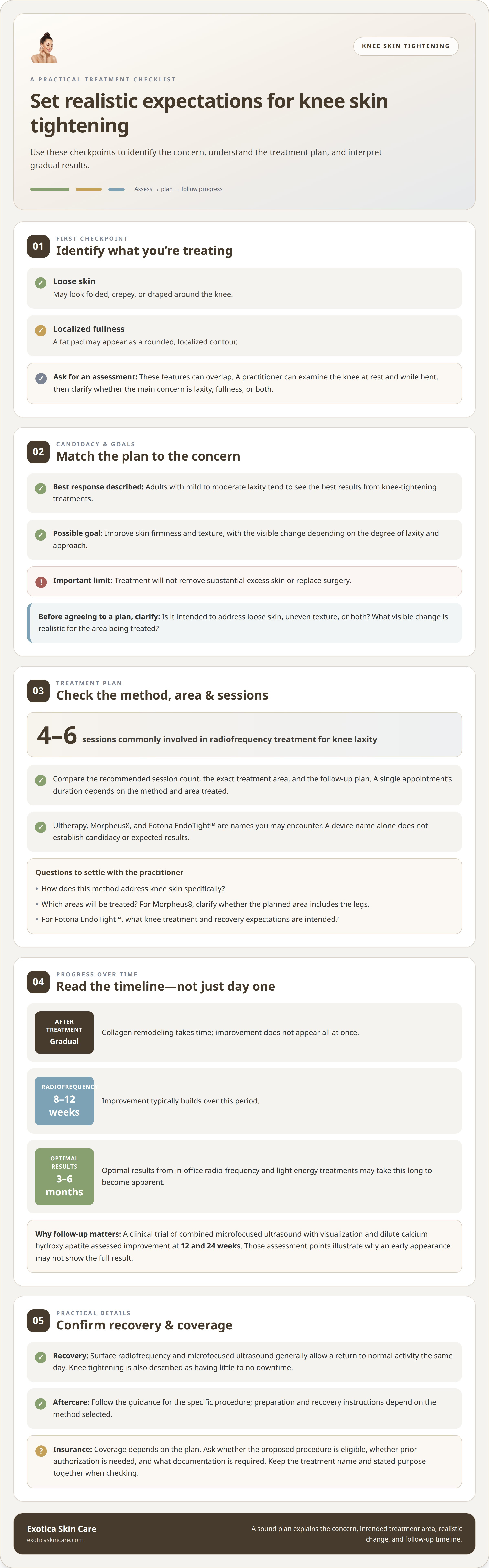
For mild to moderate knee laxity, radiofrequency treatment commonly involves four to six sessions. Results develop gradually as collagen remodeling progresses, so the treatment plan and timeline matter as much as the device name. When considering skin tightening for knees in Henderson Nevada, compare the proposed treatment area and follow-up plan.
Treatment Duration and Results
Compare the recommended number of sessions, the treatment area, and the expected change in skin texture and sagging. Radiofrequency treatment for knee laxity commonly involves four to six sessions, while a single appointment’s duration depends on the method and area treated. Surface radiofrequency and microfocused ultrasound generally allow a return to normal activity the same day. Knee tightening is also described as having little to no downtime.
Adults with mild to moderate laxity tend to see the best results from knee-tightening treatments. Treatment can improve skin firmness, but it won’t remove substantial excess skin or replace surgery. The practitioner’s plan should clarify whether the main concern is loose skin, uneven texture, or both, and what visible change is realistic.
Collagen Remodeling Timeline
Improvement develops over time rather than appearing all at once. Radiofrequency results for knee laxity typically build over 8 to 12 weeks, while optimal results from in-office radio-frequency and light energy treatments may not become apparent until 3-6 months after the initial procedure. These timelines reflect gradual collagen remodeling, not an immediate tightening effect.
A clinical trial of combined microfocused ultrasound with visualization and dilute calcium hydroxylapatite assessed improvement at 12 and 24 weeks. Those assessment points illustrate why an early appearance may not show the full result. Follow-up should consider changes in laxity and texture across the treatment area, not just how the knees look immediately afterward.
Ultherapy, Morpheus8, and Fotona EndoTight™ are names readers may encounter when comparing options. Ask how the proposed method addresses knee skin specifically, what areas it treats, and whether it targets the concern you have. For Morpheus8, clarify whether the planned treatment area includes the legs. For Fotona EndoTight™, discuss the intended knee treatment and recovery expectations. A device name alone doesn’t establish candidacy or expected results.
Insurance coverage depends on the plan, so don’t assume an appearance-focused treatment is covered or excluded. Before scheduling, ask your insurer whether the proposed procedure is eligible, whether prior authorization is needed, and what documentation is required. Keep the treatment name and its stated purpose together when discussing coverage. Coverage is separate from the treatment timeline, which depends on the method and recommended sessions. For skin tightening for knees in Henderson Nevada, these details can help you prepare for an informed treatment discussion.
Can You Tighten Loose Skin on Your Knees?
First, identify whether the visible concern is loose skin, localized fullness, or both. This distinction shapes what a treatment can reasonably address.
Fat Pads and Loose Skin
A fat pad usually appears as localized fullness with a rounded contour, while loose skin may look folded, crepey, or draped. These features can overlap, so appearance alone may not settle the distinction. During an assessment, the practitioner examines the knee at rest and while bent, then considers whether fullness or skin laxity is the primary concern. This helps match the proposed treatment to the area that concerns you most.
Causes of Crepey Knee Skin
The knees flex thousands of times a day, and repeated movement can make existing creases more noticeable. Many people first notice knee skin laxity in their 40s and 50s. Changes in collagen production and skin texture can contribute to a crepey appearance, while loose skin may also follow changes in body weight. The visible result varies: one person may notice fine surface creasing, while another sees more pronounced sagging.
During a consultation, describe what has changed and where you see it, such as above the kneecap or along its inner edge. This helps distinguish a skin-texture concern from a fuller contour. Choose a treatment for the tissue concern, not by device name alone. Ask how the proposed approach addresses laxity and what kind of improvement it is intended to achieve.
Henderson Nevada Knee Tightening Clinics
For a Henderson Nevada assessment, focus on how the practitioner evaluates your knee, explains candidacy, and connects the proposed method to your concern. A useful consultation identifies whether the main issue is loose skin, a fat pad, or a combination. It should also clarify expected downtime, recovery, and the treatment plan. Look for specific explanations rather than broad promises of a tighter appearance.
Ask how the practitioner addresses knee-area laxity and which areas the technology can treat. If they discuss a device commonly used on other body areas, ask how the plan applies to knees. The provider should explain the intended treatment area and realistic goals in plain language. A familiar device alone doesn’t make an approach suitable; the plan should match the concern being assessed.
Preparation and Skin Care
Before treatment, share relevant health information, medications, skin sensitivities, and your goals during the consultation. Follow the clinic’s preparation instructions, which depend on the method selected. Afterward, use the recovery guidance provided for that procedure rather than assuming every treatment has the same aftercare. Bruising and swelling after knee skin-tightening procedures usually resolve within a week.
Track how the area looks and feels during recovery, and note changes that concern you. If swelling worsens rather than improves after 48 to 72 hours, contact your provider. This timeframe offers a practical point for seeking guidance, while the treatment method determines other aftercare details. Clear instructions support a more comfortable recovery and help you understand what changes to expect.
Provider experience and credentials
Before booking, ask who performs the treatment, what training and credentials they hold, and how often they treat knee laxity. Also ask how they distinguish loose skin from a fat pad, what results are realistic, and how they manage swelling or other side effects.
Knee skin moves differently from skin on a flatter area. The practitioner should examine your knee while relaxed and bent, then explain how that movement affects the treatment plan. Ask them to describe the area they intend to treat, such as skin above the kneecap or loose tissue along its sides. Specific details help you understand whether the proposed approach addresses your concern.
Relevant experience includes both the treatment method and the body area, not just aesthetic work in general. Ask how the practitioner’s training prepares them to treat knee laxity and whether they can explain the method in plain language. A useful answer covers the target tissue, expected recovery, and how progress will be assessed. If the explanation relies only on a device name, ask how its settings and treatment plan apply to your knees.
Discuss candidacy openly. Mild skin laxity differs from substantial excess skin after significant weight loss, and neither should be confused with a localized fat pad. Ask what findings could make a noninvasive treatment unsuitable or when surgery may be a more appropriate discussion. The practitioner should explain these distinctions without suggesting one approach suits every concern.
Before consenting, understand the planned treatment depth, whether anesthesia is used, and what sensations or visible changes may occur afterward. Ask how the practitioner controls treatment across the knee’s contours and what instructions support recovery. Clarify which swelling or skin changes are expected, which require follow-up, and whom to contact. These details help you assess whether the plan is tailored and the recovery guidance is clear.
Ask for a clear explanation of the full plan, including the number of sessions, spacing, follow-up, and how results will be reviewed. If a series is recommended, ask what might prompt an adjustment rather than continuing without changes. Discuss how exercise and everyday knee movement fit into recovery instructions. The treatment schedule should reflect your skin’s condition and goals.
Ask how photographs or other assessments will document changes over time, and what “improvement” means for your specific concern. The goal, for example, might be smoother texture rather than the removal of deeper folds. Clear expectations, relevant experience, and an understandable safety plan are a sounder basis for deciding than a broad promise of minimal downtime.
Which Henderson Nevada clinics offer skin tightening treatments for knees?
A clinic’s general skin-tightening menu doesn’t establish whether its plan includes knees. For an appointment in Henderson Nevada, focus on whether the consultation addresses the knee area directly, identifies the concern, and explains how the proposed method suits that area.
Start by distinguishing a clinic’s equipment list from its treatment plan. Ultherapy, Morpheus8, and Fotona EndoTight™ are names associated with different approaches, but a device name alone doesn’t show how a practitioner would use it for knee skin. Look for a clear explanation of the intended treatment area, the goal, and the expected recovery.
A useful assessment examines the knee’s contours and movement. Loose skin above the kneecap, for example, may call for a different plan than crepey texture along the inner knee. The practitioner should explain whether the concern is skin laxity, a localized fat pad, or both, then connect the recommended approach to that finding.
Ask how the clinic determines candidacy for knee treatment and what factors could change the plan. Mild to moderate laxity tends to respond best to tightening approaches. The amount of looseness and type of tissue concern also matter. A clear explanation distinguishes improved firmness or texture from removing substantial excess skin.
Compare the details of the proposed care, not just the treatment names. Ask who performs the procedure, what training applies to the method, and how experience treating knees informs the plan. The clinic should also explain the expected number of sessions, how progress is evaluated, and which changes call for follow-up.
Recovery guidance is another practical point of comparison. For knee tightening, ask what normal post-treatment changes may look like and what instructions apply to your specific method. If swelling worsens rather than improves after 48 to 72 hours, contact the provider. Clear aftercare information helps you understand how the clinic supports treatment beyond the appointment.
Discuss insurance with the clinic and your insurer before scheduling. Ask for the procedure name and its stated purpose, then use those details to find out whether your plan considers it eligible and requires documentation. Coverage decisions are separate from clinical suitability, so keep the treatment discussion focused on your knee concern and the plan’s rationale.
The most relevant Henderson Nevada clinic is one that can explain knee-specific candidacy, treatment area, recovery, and follow-up in concrete terms. If a consultation focuses only on a device or broad claims about body treatments, ask how the proposed plan addresses your knee’s appearance and your goals.
How to Prepare and Care for Skin After Knee Tightening
Preparation starts with instructions for the specific treatment being planned. Before your appointment, share your health history, current medications, skin sensitivities, and any recent changes that could affect the treatment area. Ask what to do beforehand and whether anesthesia is involved. These details help the practitioner tailor preparation to the method rather than rely on generic advice for every knee procedure.
Use the consultation to clarify the treatment area and recovery plan. Ask whether the procedure targets skin above the kneecap, the inner knee, or another area. Request written aftercare instructions and make sure you understand which products are appropriate for treated skin. If anything is unclear, ask the practitioner to explain it before treatment.
Plan around the instructions you receive. Ask when you can resume normal exercise, how to care for the treated area, and whether you need to temporarily change your usual skin-care routine. Don’t apply advice from a different procedure or body area, since the treatment method and knee movement can affect the instructions. Keep the clinic’s guidance handy during recovery.
Bruising and swelling after knee skin-tightening procedures usually resolve within a week. Pay attention to the direction of change, rather than judging recovery from one moment. Contact your provider if swelling worsens instead of improving after 48 to 72 hours. Also report a new or concerning change in the treated area, and describe when it began and whether it is changing.
Follow-up is part of aftercare, not an optional extra. Use the appointment to discuss how the skin feels, whether swelling or bruising has changed, and whether the treated area matches the agreed treatment plan. If both knees were treated, describe any difference between them. Specific observations give the practitioner useful context and help keep expectations aligned with the intended result.
Before leaving, make sure you know whom to contact with recovery questions and how follow-up is arranged. Keep the treatment instructions together with any notes about your skin’s response. If you’re exploring broader skin-care support alongside a procedure, explore skin-care options and keep the conversation focused on the goals and care plan relevant to you.
Exotica Skin Care
Exotica Skin Care can help you discuss your skin goals and understand which aesthetic approach best fits your priorities. If you’re considering knee tightening, bring your concerns about laxity, texture, and desired changes into that conversation. Scarlet SRF is a radiofrequency microneedling treatment, while BioRePeelCl3® Peel, PRX Derm Perfexion, and AquafirmeXS offer other skin-care options. The right discussion starts with your treatment area and goals, rather than assuming every approach suits every concern. A personalized conversation can help you make an informed next-step decision. Contact Exotica Skin Care to discuss your skin-care goals.
Choose Your Next Step With Care
Your next step is to define what you want to change and what kind of care feels appropriate. For skin tightening for knees in Henderson Nevada, a thoughtful conversation can help connect your concern with a suitable aesthetic approach, without assuming every treatment is right for every area. Exotica Skin Care offers Scarlet SRF, BioRePeelCl3® Peel, and PRX Derm Perfexion among its aesthetic services. These offerings provide options to discuss based on your broader skin goals.
Bring your questions about the knee area, expected outcomes, and treatment suitability to the consultation. Clear priorities make it easier to understand your options and decide how to proceed. There’s no need to rush; informed care starts with an open discussion.
Contact Exotica Skin Care to discuss your skin-care goals and possible next steps. Take the time you need to choose an approach that feels considered and right for you.
Frequently Asked Questions
What Causes Saggy Knees?
Sagging around the knees can reflect changes in skin firmness and texture as skin ages. The knees also bend and flex thousands of times a day, which can make creases more visible. Many people first notice knee laxity in their 40s and 50s. A clinician can assess whether the appearance comes mainly from loose skin, localized fullness, or both, since those concerns call for different treatment discussions.
Who Is a Good Candidate?
Adults with mild to moderate knee skin laxity tend to see the best results from tightening treatments. Candidacy also depends on whether the concern is loose skin or a fat pocket, and on how much excess skin there is. Someone seeking subtle improvement in firmness may have different options from someone hoping to remove deeper folds. The treatment discussion should establish what change is realistic for the specific concern.
How Do Clinicians Decide Which Knee Treatment Is Right?
Practitioners consider the concern’s appearance and location, the degree of laxity, and whether fullness suggests a fat pocket rather than loose skin. They also weigh the treatment area, expected recovery, and desired result, such as improved firmness or texture. A plan for crepey skin, for example, may differ from one addressing localized fullness. These distinctions guide the method and treatment schedule.
How Can a Provider Treat “Old Lady Knees” With Skin Tightening?
The phrase often refers to crepey, loose-looking skin around the knees, but it doesn’t describe one specific condition. A provider first assesses the skin’s texture and laxity, then discusses whether a nonsurgical approach may improve firmness. Treatments that encourage collagen remodeling work gradually, so visible changes develop over time. The plan should address the actual skin concern, not just the label used to describe it.
What Are the Real Risks and Side Effects?
Bruising and swelling can occur after knee skin-tightening procedures and usually resolve within a week. The expected response depends on the method and treated area, so ask for procedure-specific aftercare guidance before treatment. Pay attention to whether swelling is improving: contact the provider if it worsens rather than improves after 48 to 72 hours. Discuss any concerns about recovery with the treating professional rather than assuming every method has identical effects.
What Is Non-Surgical Knee Tightening?
Nonsurgical knee tightening uses a treatment other than an operation to address skin laxity or texture. Options may use radiofrequency, focused ultrasound, or light energy to encourage gradual changes in the treated tissue. These approaches differ in how they deliver energy and how many appointments may be recommended. They aim to improve the appearance of laxity, not remove substantial excess skin as surgery may.
What Skin Tightening Treatments Are Available for Loose Skin Around the Knees?
Approaches discussed for knee laxity include radiofrequency, microfocused ultrasound, laser or light-based treatments, and thread procedures. The suitable category depends on whether the main concern is loose skin, crepey texture, or localized fullness. A treatment aimed at skin firmness, for example, differs from an approach intended for a fat pocket. Ask how the proposed method addresses the specific tissue concern and what recovery involves.
How Do Radiofrequency, Ultrasound, Laser, and Microneedling Compare for Knee Skin Tightening?
Radiofrequency commonly involves a series of sessions, while microfocused ultrasound and surface radiofrequency generally allow a return to normal activity the same day. Laser and light-based approaches also work gradually. Microneedling may be combined with radiofrequency, but a device’s name alone doesn’t establish its suitability for knees. Compare the intended treatment area, session plan, recovery guidance, and how progress will be assessed.