
More products and faster fixes won’t necessarily help your skin settle after microneedling. If you’re wondering how to speed up healing after microneedling, the best place to start is often a calm, consistent routine that protects your skin while it recovers. Some redness or swelling can occur, but the experience and recovery period can vary depending on the treatment and your skin.
It’s understandable to feel unsure when advice about skincare, makeup, exercise, and sun exposure doesn’t always match. This guide explains how to keep aftercare simple, which habits and products may irritate freshly treated skin, and when it’s sensible to contact the professional who performed your treatment. You’ll also learn why picking at flaking skin or rushing back to active ingredients can work against a comfortable recovery. Because care should reflect both the treatment received and your individual skin, guidance for Scarlet SRF radiofrequency microneedling may differ from advice for another microneedling treatment. With a measured approach and clear expectations, you can give your skin a more supportive environment as it settles.
Key Takeaways
- To speed up healing after microneedling, follow the aftercare instructions tailored to your treatment and skin rather than adding new products.
- Keep your routine simple, and use only products approved for your recovery plan.
- Learn which common aftercare choices may irritate freshly treated skin and how to avoid unnecessary experimentation.
- Know when worsening, severe, or unexpected symptoms call for guidance from your treatment professional.
- Explore how personalized aftercare relates to Scarlet SRF radiofrequency microneedling at Exotica Skin Care.
What Healing After Microneedling Usually Looks Like
Healing after microneedling is the skin’s recovery following a controlled treatment, not an instant transformation. The procedure creates a stimulus for the skin’s repair process, and the surface may look or feel different while it settles. Temporary redness, warmth, sensitivity, or dryness can occur, though each person’s experience varies. These changes alone don’t show whether a treatment has succeeded or failed.
Expected temporary changes tend to settle; severe, worsening, or unexpected symptoms deserve advice from the professional who performed your treatment. If you’re looking for ways to speed up healing after microneedling, understanding this difference is a useful first step. Follow your individual aftercare instructions rather than judging recovery by appearance alone.
Why the skin may look and feel different after treatment
Microneedling temporarily affects the skin’s surface barrier, which normally helps retain moisture and protect against irritants. As the skin responds, it may feel more sensitive or appear flushed. The details of this process are part of Collagen Induction Therapy (Microneedling), another name used for microneedling.
Collagen is one component of the skin’s repair and support structure. Its role is part of the longer-term response, not an immediate visual change. That’s why the initial appearance of the skin isn’t a reliable measure of the treatment’s eventual effect. Redness doesn’t prove that a treatment worked, and less visible redness doesn’t prove that it didn’t.
Why recovery is not identical for everyone
The treatment approach and individual skin characteristics can influence how the skin feels and looks afterward. A person’s response may also differ between treatments. Scarlet SRF, offered at Exotica Skin Care, is one example of radiofrequency microneedling. General information can help set expectations, but it can’t replace the instructions given for your specific treatment and skin.
Pay attention to how your skin changes rather than comparing your recovery with someone else’s. If symptoms feel severe, worsen, or seem unexpected, don’t try to manage them by adding new products or changing your routine on your own. Contact the professional who performed your treatment for guidance. Personalized advice helps distinguish a normal settling process from a response that needs closer attention.
How to Support Microneedling Recovery With Simple Aftercare
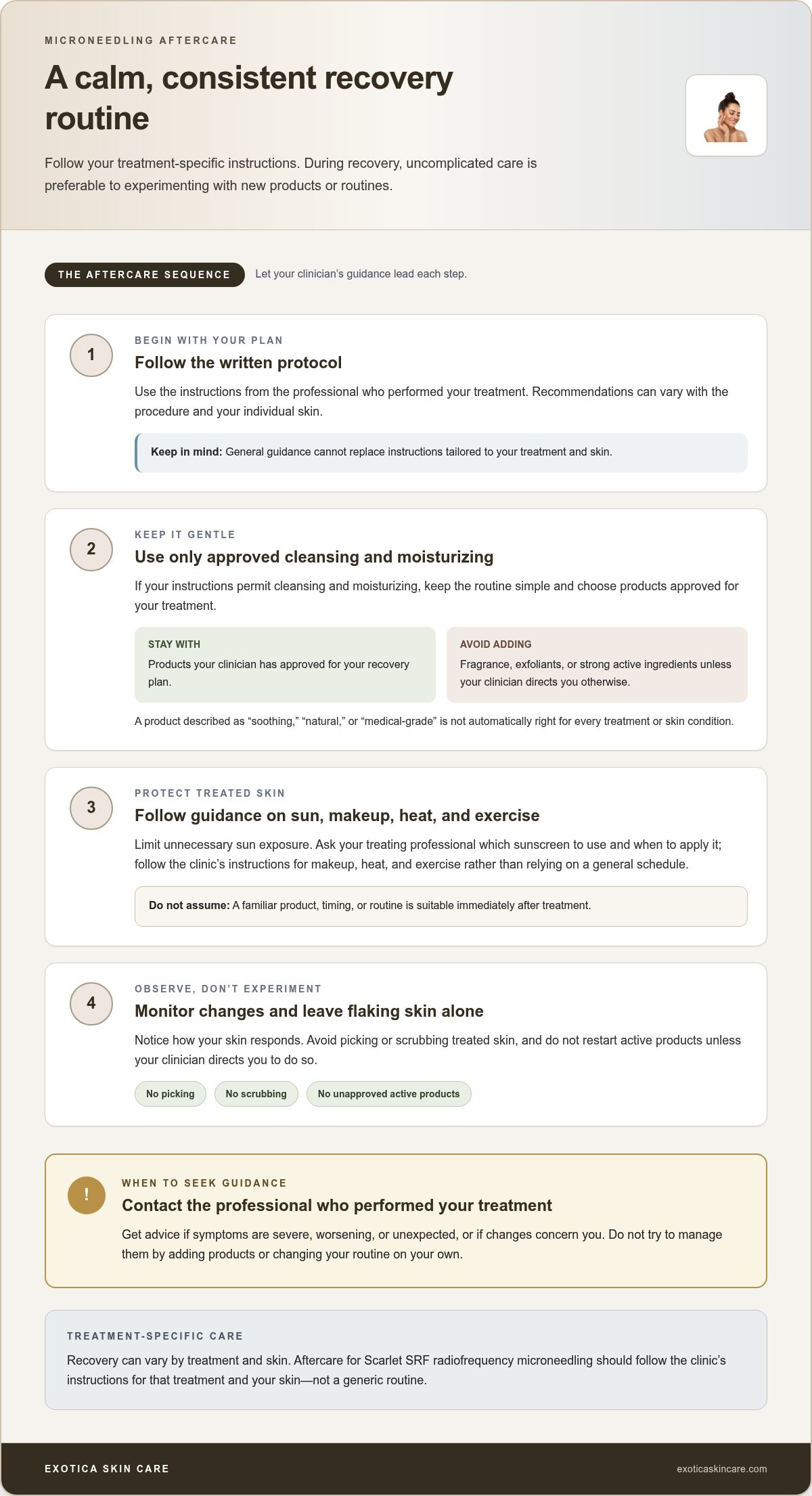
A simple routine can make aftercare easier to follow. Rather than trying to accelerate the process with extra products or treatments, focus on the instructions provided for your procedure and your skin. If you want to speed up healing after microneedling, consistency is more useful than experimentation during recovery.
- Start with your written protocol. Use the instructions from your treating professional as your guide, since recommendations can vary by treatment and individual skin condition.
- Keep care gentle. Cleanse and moisturize only as directed, using products approved for your treatment.
- Protect your skin. Limit unnecessary sun exposure and follow your clinician’s guidance on sunscreen.
- Monitor changes. Notice how your skin is responding, and seek professional advice about symptoms that concern you rather than trying to manage them by adding products.
During recovery, consistent, uncomplicated care is preferable to experimenting with new products or routines. Avoid picking or scrubbing treated skin, and don’t restart active products unless your clinician directs you to do so. That restraint can help you avoid adding unnecessary irritation while your skin settles.
Keep cleansing and moisturizing routines gentle
If your treatment instructions permit cleansing and moisturizing, keep the routine simple and use only approved products. Fragrance, exfoliants, and strong active ingredients may irritate recently treated skin, so don’t assume a familiar product is suitable right away. A product marketed as calming or soothing isn’t automatically appropriate for every treatment or skin condition. Follow your clinician’s guidance on what to use and when to resume your usual routine.
Protect treated skin while it settles
Limiting unnecessary sun exposure is a prudent way to avoid adding stress to skin that is recovering. Ask your treating professional which sunscreen to use and when to apply it; don’t assume every product or timing is right for your specific treatment. The same individualized approach applies to makeup, heat, and exercise. Follow the clinic’s instructions rather than relying on a general schedule or advice intended for a different procedure.
Care should reflect the treatment received. For example, aftercare guidance for Scarlet SRF radiofrequency microneedling should be based on the clinic’s instructions for that treatment and your skin, not a generic routine. To learn more about Scarlet SRF microneedling, explore Exotica Skin Care’s treatment information.
Which Aftercare Choices Help, and Which Can Irritate Skin?
After microneedling, a product’s reassuring label doesn’t guarantee it’s suitable for freshly treated skin. “Soothing,” “natural,” or “medical-grade” describes how a product is presented, not whether it fits your treatment and skin condition. A helpful way to assess an aftercare choice is to ask whether it’s part of your clinician’s instructions or an unapproved addition.
| Clinician-approved gentle care | Unapproved experimentation |
|---|---|
| Follow the written protocol and use products your treatment professional has approved for you. | Introduce a new serum, cream, or home remedy because its label sounds calming. |
| Keep cleansing and moisturizing simple if your instructions include them. | Layer several products at once, making it harder to tell what may be irritating your skin. |
| Ask your clinician when to resume exfoliating acids, retinoids, or other potent actives. | Restart strong ingredients based on a general online schedule or personal guesswork. |
Gentle care versus exfoliating or active ingredients
Exfoliating acids and retinoids can be irritating for some people, and freshly treated skin may be more sensitive. That doesn’t mean every product in these categories is unsuitable for everyone; it means resuming them should follow your clinician’s guidance. There isn’t one restart schedule that fits every treatment and skin condition. Keeping the routine uncomplicated also makes it easier to notice whether a particular product seems to trigger discomfort.
If you’re researching medical-grade skin care products, consider how product choice fits into an individualized routine, rather than assuming that a professional-sounding label makes something appropriate during recovery.
Common recovery shortcuts that may backfire
Picking at flaking skin, scrubbing to smooth it, layering multiple new products, or applying an unapproved remedy can add irritation instead of helping your skin settle. Resist the urge to intervene each time your skin looks different. Post-treatment skin isn’t the time for an improvised routine; aggressive intervention is not the same as faster healing.
The goal isn’t to find more steps that promise to speed up healing after microneedling. It’s to avoid unnecessary variables and follow the instructions for your procedure. If you’re considering a new product or aren’t sure whether to resume a familiar one, ask the professional who performed your treatment before changing your routine. For more context on microneedling care, explore Exotica Skin Care’s treatment information.
When to Contact Your Treatment Professional About Recovery
Some changes after microneedling can be part of recovery, but symptoms that feel severe, worsen, or seem unexpected deserve individualized guidance. Don’t try to manage a concerning change by adding a serum, cream, or home remedy before speaking with the professional responsible for your treatment. They can consider what procedure you received and the aftercare instructions you were given.
Seek prompt medical attention for urgent or severe symptoms. Don’t delay urgent care while waiting for a routine reply from your treatment professional. For less urgent concerns, contact the treating professional for advice rather than trying to diagnose the cause from appearance alone. A photo or symptom description can’t reliably establish whether a change is an infection, an allergy, or another complication.
How to describe a recovery concern clearly
A clear account can help your treatment professional understand what has changed. Note when the symptom began, whether it has improved or worsened, and which products you’ve used since the procedure. If useful and appropriate for the clinic’s communication process, take clear photographs in good lighting. Share what you’ve observed without assigning a diagnosis.
When the original aftercare plan needs clarification
If your instructions are unclear, contact the professional who performed your treatment before changing your routine. Ask for guidance if you’re unsure whether to use a product, resume an activity, or adjust a step in your care plan. Avoid relying on advice written for a different procedure. Treatment-specific instructions matter for radiofrequency microneedling as well as other treatments, and should reflect your individual skin.
For people considering Scarlet SRF radiofrequency microneedling, Exotica Skin Care’s treatment information offers a place to learn about this option. Explore Scarlet SRF treatment information, and follow the aftercare guidance provided for your own treatment. If recovery raises a concern, timely professional advice is more appropriate than trying to speed up healing after microneedling by making unapproved changes.
Personalized Microneedling Aftercare at Exotica Skin Care
Aftercare should match the treatment performed and your skin, not a one-size-fits-all routine. Clear instructions can help you understand what to use, what to pause, and how to respond if recovery doesn’t feel as expected. If you’re trying to speed up healing after microneedling, the aim is to support recovery with appropriate care, not to rush the skin or add steps without guidance.
What treatment-specific guidance should clarify
Your aftercare instructions should make it clear how to approach cleansing, moisturizing, sun protection, and restarting products you paused for treatment. If any step is unclear, or your recovery differs from what you were told to expect, follow up with the professional responsible for your treatment before changing your routine. Share what you’ve noticed and which products you’ve used so the guidance can reflect your situation.
That individualized approach is especially relevant because microneedling treatments aren’t all the same. Scarlet SRF is Exotica Skin Care’s radiofrequency microneedling option. Instructions should be specific to the treatment performed and your skin, without assuming that general online advice applies to you. No routine can guarantee a particular recovery experience, so keep your questions focused on the care plan you received.
Explore Scarlet SRF microneedling in Henderson
If you’re considering Scarlet SRF or want to understand how treatment and aftercare fit together, explore the information available and bring your questions to a personalized discussion. Exotica Skin Care is located in Henderson Nevada. Understanding the treatment and its tailored guidance can help you make informed decisions with greater confidence.
Explore Scarlet SRF at Exotica Skin Care.
Support Your Skin With Calm, Personalized Aftercare
There’s no reliable shortcut to recovery. To speed up healing after microneedling, keep your routine simple, follow the instructions for your treatment, and avoid adding products or picking at your skin without professional guidance. Your skin’s response may vary, so worsening, severe, or unexpected symptoms are a reason to seek advice from the professional who performed your treatment.
Aftercare should reflect both the procedure and your individual skin. Exotica Skin Care offers Scarlet SRF radiofrequency microneedling for clients in the Las Vegas area, with the clinic located in Henderson. If you’re considering treatment or want to learn more, explore Scarlet SRF at Exotica Skin Care.
With thoughtful care and clear guidance, you can give your skin the support it needs to settle at its own pace.
Frequently Asked Questions
How can I speed up healing after microneedling?
Keep aftercare simple and follow the instructions provided by the professional who performed your treatment. Use only approved products, avoid picking or scrubbing, and don’t add active ingredients unless your clinician approves them. Protect treated skin as directed, and monitor how it changes. If symptoms feel severe, worsen, or differ from what you were told to expect, contact your treatment professional. No routine can guarantee instant healing.
What should I put on my face after microneedling?
Use only the cleanser, moisturizer, and other products approved for your specific treatment and skin. Recently treated skin may be more sensitive, so avoid experimenting with new products or assuming that an item labeled “soothing” is suitable. If your written aftercare instructions don’t say what to use, or when to restart a familiar product, ask the professional who performed your treatment before applying it.
Can I use retinol or exfoliating acids after microneedling?
Don’t restart retinol, exfoliating acids, or other potent active products based on a generic online timeline. The appropriate timing can depend on your treatment and your skin’s response. Follow the instructions from your clinician, and ask before resuming an active ingredient if your written plan is unclear or your skin still feels irritated. A product you normally tolerate may not be appropriate during recovery.
Is redness after microneedling normal?
Temporary redness can occur after microneedling, but the expected response varies by person and treatment. Follow your aftercare instructions and pay attention to how your skin changes. If redness is severe, worsening, accompanied by other concerning symptoms, or different from what your clinician described, contact the professional responsible for your treatment. Don’t try to diagnose the cause from appearance alone or cover a concern with new products.
How long does it take for skin to heal after microneedling?
There isn’t one recovery timeline that applies to every person or microneedling treatment. The skin’s response can vary with the procedure and individual factors, so use the timeline provided by your treatment professional rather than relying on a general estimate. If your skin isn’t progressing as expected, or symptoms concern you, contact the clinic that treated you for guidance tailored to your procedure and skin.
Can I wear makeup after microneedling?
Follow your treatment professional’s instructions about when makeup is appropriate. Applying products before your clinician advises, or using items that irritate your skin, may make recovery less comfortable. If your aftercare plan doesn’t address makeup, ask before applying it, particularly if the treated area remains sensitive, visibly irritated, or unlike its usual condition. Don’t rely on a generic timeline intended for a different treatment or person.
When should I contact someone about microneedling side effects?
Contact the professional who performed your treatment if symptoms are severe, worsening, unexpected, or outside the recovery guidance you received. Explain when they began, how they’ve changed, and which products you’ve used. Don’t try to diagnose the cause or manage a concern by adding products. Seek prompt medical attention for urgent or severe symptoms. In the Las Vegas area, Exotica Skin Care offers Scarlet SRF radiofrequency microneedling in Henderson.