
To reduce skin inflammation after treatment, start by pausing your usual skincare routine and following the instructions for the specific procedure you had. Redness, swelling, bruising, or mild discomfort can occur as skin responds to an aesthetic procedure, but what to expect depends on the treatment. It’s understandable to wonder whether a reaction is part of healing or needs attention, especially when aftercare differs from one procedure to another.
This guide explains why skin may look or feel inflamed after treatment, how to care for it gently, and when to contact your provider. Your procedure-specific instructions should take priority over general tips. Severe or increasing pain, spreading redness, unusual skin discoloration, or signs of infection shouldn’t be dismissed. With a cautious approach and clear guidance, you can support your skin without adding unnecessary irritation.
Key Takeaways
- Redness or sensitivity can have different explanations, so assess changes in the context of the procedure you had.
- Use gentle care and follow your provider’s written instructions rather than relying on a one-size-fits-all routine.
- Check with your treating provider before adding products or trying home remedies, and avoid friction or picking when instructed.
- If symptoms worsen, pause unapproved products, review your aftercare instructions, and note what has changed before contacting your provider.
- Severe, worsening, or unexpected symptoms warrant prompt professional advice.
Is Skin Inflammation After Treatment Normal? Understand the First Signs
Redness or sensitivity after a skin treatment can have different explanations. What’s expected depends on the procedure and your individual skin response. A change in appearance alone can’t confirm whether a reaction is routine or needs assessment. Follow the written aftercare instructions and guidance for your specific procedure rather than generic online advice.
For a general overview of how skin inflammation can present, see this reference. It offers background, but it can’t tell you what to expect after your particular treatment.
For another perspective on skin inflammation, watch this video:
What can inflammation look and feel like after a skin treatment?
You may notice redness, warmth, tenderness, sensitivity, or swelling. These are observations, not a diagnosis, and their combination and intensity can differ from person to person. Appearance and duration also vary by treatment, so there isn’t one recovery timeline that applies to everyone. Note when each symptom began and whether it’s improving, stable, or changing.
A useful distinction: Mild changes that match your provider’s procedure-specific expectations may be monitored as directed. Severe, worsening, or unexpected symptoms call for provider follow-up.
Why treatment type matters when judging a reaction
Different procedures affect the skin in different ways, so their aftercare expectations aren’t interchangeable. Scarlet SRF is radiofrequency microneedling, while a chemical peel is a distinct treatment. The same distinction applies across other skin procedures like body art; for readers exploring tattoo artistry, you can discover Krets Tattoo to view custom and flash work. Don’t assume advice for one applies to the other, or that a similar-looking reaction has the same explanation.
Before trying to reduce skin inflammation after treatment, check the instructions for the procedure you had. If they don’t address what you’re experiencing, or you’re unsure whether a change is expected, contact your treating provider. Seek prompt follow-up for severe or increasing discomfort, spreading redness, unusual discoloration, or other symptoms that concern you. A provider familiar with the procedure can help assess your concern; this general information can’t replace individualized advice.
Why Skin May Become Red or Sensitive After an Aesthetic Treatment
Inflammation is the body’s response to irritation or tissue change. It can appear as redness or swelling, or feel like warmth, tenderness, or sensitivity. These signs describe what you’re experiencing, but they don’t identify the cause on their own. A temporary response and a complication can’t always be distinguished by appearance, and an article can’t diagnose either.
Because procedures affect skin differently, one explanation won’t fit every reaction. If you’re trying to reduce skin inflammation after treatment, first check the aftercare instructions for the exact procedure you received. Don’t assume a new symptom is an allergy, infection, or product reaction without professional assessment.
How treatment depth and method can affect the skin response
Energy-based treatments and peels use different approaches, which is one reason their care instructions may differ. Scarlet SRF is radiofrequency microneedling; a chemical peel is a separate type of treatment. Neither should be used as a reference point for the other’s aftercare. The treatment area and details of the procedure may also matter, so ask your provider what responses are anticipated in your case and which changes warrant follow-up.
What can make one person’s response different from another’s?
People can have different levels of skin sensitivity, and treatment details may influence what they notice afterward. Existing skin concerns and medications can also be relevant to individualized advice. Share these details with your treating provider rather than stopping prescribed medication or adding a product based on an assumption about the cause.
Keep track of when symptoms began, where they appear, and whether they’re changing. This gives your provider clearer information to consider. If symptoms are severe, worsening, or unexpected, contact the treating provider promptly. Seek urgent medical advice for a serious or rapidly escalating concern. General resources such as the American Academy of Dermatology’s caring for injured skin can offer background, but they don’t replace instructions tailored to a recent aesthetic procedure.
For readers considering a treatment or seeking individualized context, Exotica Skin Care offers Scarlet SRF and chemical peels at its Las Vegas boutique medical spa. You can explore personalized treatment guidance and discuss procedure-specific questions with a qualified skin care professional.
Common Aftercare: What Helps, What to Avoid and What to Verify
Aftercare should match the procedure, treatment area, and instructions you received. To reduce skin inflammation after treatment safely, don’t assume a tip that helped someone else is appropriate for you. Start with your written care plan. If it doesn’t address a product or action you’re considering, check with your treating provider first.
The table below helps distinguish general care from decisions that need procedure-specific guidance. It doesn’t replace your provider’s instructions.
| Cautious general steps | Confirm with your treating provider |
|---|---|
| Follow the written aftercare plan and handle the treated area gently. | How and when to cleanse or apply products, especially if instructions are unclear. |
| Track symptoms and when they began. Take clear photos if your provider requests them. | Whether a change in redness, sensitivity, or swelling fits the expected response for your procedure. |
| Follow the sun-protection directions in your procedure-specific care plan. | Which sun-protection approach and products are suitable for your treated skin, and when to use them. |
| Avoid rubbing, scrubbing, or picking if your instructions say to protect the area from friction or touching. | Whether to use a cool compress, active ingredients, topical medicines, supplements, or a home remedy. |
Low-risk ways to care for sensitive skin
Keep your routine simple and follow the plan you were given instead of adding steps to “calm” the skin. Even familiar skincare may not be appropriate immediately after every procedure. If you’re unsure about a cleanser, moisturizer, or sunscreen, ask the provider who performed the treatment before applying it to the treated area.
Make a brief note of what you observe and whether it changes. Photos can help document appearance, but take them if your provider asks or advises you to. Don’t delay contacting the provider if symptoms are severe, worsening, or unexpected.
What to pause until the provider gives guidance
Ask before restarting exfoliants, retinoids, acids, or fragranced products. Avoid scrubbing, picking, or layering several new products over a reaction. These steps can make it harder to tell what’s affecting the skin. Don’t use leftover prescription creams or other medication unless a clinician directs you to. There’s no universal product or home remedy that suits every treatment, so procedure-specific guidance is the safer starting point.
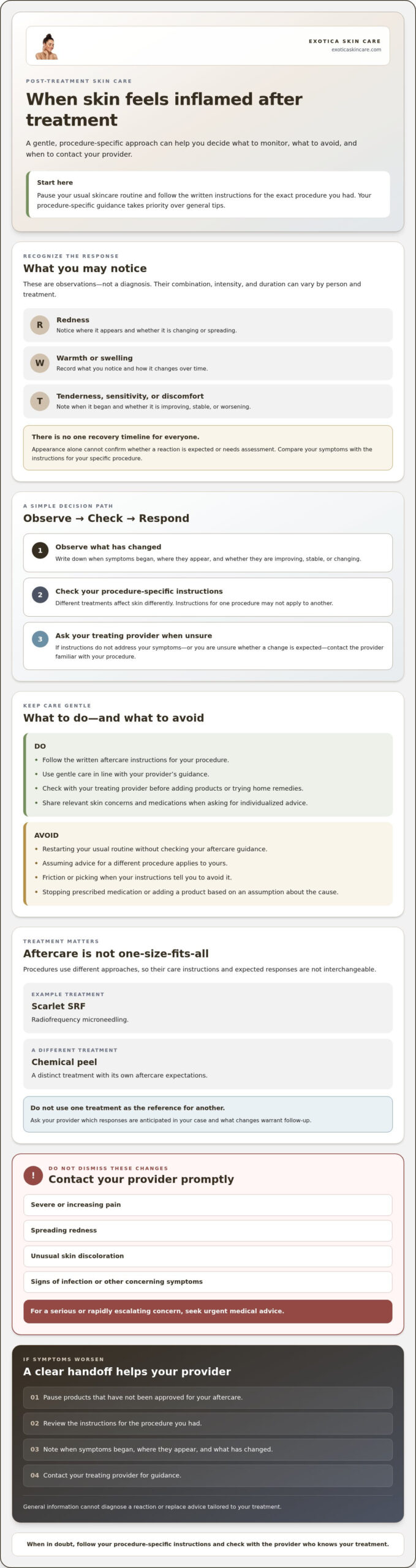
What to Do If Skin Inflammation Worsens After Treatment
A reaction that’s becoming more intense, differs from your written aftercare instructions, or feels unexpected deserves attention. Don’t try to diagnose the cause or cover the change with additional products. Take these steps to give the professional who knows which procedure was performed clear information:
- Pause unapproved products. Stop new or non-prescribed skincare you’ve added to the treated area. Don’t apply leftover prescription creams or medication unless a clinician directs you to.
- Review your aftercare instructions. Check the directions for your specific procedure and note any guidance about symptoms or when to seek follow-up.
- Record what’s changing. Note when symptoms began, where they appear, and whether they’re intensifying or spreading. List products or medications used after treatment. Take photos if your provider requests them.
- Contact the treating provider. Explain what you’re experiencing and ask what to do next. Don’t wait an arbitrary number of hours or days if symptoms are severe or worsening.
When should you contact the treatment provider?
Reach out promptly if symptoms intensify, persist in a way your instructions don’t address, or differ from the expectations discussed for your procedure. Include the treatment date, products you’ve applied, and how symptoms have changed. Clear photos may help if requested, but don’t delay making contact to take them. The provider can advise whether you need an assessment or another level of care.
General online guidance about how to reduce skin inflammation after treatment can’t determine what’s causing an individual reaction. Don’t assume worsening redness or discomfort is simply irritation, or that a particular product will resolve it.
When does a skin reaction need urgent medical attention?
Seek urgent medical assessment for severe or rapidly worsening symptoms. Breathing difficulty or rapidly spreading swelling may be an emergency. Contact emergency services immediately rather than waiting for a spa or treatment provider to respond. Do not use a spa as a substitute for urgent or emergency care.
Exotica Skin Care is not a 24/7 emergency care provider. For non-emergency questions related to a treatment received there, contact Exotica Skin Care about your treatment concerns. If symptoms may be urgent, seek appropriate medical care instead.
Personalized Post-Treatment Guidance in Henderson and the Las Vegas Area
Aftercare works best when it reflects both the procedure performed and your individual skin. A provider familiar with your treatment can explain which changes may be expected, review your instructions, and help you decide whether a new or changing symptom needs follow-up. General advice can offer context, but it can’t account for treatment details or personal skin concerns.
Exotica Skin Care offers Scarlet SRF radiofrequency microneedling and chemical peels at its Las Vegas boutique medical spa. These are distinct procedures, so questions about redness, sensitivity, or product use should be considered in relation to the treatment you had. The clinic serves clients in Las Vegas, Summerlin, and Henderson.
Questions to ask before and after a skin treatment
Clear questions can make your care plan easier to follow. Before treatment, ask what changes may be expected for that specific procedure and which symptoms should prompt a call. Confirm what to use on your skin, including cleanser, moisturizer, sunscreen, and active ingredients. Ask when each is appropriate under your care plan.
Before leaving, make sure you know how to reach the treating provider if symptoms change. If you’re already home and something feels unexpected, refer to your written instructions and contact the provider for procedure-specific guidance. Severe or rapidly worsening symptoms may require urgent medical care rather than a spa.
Explore treatment-specific guidance
If you’re considering Scarlet SRF, ask your provider about the procedure and its aftercare before treatment. For a chemical peel, confirm which instructions apply to that peel and your skin. If you’re comparing approaches, ask how the treatments differ and what care each may involve. A guide or general article can be useful background, but it shouldn’t replace instructions from the provider familiar with your procedure.
To reduce skin inflammation after treatment, avoid guessing which products or steps are right for you. Bring your questions to a qualified skin care professional who can discuss the treatment and your concerns without promising a diagnosis or outcome. For a low-pressure conversation about treatment questions, contact Exotica Skin Care.
Move Forward With Care Tailored to Your Skin
After a treatment, the right next step depends on the procedure and how your skin is responding. Follow your written aftercare plan, keep care gentle, and check with your treating provider before adding products or home remedies. If symptoms become severe, worsen, or feel unexpected, seek professional advice rather than trying to manage them alone. These principles can help you reduce skin inflammation after treatment with greater confidence while respecting your skin’s individual needs.
Personalized guidance is especially valuable when you have questions about a specific procedure. Exotica Skin Care offers Scarlet SRF radiofrequency microneedling and chemical peels, serving clients in Las Vegas, Summerlin, and Henderson. For a low-pressure conversation about your treatment questions, contact Exotica Skin Care.
Frequently Asked Questions
Is redness normal after a skin treatment?
Redness can occur after a skin treatment, but whether it’s expected depends on the procedure and your individual response. Sensitivity, warmth, tenderness, or swelling may also be noticeable. Follow the aftercare instructions for your specific treatment rather than comparing your skin with someone else’s experience. If redness is severe, worsening, spreading, or differs from the guidance you received, contact your treating provider for advice.
How can I reduce skin inflammation after treatment?
To reduce skin inflammation after treatment, begin with the written aftercare plan from your treating provider. Handle the area gently, avoid rubbing or picking if instructed, and don’t add products or home remedies without checking whether they’re appropriate for your procedure. Note when symptoms began and how they change. If irritation worsens or feels unexpected, contact your provider rather than trying several new treatments on your own.
Can I use ice or a cold compress after a skin treatment?
Check with your treating provider before applying ice or a cold compress, since the right approach can depend on the procedure and treated area. Don’t place ice directly on treated skin or assume cooling is suitable for every treatment. Follow your written instructions. If they don’t mention cold applications, ask before trying one, particularly if your skin is very sensitive or the area looks or feels worse.
What skincare products should I avoid after treatment?
Ask your provider before using exfoliants, retinoids, acids, fragranced products, or other active ingredients on treated skin. Timing and suitability depend on the procedure and your care plan, so a universal list may not fit your situation. Avoid scrubbing, picking, or layering several new products over irritation. Follow the instructions you received, and check before restarting products if their use isn’t clearly addressed.
When should I contact my provider about inflammation after treatment?
Contact your treating provider promptly if symptoms are severe, worsening, unexpected, or different from the aftercare instructions. Share which procedure you had, when symptoms started, what products or medications you’ve used, and how symptoms have changed. For breathing difficulty or rapidly spreading swelling, seek emergency help immediately instead of contacting a spa. Exotica Skin Care serves Las Vegas, Henderson, and Summerlin, but it isn’t a 24/7 emergency care provider.
Can I treat post-treatment inflammation with over-the-counter medication?
Check with your treating provider or another clinician before using over-the-counter medication for post-treatment symptoms. A medication that seems familiar may not suit your procedure, other medications, or health history. Don’t apply over-the-counter creams or take medication based only on a general online recommendation, and don’t stop prescribed medication without professional advice. Describe your symptoms and the treatment you received so a clinician can advise you on an appropriate next step.