
Could a peel labeled “gentle” cause more than temporary redness? The risks of at-home chemical peels depend on more than acid strength. Your skin’s condition, the formula, and how you apply it all matter. Burning, prolonged irritation, discoloration, and scarring are possible. Knowing the difference between short-lived sensitivity and a concerning reaction can help you make a more informed choice.
It’s understandable to feel uncertain when advice about peel strength, frequency, and skin suitability seems to conflict. On July 30, 2024, the FDA warned consumers against using certain chemical peel products without supervision from a licensed, trained practitioner. The warning doesn’t mean every at-home peel will cause harm, but it highlights why careful product selection and use matter.
This guide explains possible side effects, factors that can increase the chance of irritation or injury, and when a reaction needs prompt attention. You’ll also learn why a product’s strength isn’t the only measure of risk, and how professional guidance can help you decide whether a peel may suit your skin. The goal is to help you protect your skin barrier and choose a cautious next step.
Key Takeaways
- The risks of at-home chemical peels depend on the formula, your skin’s condition, and how you use the product, not strength alone.
- Learn to distinguish temporary dryness, redness, or tingling from symptoms that may signal a more serious reaction.
- Contact time, frequency, and a compromised skin barrier can affect your response. Avoid improvising or combining peel products.
- Compare at-home and professional peels by looking at skin assessment, treatment control, and support if a reaction occurs.
- If you’re unsure what may suit your skin, explore professional peel guidance at Exotica Skin Care, including BioRePeelCl3® and PRX Derm Perfexion.
At-home chemical peel risks: expected reactions versus warning signs
An at-home chemical peel uses acids or other peeling agents to exfoliate the skin’s outer layers. Products differ in formula and strength, so the risks of at-home chemical peels aren’t the same for every person or product. A brief, mild sensation doesn’t tell the whole story. Your response also depends on exposure and the condition of your skin.
The same product can feel different on different skin, and a reaction can change depending on the formula and how it’s used. The broad term Chemical peel covers treatments with different agents and depths, which helps explain why their effects and risks vary.
For a dermatologist’s perspective on home peel use, watch this video:
Which reactions may be temporary, and which need attention?
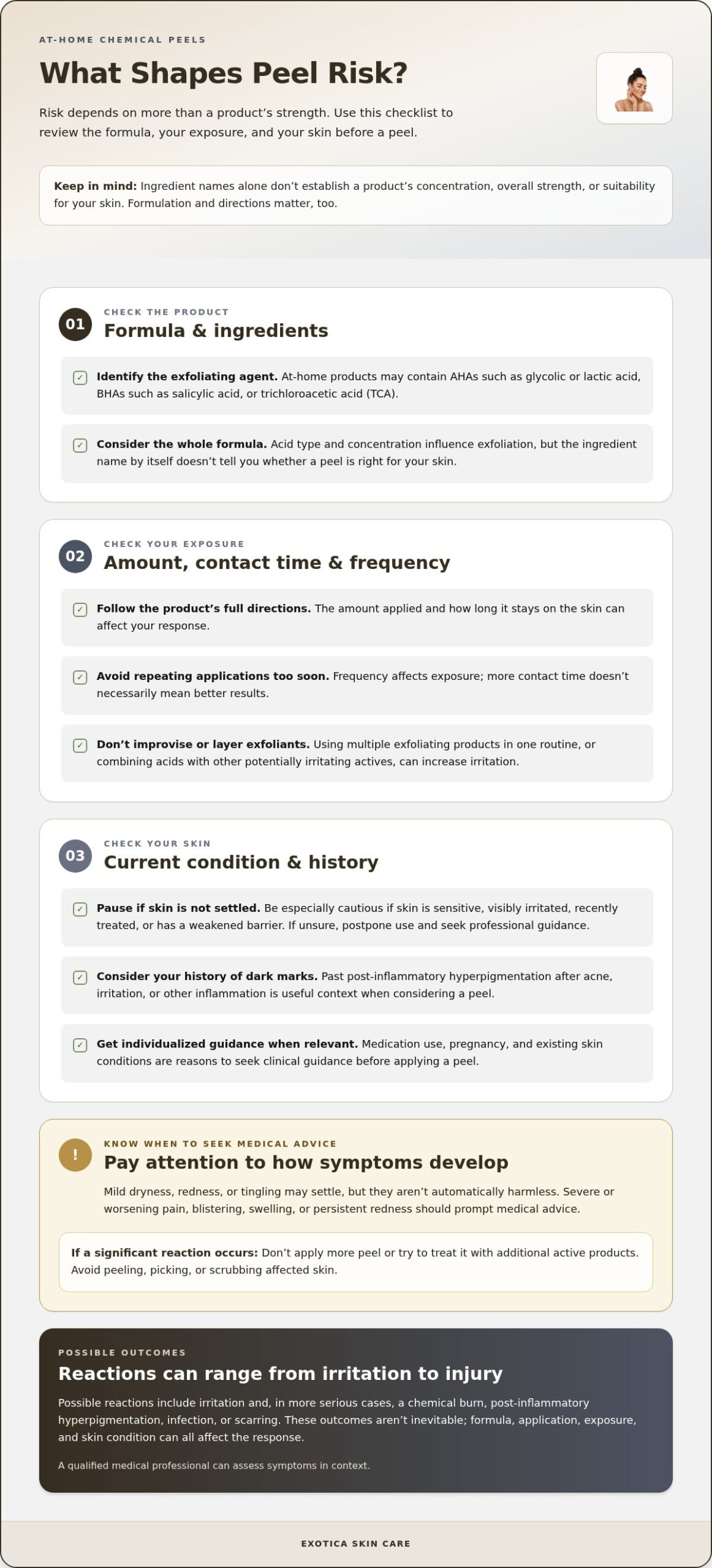
Some people notice mild dryness, redness, or tingling after a peel. These effects may settle, but they aren’t guaranteed or automatically harmless. Pay attention to how symptoms develop instead of assuming discomfort is part of the process. Severe or worsening pain, blistering, swelling, or persistent redness should prompt medical advice. Don’t apply more peel or try to treat a significant reaction with additional active products. This guide can’t diagnose an individual reaction; a qualified medical professional can assess symptoms in context.
What can go wrong after a home peel?
Possible reactions include skin irritation and, in more serious cases, a chemical burn, post-inflammatory hyperpigmentation (dark spots that develop after inflammation), infection, or scarring. These outcomes aren’t inevitable, and different peels don’t carry identical risks. The formula, amount applied, contact time, application technique, and your skin condition can all affect the response.
A deeper injury can affect more than the skin’s surface and may take longer to heal. Lasting discoloration or scarring is possible. Blisters, broken skin, or worsening inflammation deserve particular attention because damaged skin may be more vulnerable to infection. Don’t peel, pick, or scrub affected areas, as further irritation can compound the injury.
Appearance alone may not tell you how serious a reaction is, especially since redness and sensitivity vary. If symptoms are intense, worsening, persistent, or accompanied by blistering or swelling, seek medical advice rather than waiting for a routine recovery. Early assessment can help clarify appropriate care and ensure a concerning reaction isn’t overlooked.
Why at-home chemical peel risks vary by formula, skin, and technique
The risks of at-home chemical peels depend on several interacting factors, not just a product’s label or one ingredient. Acid type and concentration influence how a formula exfoliates, while the amount applied, contact time, and frequency affect your skin’s exposure. Your current skin condition matters, too. A product used on calm, intact skin may feel very different on skin that’s already irritated or recovering from another treatment.
Peel risk depends on the ingredient, its concentration, how long it stays on the skin, how often it’s used, and the condition of the skin receiving it. Ingredient names alone can’t tell you whether a peel is suitable for you.
How peel ingredients and application affect skin
At-home products may contain alpha hydroxy acids (AHAs), such as glycolic or lactic acid, which exfoliate at the skin’s surface; beta hydroxy acids (BHAs), such as salicylic acid; or trichloroacetic acid (TCA). These are different ingredient categories, but the name alone doesn’t establish a product’s concentration, overall strength, or suitability for your skin. Formulation and directions matter, too.
Using multiple exfoliating products in the same routine, repeating applications too soon, or leaving a peel on longer than directed can increase irritation. More contact time doesn’t necessarily mean better results. Follow the product’s full instructions, and avoid layering acids or other potentially irritating active ingredients unless a qualified professional has advised you how to do so.
Who should be especially cautious before using a peel?
Use extra caution if your skin is sensitive, visibly irritated, recently treated, or has a weakened barrier. A compromised barrier may be less able to tolerate irritating ingredients, so a product you’ve used before could feel different during a flare or recovery period. If you’re unsure whether your skin has settled, postpone use and seek professional guidance.
Skin tone and personal history are relevant, too. People who have developed dark marks after acne, irritation, or other inflammation may have particular concerns about post-inflammatory hyperpigmentation. This doesn’t mean everyone with a particular skin tone will react the same way. It means your history is useful context when considering a peel. Medication use, pregnancy, and existing skin conditions are also reasons to seek individualized clinical guidance before applying one.
For people in the Las Vegas area, sun exposure and dry conditions are practical details to discuss as part of a skin-care plan. They don’t determine by themselves whether a peel is appropriate, but considering your routine and current skin condition can help inform your decision.
If you’re uncertain about ingredient choice or whether your skin is ready, a professional assessment can help you weigh your concerns. Exotica Skin Care offers chemical peels, including BioRePeelCl3® and PRX Derm Perfexion. Explore professional peel guidance as a next step.
At-home versus professional chemical peels: compare safety and control
Home peels can be convenient, but choosing a product and following its directions carefully are essential. Professional treatment offers a different level of guidance: a practitioner can discuss your skin history and goals, then help you consider an appropriate option. Neither setting removes all risk. Products and skin responses vary, so the key differences are the guidance and control available, not a guarantee of safety.
| Consideration | At-home peel | Professional peel |
|---|---|---|
| Control | You apply the product and must follow its label directions closely. | A practitioner manages application within the treatment plan and can observe the skin’s response. |
| Individualized assessment | You select a product based on its label and your own understanding of your skin. | A discussion can take skin goals, sensitivity, past reactions, and current routine into account. |
| Product instructions | Directions are provided with the product; interpreting and following them is your responsibility. | The practitioner explains the selected treatment and relevant care instructions. |
| Response support | You may need to decide how to respond if irritation occurs. | You can discuss your response with the practitioner involved in your treatment. |
What a professional assessment can add
A useful assessment starts with your individual context. A practitioner can discuss what you hope to address, whether your skin is sensitive or irritated, how it has responded to past treatments, and which products are already in your routine. That conversation helps frame whether a peel may be a suitable next step and which options to consider. It doesn’t make every professional peel risk-free; it provides a more individualized basis for the decision.
When skin history is complex, individualized assessment matters because the same treatment may not be equally suitable for every person.
Exotica Skin Care offers chemical peel services, including BioRePeelCl3® and PRX Derm Perfexion. For details about one professional option, explore BioRePeel chemical peel information.
When a home peel may not be the right next step
Pause before applying a product if you can’t confidently identify its ingredients, understand its directions, or tell whether it suits your skin. Recurring reactions, active irritation, or persistent pigmentation concerns are also reasons to seek professional guidance rather than trying another peel on your own. Discussing your goals, skin history, and current routine can help clarify whether a professional option is worth considering.
Lower at-home chemical peel risks and manage irritation
Caution starts before application. A product label explains how to use the peel, but it can’t determine whether the product is right for your skin. Read all directions and warnings, avoid improvising, and don’t increase the amount, contact time, or frequency in pursuit of a stronger effect. These steps can reduce avoidable exposure, but they can’t eliminate the risks of at-home chemical peels.
A cautious checklist before applying a peel
Review the product and your skin before opening the container. If you can’t identify the product or understand its directions, don’t apply it. A patch test, when directed by the label, may offer useful information, but it doesn’t guarantee that full-face use will be safe or cause no reaction.
- Check the product identity, complete instructions, warnings, and expiration information.
- Follow the label’s directions exactly. Don’t leave the peel on longer, use it more often, or combine it with other peel products.
- Don’t apply a peel to irritated, damaged, or actively inflamed skin without guidance from a qualified professional.
- Follow product instructions and qualified clinical advice about sunscreen and sun avoidance after use.
Keep the rest of your routine simple around peel use. Adding other exfoliating or active products can make it harder to identify what’s causing irritation and may put more stress on skin that is already reacting. For gentle daily skincare essentials and at-home beauty tools designed to keep your routine balanced, resources such as carebarebeauties.com offer supportive options. If you’re unsure about combining products, wait and seek individualized guidance instead of experimenting.
What to do if your skin reacts badly
If a reaction begins, stop using the peel. Follow its label for immediate removal or rinsing, and don’t try to counteract it with a homemade neutralizer, another acid, or additional active products unless a qualified clinician specifically directs you to do so. Avoid scrubbing or picking at the skin, which can add friction to an already irritated area.
Get prompt medical attention for severe pain, blistering, rapidly worsening symptoms, or product exposure to the eyes. If the product gets into your eyes, treat it as urgent and seek medical care. Persistent or worsening redness and swelling also warrant medical advice, especially if you’re unsure how serious the reaction is. Bring the product packaging or ingredient information if you seek care, so the clinician can see what was applied.
Don’t restart the peel just because the first symptoms ease. Give your skin time to recover, and ask a qualified clinician before trying another exfoliating product if the reaction was significant, keeps returning, or leaves persistent discoloration. A careful pause is safer than layering on more treatments to correct a reaction.
If you’d prefer guidance tailored to your skin and routine, schedule a professional peel assessment with Exotica Skin Care.
Explore professional peel guidance at Exotica Skin Care in Henderson
Choosing a peel doesn’t have to mean weighing product labels alone. A personalized conversation can put your goals, skin history, and current routine into context before you decide whether a peel is an appropriate next step. This may be especially valuable if you’ve experienced irritation, have concerns about pigmentation, or feel uncertain about the risks of at-home chemical peels. The aim is a considered choice, not pressure to pursue a treatment.
Discuss your skin goals and peel concerns
At Exotica Skin Care, licensed estheticians can discuss your skin-care goals and concerns as part of a personalized plan. Sharing a few details can make the conversation more useful. Consider mentioning:
- What you hope to address and what matters most to you.
- Any known sensitivities, active irritation, or past reactions to skin-care products or treatments.
- The products in your current routine, including exfoliants or other active ingredients.
- Any previous peels or skin treatments and how your skin responded afterward.
This context can guide a discussion about suitable options, including the clinic’s chemical peels, BioRePeelCl3® and PRX Derm Perfexion. No treatment can be assumed right for everyone, and a conversation doesn’t guarantee a particular result. It gives you space to explain your goals, raise concerns, and understand the options being considered. You can also explore advanced skin rejuvenation options for broader treatment context.
Continue with a considered home-care plan
Care after a peel should reflect the treatment and your individual skin, rather than follow a one-size-fits-all routine. Ask for clear guidance on which products to use, what to pause, and how to follow sun-protection instructions. If your skin feels sensitive, resist adding extra exfoliants or new active products without guidance. A simple, appropriate routine can make it easier to care for your skin while it settles.
Bring your current products or a list of their names to a skin-care discussion. That practical step can make advice more specific and reduce guesswork about how your routine fits with a treatment. Exotica Skin Care uses medically approved skin-care products, and you can review information about medical-grade skin-care products when considering ongoing care.
Exotica Skin Care is located at 2480 W. Horizon Ridge #130, Henderson, Nevada. If you’re ready to discuss your goals, sensitivities, or peel concerns, schedule a skin-care consultation.
Choose your next step with confidence
A thoughtful skin-care decision doesn’t have to begin with another product. If you’re still weighing the risks of at-home chemical peels, consider what you want to address, what your skin has tolerated before, and what would help you feel comfortable moving forward. You can wait, seek individualized guidance, or explore a different approach. There’s no need to rush into a peel simply because it’s available.
A conversation about your concerns can help turn uncertainty into a more personal plan. Share your goals and questions, including anything that makes you hesitant, so the discussion can focus on what matters to you. Exotica Skin Care offers a supportive setting to explore peel options with care and attention to your skin’s needs.
Discuss your peel concerns with Exotica Skin Care and take your next step at a pace that feels right for you. An informed choice is a worthwhile beginning.
Frequently Asked Questions
Is tingling during an at-home chemical peel normal?
Mild, brief tingling can occur, but it isn’t a reliable sign that a peel is working or safe for your skin. Stop using the product if the sensation becomes painful, intense, or keeps worsening, and follow the label’s removal instructions. Avoid applying more acids or scrubbing the area. If discomfort persists or you notice swelling, blistering, or marked redness, seek medical advice.
Can at-home chemical peels cause permanent scars?
Scarring is possible if a peel causes a deep skin injury, though not every peel or reaction leads to a scar. Don’t pick at peeling skin or pop blisters, as further trauma may complicate healing. If skin breaks, pain is severe, or the area appears to be worsening, seek medical advice promptly. A clinician can assess the injury and recommend appropriate care.
What should I do if a chemical peel gets in my eye?
Rinse the eye immediately with clean, lukewarm water and seek urgent medical advice. Don’t put neutralizers, skincare products, or other chemicals in the eye. If you wear contact lenses, remove them if you can do so easily while rinsing, but don’t delay flushing to do it. Keep the product packaging available so a medical professional can identify its ingredients.
Can I use an at-home peel if I have sensitive or darker skin?
Possibly, but neither sensitivity nor darker skin tone alone determines whether a particular peel is suitable. A history of dark marks after acne, irritation, or previous treatments is important to mention because inflammation can be followed by pigmentation changes. If you have sensitive skin or a history of discoloration, get individualized guidance before trying a peel, especially before a sunny day outdoors in Las Vegas.
Can I use a chemical peel while using retinoids?
Don’t combine a peel with a retinoid without guidance from the clinician who advises you on your skin care or medication. Both may irritate some people’s skin, and the right approach depends on the specific products, how you use them, and your skin’s condition. Check the peel label and ask the prescribing clinician whether to pause or adjust anything. Don’t change prescribed medication without their advice.
Does visible peeling mean an at-home peel is working?
No. Visible flaking isn’t a dependable measure of whether a peel is effective, and a lack of peeling doesn’t prove it failed. Skin can respond differently depending on the formula and individual factors. Don’t repeat an application or leave the product on longer to force visible peeling. Follow the directions, and seek professional advice if you’re unsure how to interpret your skin’s response.
How long should I wait before using another peel after irritation?
There isn’t one safe waiting period for everyone. Don’t use another peel while your skin remains irritated, tender, unusually dry, or visibly inflamed. Wait until it has fully recovered, and seek clinical advice before restarting if symptoms were significant, keep returning, or left discoloration. Review your routine for other exfoliating products before trying again, so you don’t expose recovering skin to overlapping irritants.