
A chemical peel can improve the look of enlarged pores, but it won’t instantly change their appearance. For clients visiting Exotica Skin Care seeking the best treatment for large pores in Las Vegas, a peel may be worth considering when excess oil and buildup contribute to visible congestion. The right approach depends on your skin and what is making pores stand out.
If pores look prominent or clog easily, it’s natural to want smoother-looking skin and a clear idea of what to expect. Visible changes may develop gradually, and the timeline depends on the treatment and how your skin responds.
Here, you’ll learn how chemical peels may support pore unclogging and skin renewal, how oil control, cleansing, and exfoliation fit into a treatment plan, and what can influence the pace of results. The goal is a more informed view of what treatment can realistically address, so you can consider your next step with confidence.
Key Takeaways
- Chemical peels can help clear surface buildup and refine the look of pores; visible changes develop over time rather than instantly.
- Oil control and pore unclogging work best when the approach suits your skin’s needs and the factors contributing to congestion.
- Enlarged pores have several possible causes, so identifying what affects their appearance helps guide treatment choices.
- Professional options vary in how they address texture, oiliness, and visible pores; the most suitable approach depends on your skin goals.
- Retinoids, salicylic acid, and niacinamide support skin in different ways, making their roles and suitability worth understanding before choosing a plan.
Chemical peels
Chemical peels exfoliate the skin’s surface and can improve the appearance of enlarged pores. The right peel depends on congestion, oiliness, pigmentation, skin sensitivity, and your treatment goals.
Comparing Pore Treatments
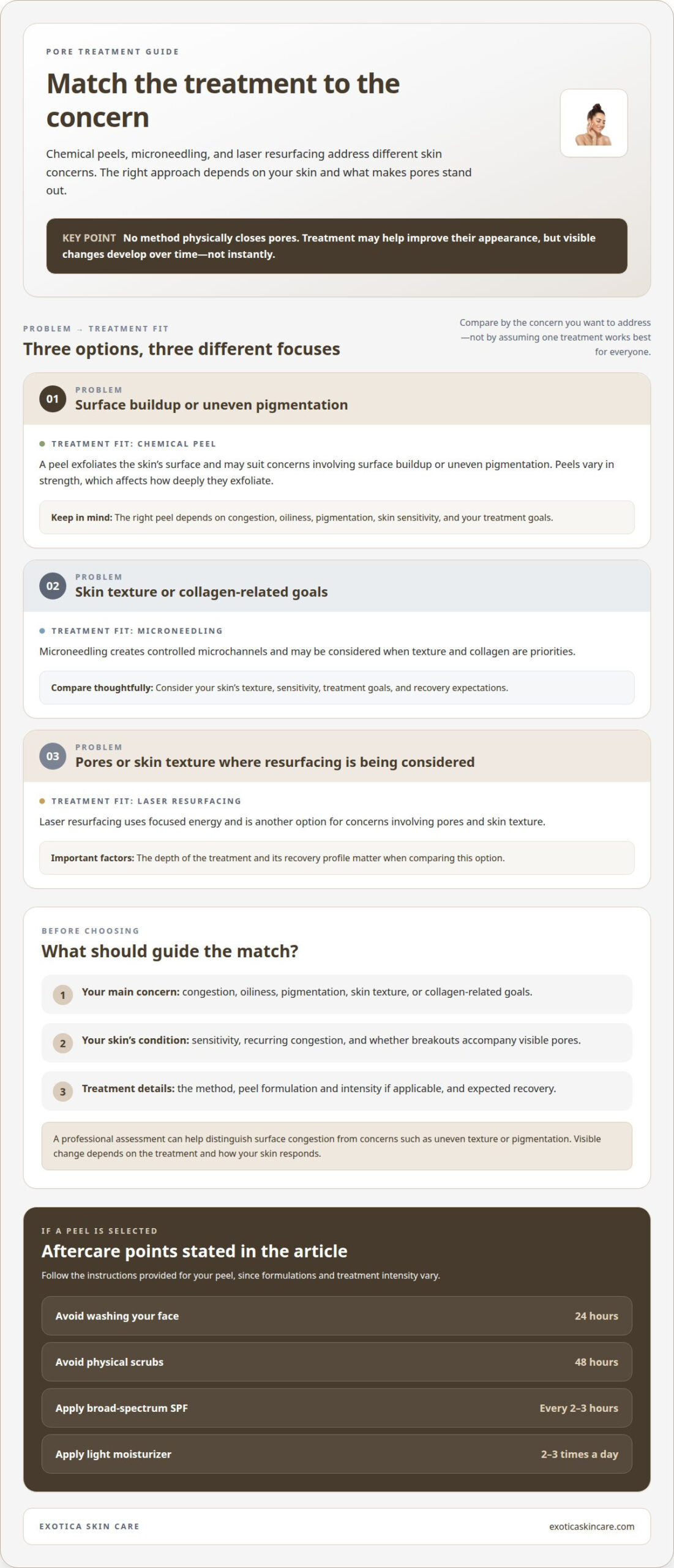
For enlarged pores, chemical peels exfoliate the surface, microneedling creates controlled microchannels, and laser resurfacing uses focused energy. A peel may suit concerns involving surface buildup or uneven pigmentation; microneedling may be considered when texture and collagen are priorities. Laser resurfacing is another option, but its depth and recovery profile matter. No method physically closes pores.
Compare these methods by the concerns they address, not by assuming one works best for everyone. A consultation should consider congestion, skin texture, pigmentation, sensitivity, and recovery expectations. Chemical peels vary in strength, which affects how deeply they exfoliate. These factors help match the treatment to your skin’s condition.
Visible changes may develop as the skin renews after exfoliation, rather than appearing as an immediate, permanent change in pore size. Oil production, recurring congestion, and skin texture can all affect how pores look. A peel may improve surface smoothness, while another treatment may better suit texture or collagen-related goals. Focusing on your main concern helps keep the plan relevant.
Henderson In-Office Options
In Henderson, people may consider chemical peels, microneedling, or laser resurfacing for concerns involving pores and skin texture. When discussing a procedure in Nevada, ask who performs it, what training is relevant, and how the provider approaches treatment. Qualifications and scope can differ by procedure, so ask about the specific method being considered.
A clinic should explain the selected peel, what it is intended to address, and how to care for skin afterward. After a Henderson med spa peel, advised care includes avoiding face washing for 24 hours and physical scrubs for 48 hours. Patients are also advised to apply broad-spectrum SPF every 2 – 3 hours and light moisturizer 2 – 3 times a day.
During recovery, abrasion or insufficient sun protection can affect comfort. Follow the aftercare instructions provided for your peel, since formulations and treatment intensity vary. A measured plan starts with your skin’s current condition, then addresses congestion, oiliness, texture, or pigmentation without promising to permanently remove pores.
Treat that figure as a starting point for a consultation, not a reason to choose a peel on price alone. Before booking, ask which formulation and intensity are planned, what concern the treatment is meant to address, and what aftercare it requires. You can also discuss who will perform the procedure and their relevant training. A clear explanation helps you decide whether a peel fits your priorities, skin sensitivity, and recovery expectations. Raise any care questions before the appointment.
Pore unclogging and oil control
Oil and compacted debris can collect at pore openings, making them more noticeable. A professional assessment can distinguish surface congestion from concerns such as uneven texture, pigmentation, or recurring acne. The distinction matters: clearing visible buildup is different from managing excess oil or improving texture. A brighter appearance may be one goal, but treatment planning should focus on what is causing the visible congestion.
At an appointment, the provider can assess where congestion appears, whether your skin feels oily, and whether breakouts accompany enlarged pores. For example, recurring clogged areas with active acne call for a different plan than visible pores without breakouts. Skin sensitivity and pigmentation also affect which approach may suit you. This assessment helps determine whether to prioritize unclogging pores, managing oil, or both.
Oil control doesn’t mean stripping the skin. A treatment plan should address excess surface oil without unnecessary irritation, which can make skin uncomfortable and complicate care. Cleansing and exfoliation have different roles: cleansing lifts surface residue, while exfoliation addresses accumulated dead skin cells. Their place in a professional plan depends on your skin’s condition and the treatment selected.
For acne-related congestion, targeted light and energy treatments can address inflammation, bacteria, pore appearance, and skin texture. These effects relate to active acne and visible texture, not a permanent change to the pores themselves. The method should match the concern being treated. Fine wrinkles and collagen-related goals are separate considerations, even when they occur alongside enlarged pores.
Expect the plan to focus on observable changes, such as fewer clogged openings, less noticeable surface oil, or smoother-looking texture. The speed and degree of change depend on the treatment and your skin’s response. A lasting plan also accounts for recurring oil and congestion, rather than treating one clear-looking day as the final result. No pore treatment physically erases pores.
For a personalized discussion of congestion and oil control, schedule a skin appointment. This conversation can clarify whether acne activity, surface buildup, or texture is the primary concern, then align treatment goals with the skin’s condition.
Appearance of enlarged pores
In a facial assessment, pore visibility is considered alongside texture, oiliness, and uneven tone. For example, pores across the nose may look more noticeable than those on the cheeks. This distribution helps distinguish a localized concern from a broader pattern. A provider may also consider whether congestion, acne marks, or pigmentation draw attention to the same area. The plan should target the feature that contributes most to the appearance, rather than treating every visible pore as the same concern.
Lighting and surface texture can affect how pores look in different settings. An oily sheen across the forehead, for example, may emphasize pore openings, while uneven texture can cast small shadows on the cheeks. These details matter when setting goals: treatment may refine the surrounding skin without making pores disappear. A useful appointment conversation identifies the areas that concern you and describes the change you want, such as smoother-looking cheeks or less noticeable congestion around the nose.
Enlarged pores aren’t a single diagnosis. A provider considers whether oil, clogged openings, acne activity, or texture contributes to the concern. Pigmentation can also affect the overall appearance of facial skin, though it’s distinct from pore size. Separating these features helps set realistic expectations. For instance, improving uneven tone may make skin look more uniform, while addressing congestion may make pore openings look cleaner. Each goal calls for a plan suited to the skin condition.
Ask how a proposed treatment addresses the concern you actually see. A peel focuses on exfoliation, while procedures that stimulate collagen production address different skin goals. The right option depends on your texture, sensitivity, and desired degree of facial rejuvenation. Discuss recovery as part of the decision, since it affects how treatment fits around work, social plans, and other commitments. A clear explanation of the method and its intended target helps you compare options without assuming they produce identical results.
Discuss progress through consistent observations, not promises of pore removal. At follow-up, compare the same facial areas and goals, such as cheek texture or visible congestion near the nose. Lighting and skin oil can change appearance, so note those conditions during the discussion. The provider can assess whether the plan addresses your main concern or needs adjustment. This measured approach supports informed decisions about continued care and realistic results.
What treatments are most effective for enlarged pores?
The most suitable option depends on what makes pores noticeable: congestion, excess oil, uneven texture, or several concerns together. A chemical peel focuses on surface exfoliation, while microneedling and laser treatments use different methods to address skin concerns. No option permanently removes pores. The practical goal is to improve their visible appearance by addressing the factors that draw attention to them. If you’re considering the best treatment for large pores in Henderson, Nevada, identifying your primary concern is a useful starting point.
Begin by defining your treatment goal. Clogged openings around the nose, for example, point to a different concern than uneven cheek texture. A professional assessment can consider whether oiliness, acne activity, or pigmentation also affects the area. This helps match treatment to the concern instead of choosing an option based only on popularity. It also gives you a clearer basis for discussing expected changes.
A chemical peel may suit a plan focused on surface buildup or uneven tone. Its exfoliating action can refine the skin’s surface, and its strength informs the selection. Microneedling uses controlled microchannels, while laser resurfacing applies focused energy. These methods aren’t interchangeable. Compare the concern each treatment addresses, your skin’s condition, and recovery needs rather than assuming they produce identical results.
For acne-related concerns, targeted light and energy treatments have a distinct role. They can address inflammation, bacteria, pore appearance, and skin texture. This may be relevant when active acne accompanies visible pores, but it doesn’t make these treatments suitable for everyone. The choice should reflect whether acne activity is central or whether surface congestion and texture matter more.
At consultation, organize the treatment discussion around clear decision points:
- Primary target: Identify whether congestion, oiliness, acne, pigmentation, or texture is most noticeable.
- Method: Match that concern with exfoliation, microneedling, or a light-and-energy approach.
- Recovery: Discuss the expected downtime and care requirements for the selected procedure.
- Progress: Define improvement, such as smoother-looking cheek texture or less visible congestion near the nose.
Measure progress against the agreed goal, not an expectation that pores will disappear. A plan for acne-related congestion differs from one focused on texture, and visible changes depend on your skin’s response. Choosing the best treatment for large pores in Henderson, Nevada, means weighing the target concern, method, and recovery together. This framework gives you a specific basis for discussing suitability and realistic goals.
How do retinoids, salicylic acid, and niacinamide help reduce the appearance of pores?
Retinoids, salicylic acid, and niacinamide address different factors that can make pores more noticeable. They don’t physically close pores. A professional considers whether congestion, excess oil, uneven texture, or sensitivity is the main concern, then determines whether these ingredients suit your skin.
Retinoids are associated with skin-cell turnover. They may be considered when clogged pores, uneven texture, or acne marks accompany visible pores. Their role differs from in-office peel exfoliation: retinoids are topical ingredients, while a peel is a professional procedure. A provider can consider skin sensitivity and existing treatments before including a retinoid, particularly if irritation is a concern.
Salicylic acid is used to exfoliate and address congestion in oil-prone areas. For example, a provider might consider it when visible clogged openings cluster around the nose or chin. The aim is to improve the appearance of buildup and support clearer-looking skin, not erase pore openings. Its suitability depends on your skin’s condition and the other exfoliating treatments in your plan.
Niacinamide is used in skin care formulations to support the skin barrier and address the appearance of oiliness and uneven tone. It may complement a plan for visible pores when surface shine or discoloration also affects the complexion. It works differently from salicylic acid, which targets exfoliation and congestion. These ingredients aren’t interchangeable, even when the goal is smoother-looking skin.
During a professional appointment, these factors can guide the discussion:
- Congestion: Consider whether clogged openings are a visible part of the concern.
- Oiliness: Identify whether shine makes pores stand out across areas such as the nose or forehead.
- Texture and tone: Note whether roughness or uneven pigmentation also affects the complexion.
- Sensitivity: Discuss how the skin responds to exfoliating ingredients or existing treatments.
Combining ingredients without considering the full plan can lead to overlapping exfoliation or irritation. A provider can assess how topical ingredients fit alongside procedures, cleansing, and other skin care. The aim is a coherent approach, not a longer ingredient list. Track progress against the specific concern, such as less visible congestion or a more even-looking surface.
Discuss a personalized pore-care plan to explore which ingredients and professional treatments align with your skin’s concerns.
Exotica Skin Care
At Exotica Skin Care, we can help you discuss enlarged pores and identify which concerns matter most to your treatment goals. Our estheticians can consider oiliness, congestion, uneven texture, and the change you hope to see, then discuss an appropriate option.
Available treatments include Scarlet SRF, BioRePeelCl3® Peel, PRX Derm Perfexion, and AquafirmeXS. Each offers a different approach to skin care, so the right discussion begins with your skin’s needs rather than a one-size-fits-all choice. If you’re considering treatment in Henderson Nevada, bring your questions about expected results, recovery, and how an option fits your goals.
Contact Exotica Skin Care to discuss your concerns and possible next steps.
Choose a Clear Next Step for Your Skin
Choosing the best treatment for large pores in Henderson starts with a focused conversation about your priorities. Consider which change matters most, such as a smoother-looking surface or less visible congestion. Then discuss how treatment options align with your skin’s condition, recovery preferences, and broader skin-care goals.
Exotica Skin Care offers Scarlet SRF, BioRePeelCl3® Peel, and PRX Derm Perfexion. These are options to discuss in relation to your concerns, not interchangeable solutions or promises of a particular result. A thoughtful next step is to share what you’d like to improve and ask how a treatment approach could address that goal.
Give yourself room to make an informed choice. A clear plan can help you move forward with confidence and realistic expectations for your skin. Contact Exotica Skin Care today to discuss your concerns and possible next steps.
Frequently Asked Questions
How quickly will I see results?
Results develop at different speeds, depending on the treatment and the concern being addressed. A peel aimed at surface buildup may show changes on a different timeline than a procedure targeting texture or collagen remodeling. For example, acne-scar treatments using collagen remodeling techniques can continue improving skin for months after treatment. Ask what visible change to look for first and how progress will be assessed for your specific goal.
What should I expect post-treatment?
Expect aftercare to depend on the procedure and its intensity. After a Henderson med spa peel, advised care includes avoiding face washing for 24 hours and physical scrubs for 48 hours. Patients are also advised to apply broad-spectrum SPF every 2 – 3 hours and light moisturizer 2 – 3 times a day. Follow the specific instructions provided for your treatment, rather than applying peel aftercare to other procedures.
How many treatment sessions are typically needed, and how long do results last?
There’s no single session count or result duration that applies to every pore treatment. The plan depends on the treatment, the skin concern and its extent, and how your skin responds. For example, a plan addressing recurring congestion may differ from one focused on texture. At your appointment, discuss how progress will be evaluated and what could lead to adjustments over time.
Which dermatologists or medical spas in Henderson offer treatments for large pores?
Exotica Skin Care serves Henderson and offers skin treatments including Scarlet SRF, BioRePeelCl3® Peel, and PRX Derm Perfexion. The business is based in Henderson Nevada and serves the Henderson area. During an appointment, you can discuss whether your concern is primarily congestion, oiliness, or texture, and which available treatment may suit your goals. The treatment names alone don’t determine suitability for an individual.
What are the risks, side effects, and recovery times for pore treatments?
Potential reactions and recovery vary with the procedure, its intensity, and your skin condition. Peels, microneedling, and energy-based treatments use different methods, so their aftercare and recovery shouldn’t be treated as interchangeable. Before proceeding, discuss skin sensitivity, pigmentation concerns, and current skin-care treatments. The provider can explain the specific risks and recovery expectations for the option and treatment area being considered.