
What if the desert climate could help you build a more thoughtful skin-care routine? Learning how to protect skin from desert sun starts with consistent basics: apply broad-spectrum sunscreen with at least SPF 30 to exposed skin and reapply every two hours, or more often when sweating heavily. Pair that protection with steady hydration and clothing that shields your skin.
Dry air and strong sunlight can leave skin feeling tight, thirsty, or easily irritated, so it’s understandable to wonder whether moisturizer alone is enough. It isn’t the whole picture. This guide explains how hydration, sun-protective clothing, gentle barrier care, and antioxidant-rich foods and skin care can work together to support your skin in Las Vegas’s desert climate. You’ll find practical steps for time outdoors and everyday routines, with an emphasis on protecting skin while keeping it comfortable and resilient.
Key Takeaways
- Use broad-spectrum sunscreen with at least SPF 30, and reapply every two hours or more often when sweating heavily.
- Support skin comfort in dry desert air with consistent hydration and a gentle moisturizing routine.
- Choose sun-shielding clothing, a wide-brimmed hat, and UV-blocking sunglasses for time outdoors.
- Apply moisturizer to damp skin and look for barrier-supportive ingredients such as ceramides or glycerin.
- Learn how antioxidant-rich foods and skin-care ingredients can complement daily sun-protection habits.
1. What if I Tell You That The Desert Climate Can Be Your Skin’s Best Friend?
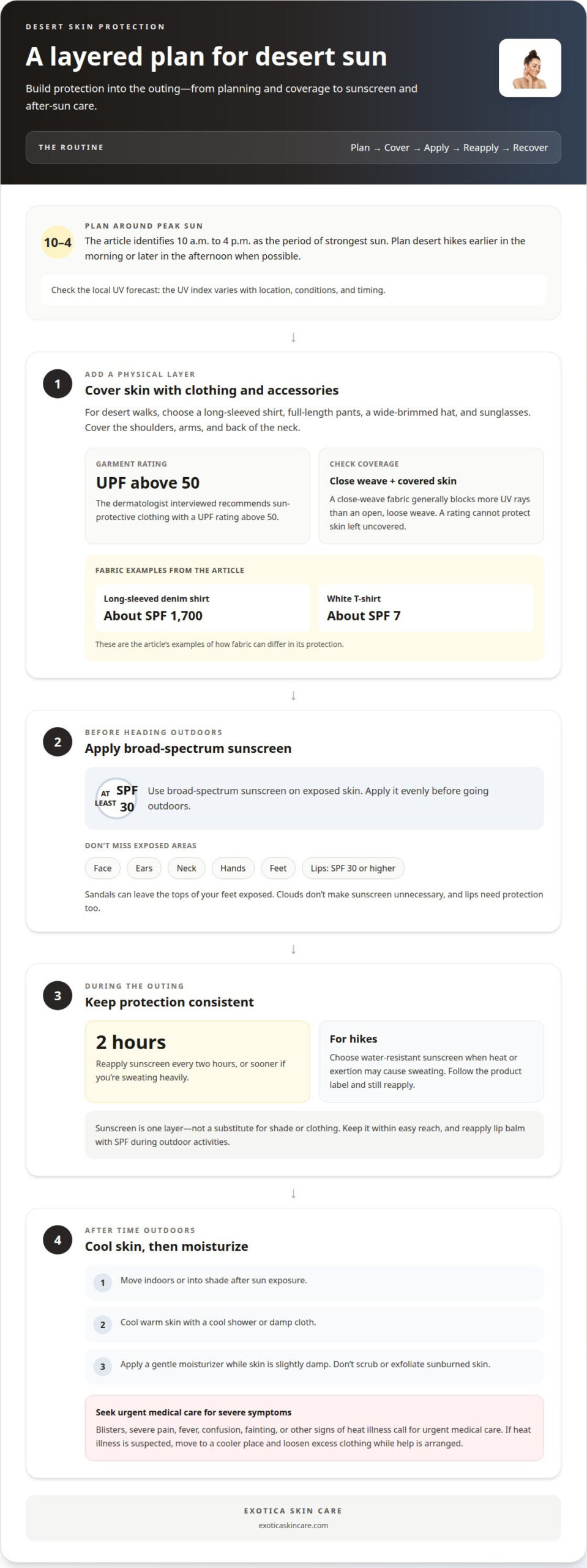
Desert sunlight calls for a consistent routine, not a single application of sunscreen. Broad-spectrum sunscreen with at least SPF 30 helps protect exposed skin from ultraviolet radiation, while shade, clothing, and careful timing add useful layers of protection.
Choose a broad-spectrum formula because “spectrum” refers to coverage across different types of ultraviolet rays. Apply it to every exposed area, including your face, ears, neck, hands, and feet. Sandals, for example, leave the tops of your feet exposed, so include them rather than stopping at your ankles.
Use water-resistant sunscreen for desert hikes, especially when heat or exertion may cause sweating. Water resistance can help sunscreen remain effective through sweat or accidental splashes, but you still need to reapply. Follow the product label, and treat sunscreen as one part of your protection, not a substitute for shade or clothing.
Apply sunscreen evenly to exposed skin before heading outdoors. Reapply every two hours, or sooner if you’re sweating heavily. A hike, outdoor errand, or long wait in the sun can extend your exposure, so plan to reapply during the outing. Keep sunscreen within easy reach rather than buried in a bag.
Clouds don’t make sunscreen unnecessary. The routine still matters on overcast days, and lips need protection too: use lip balm with SPF 30 or higher. Reapply it during outdoor activities, just as you would sunscreen on exposed skin. These small areas are easy to miss when getting ready.
When is the safest time of day for outdoor activities in the desert? Plan hikes outside the period of strongest sun, between 10 a.m. and 4 p.m. Starting early in the morning or going later in the afternoon can help reduce peak sun exposure.
What UV index levels are common in desert regions of the United States? There isn’t one level for every desert location or day. The UV index varies with local conditions and timing, so use the local forecast to guide your outdoor plans and protection.
A practical plan for how to protect skin from desert sun combines sunscreen, protective clothing, and thoughtful timing. It also accounts for details such as exposed feet, lips, and areas missed during application. With consistent habits, desert outings become easier to plan while keeping sun protection in mind.
2. Hydrating skin in a desert climate
Low humidity can leave skin feeling tight, rough, or flaky, especially after time outdoors in Las Vegas. Hydration has two related parts: drinking water supports the body’s cooling processes, while moisturizer helps reduce moisture loss from the skin’s surface. Keep water nearby and sip regularly during outdoor activities. Once indoors, check whether your face, hands, or legs feel dry, and apply moisturizer where needed.
Choose a cold or lukewarm shower rather than a hot one. A brief, comfortable rinse can remove sweat and sunscreen without the drying sensation a hot shower may cause. Pat your skin gently with a towel, leaving it slightly damp instead of rubbing it completely dry. Apply moisturizer promptly to help retain surface hydration. This simple sequence works after a hike, outdoor exercise, or a day of errands.
Choose a moisturizer that suits your preferences and how your skin feels. Greasier or oil-based products can suit very dry areas, while thick creams in jars offer a less greasy option. Fragrance-free formulas may be preferable when skin feels irritated. Apply a generous layer to dry patches, such as elbows or shins, and a lighter amount where skin feels comfortable. The best texture is one you’ll use consistently.
Gentle exfoliation can help lift dead skin cells, but aggressive scrubbing may worsen dryness. In summer, exfoliate gently once or twice a week and avoid abrasive products. If a scrub leaves your skin stinging or visibly irritated, stop using it and return to a simple cleansing and moisturizing routine. Exfoliation doesn’t replace hydration, so moisturize afterward to restore comfort.
After sun exposure, move indoors or into shade and cool warm skin with a cool shower or damp cloth. Apply a gentle moisturizer while your skin is slightly damp. Sunburn can cause redness, warmth, tenderness, and swelling, so don’t scrub or exfoliate affected skin. If blisters, severe pain, fever, confusion, fainting, or other signs of heat illness occur, seek urgent medical care. If heat illness is suspected, move to a cooler place and loosen excess clothing while help is arranged.
Skin that stays persistently dry may need a simpler routine, not more active ingredients. Pause exfoliants when your skin feels raw, avoid very hot water, and choose a fragrance-free moisturizer. During a desert outing, plan for recovery: gently rinse away sweat, let your skin cool, then moisturize. These steps can support the skin barrier and help reduce the cycle of dryness and irritation.
3. Sun-protective clothing
Clothing creates a physical layer between ultraviolet rays and your skin. For desert walks, choose a long-sleeved shirt, full-length pants, a wide-brimmed hat, and sunglasses. Covering your shoulders, arms, and the back of your neck reduces direct exposure. This layer is especially useful during activities when sunscreen may rub off under backpack straps or sleeves.
Look for sun-protective garments labeled with a UPF rating. UPF describes how much ultraviolet radiation a fabric allows through; the dermatologist interviewed recommends clothing with a UPF above 50. A close-weave fabric generally blocks more UV rays than an open, loose weave. Check the garment’s coverage, too: a high rating cannot protect skin that the garment leaves uncovered.
Fabric and fit both matter. Dense denim offers substantial coverage, while a thin white T-shirt provides much less. A long-sleeved denim shirt provides an SPF of about 1,700; a white T-shirt provides an SPF of about 7. These examples show why a lightweight-looking shirt shouldn’t automatically be treated as sun-protective. For prolonged outdoor time, prioritize closely woven material or UPF-rated clothing.
Color creates a practical tradeoff in the desert climate. Dark or bright colors and dense fabrics offer better UV protection than loose, open-weave clothing. Light-colored clothing reflects the sun’s rays better than dark clothing and can help you stay cooler. Choose a comfortable, breathable garment with a close weave, balancing coverage and heat comfort for the planned activity. Staying cooler can make it easier to avoid overheating and dehydration.
A wide-brimmed hat shades your face, ears, and neck, areas a cap may leave exposed. Add a neck gaiter or bandana when sunlight reaches the sides of your face or the back of your neck. Adjust these accessories as shade shifts during a hike, and wear long sleeves to protect your arms on exposed stretches of trail.
Sunglasses are another essential part of outdoor coverage. Choose a pair that blocks 100% of UV rays; wraparound frames also limit light entering from the sides. Wear them alongside a hat, since overhead shade alone doesn’t protect the eyes from every direction. Secure, comfortable frames are easier to keep on during walking or windy conditions.
Before leaving for a desert outing, check your outfit in a mirror for exposed shoulders, ears, neck, hands, and ankles. Add a layer or accessory wherever coverage is missing. Clothing works best as part of a complete routine, alongside shade and sunscreen, not in place of them. These protective packing habits are just as valuable if you are preparing for sunny adventures further afield, such as wildlife expeditions planned with Tamu Adventures.
4. Protecting the skin barrier and locking in moisture
Desert climates can leave your skin feeling tight or rough, particularly after time outdoors. The skin barrier helps limit moisture loss and keep the surface comfortable. Support it with a simple routine: gentle cleansing, daily moisturizer, and sun protection. Moisturizer can improve comfort, but it doesn’t block ultraviolet exposure or prevent skin cancer. Keep these protections distinct.
Apply moisturizer every day, ideally right after showering while your skin is still damp. Pat gently with a towel, then spread the product over your face and body before the remaining water evaporates. This helps hold moisture at the surface. If your hands feel dry after washing or your cheeks feel tight in desert air, reapply there rather than layering on multiple active products.
Choose fragrance-free moisturizers with barrier-supportive ingredients such as ceramides or glycerin. Ceramides help support the skin barrier, while glycerin attracts water to the skin’s surface. Hyaluronic acid is another humectant, meaning it attracts and holds water. A formula with these ingredients may suit dry-feeling skin, but texture matters too: choose a cream or lotion comfortable enough to use consistently.
Hyaluronic acid products may contain molecules of different sizes, and the overall formula affects how the ingredient behaves. Don’t assume a product’s name alone guarantees lasting hydration. In hot, dry conditions, an unbalanced hyaluronic acid formula may draw water from deeper skin layers and leave your skin feeling drier. Pairing it with a moisturizer that helps reduce water loss can make your routine more comfortable.
Use a measured routine instead of adding every trending ingredient at once. In the morning, cleanse gently, moisturize, then apply sunscreen before going outdoors. In the evening, remove sunscreen and residue without scrubbing, then moisturize damp skin. If a new product causes stinging or persistent irritation, pause it and return to familiar, gentle skin care. This makes it easier to identify which step affects your skin.
After outdoor exposure, cleanse away sweat and sunscreen with lukewarm water, then apply moisturizer while your skin is slightly damp. Avoid rough washcloths and abrasive exfoliation if your skin feels tender. A cooling rinse may ease the sensation of warmth, but moisturizer supports comfort rather than treating a significant sunburn. Redness, blistering, or severe tenderness calls for appropriate medical attention.
Think of your barrier routine as support, not a standalone shield. To protect your skin, combine moisture care with shade, protective clothing, and sunscreen. A brimmed hat can reduce direct exposure on your face, but moisturizer alone cannot prevent sun damage or skin cancer. In Las Vegas, a consistent, gentle routine helps address dryness while leaving sun protection to the measures designed for it.
5. Antioxidants and environmental damage
Sun exposure can contribute to premature aging, including age spots, dryness, and wrinkles. Ultraviolet radiation also affects the eyes and may contribute to cataracts. Antioxidants can support skin care, but they don’t replace sunscreen, protective clothing, or shade. Consider them an additional step alongside the practical sun habits described earlier.
Vitamin C and vitamin E are antioxidants used in skin-care products. After time outdoors, a product containing these vitamins may help neutralize free radicals and reduce sun-induced damage. Keep your routine gentle: cleanse away sweat and sunscreen, then apply a suitable product according to its label. Follow with moisturizer if your skin feels dry. If your skin is sunburned or irritated, avoid adding products that sting.
Food can provide antioxidants, too. Blueberries contain anthocyanin, a plant compound associated with protecting cells from UV damage. Red-colored fruits and vegetables contain compounds that may support the skin’s natural repair and rebuilding processes. Add blueberries or colorful produce to meals as part of a varied diet, but don’t treat any single food as a shield against ultraviolet exposure or skin cancer.
Build a realistic routine around the day ahead. Before leaving home, apply broad-spectrum sunscreen with SPF 30 or higher to exposed skin. Choose lightweight protective clothing that covers shoulders and arms, and bring a hat for direct sun. After returning, cleanse gently and consider antioxidant skin care, then moisturize. Each step addresses a different part of the routine, so antioxidants don’t replace UV protection.
Environmental damage isn’t always visible right away. A day outdoors may leave your skin feeling warm or dry, while spots and fine lines can develop over time. Avoid aggressive scrubbing after sun exposure, as irritation can worsen discomfort. Instead, use a gentle cleanser and a familiar moisturizer. Introduce a new antioxidant product separately so you can identify how your skin responds.
Choose products based on their ingredients and how comfortable they feel on your skin, not promises of dramatic results. Vitamin C and vitamin E can complement a daily routine, while blueberries and red produce offer food-based sources of antioxidant compounds. Neither option prevents every effect of sunlight. Consistent sunscreen, shade, and protective clothing remain the foundation; antioxidants can support the rest of your care.
Make your routine easy to repeat. Keep sunscreen with your outdoor essentials, and place your antioxidant product beside your evening moisturizer. After a walk or outdoor errand, take a moment to cleanse and care for your skin. A lightweight routine you can maintain is more practical than adding several unfamiliar products at once.
Exotica Skin Care
Exotica Skin Care can help you build a thoughtful aesthetic skin-care plan alongside daily sun-protection habits. Sunscreen, protective clothing, and hydration remain essential for limiting exposure; aesthetic treatments are not substitutes. If desert dryness or visible sun-related changes concern you, a personalized discussion can help clarify which options may suit your skin goals.
Available treatments include Scarlet SRF, BioRePeelCl3® Peel, PRX Derm Perfexion, and AquafirmeXS. Each serves a distinct aesthetic purpose, so the appropriate option depends on your concerns and desired outcomes. Share what you’ve noticed in your skin and the care you already follow, then discuss possible next steps with the team.
Contact Exotica Skin Care to discuss your skin-care goals.
Make Your Skin-Care Plan Personal
The most useful routine is one that fits your everyday life, from commuting across Las Vegas to spending time outdoors. Consider what feels manageable, which areas concern you, and how your skin responds as seasons and habits change. This reflection can turn guidance on how to protect skin from desert sun into a sustainable personal approach, rather than a collection of steps that feels difficult to maintain.
For aesthetic skin-care goals, Exotica Skin Care offers Scarlet SRF, BioRePeelCl3® Peel, and PRX Derm Perfexion. These treatments can be discussed as part of a broader conversation about your skin and the outcomes you hope to pursue. They don’t replace everyday sun protection, but professional guidance may help you understand how aesthetic care fits alongside your routine.
Contact Exotica Skin Care to talk through your skin-care goals and possible next steps. A thoughtful plan can begin with one conversation, and you can move forward at a pace that feels right for you.
Frequently Asked Questions
What if I Tell You That The Desert Climate Can Be Your Skin’s Best Friend?
A desert climate can feel more manageable when you build habits around its strong sun and dry air. Treat outdoor plans as a cue to prepare: pack sunscreen, protective layers, water, and a hat before leaving home. For example, keep a lightweight cover-up in your car for unexpected errands. These routines won’t make sunlight harmless, but they can help you care for your skin consistently.
What’s the best way to prevent and/or treat dry skin?
Use a gentle routine that supports moisture without adding unnecessary irritation. After washing, pat your skin rather than rubbing it dry, then apply a fragrance-free moisturizer while it’s still slightly damp. If your face feels tight after cleansing, try a gentler cleanser before adding exfoliating products. For persistent cracking, irritation, or discomfort, seek medical advice rather than relying on cosmetic products alone.
What’s the best way to reduce the risk of skin cancer and photoaging?
Reduce ultraviolet exposure with daily sun protection, shade, and clothing that covers exposed areas. Check your skin monthly for new moles or changes in existing spots, and schedule an annual skin exam with a dermatologist. Note changes in a spot’s appearance or sensation so you can describe them clearly during an appointment. These habits support early attention but can’t eliminate risk.
What SPF sunscreen is best for intense desert sun?
Choose broad-spectrum sunscreen with at least SPF 30 for exposed skin. The label’s broad-spectrum wording matters alongside the SPF number, so don’t select a product by SPF alone. If you’ll be sweating during a hike, choose a water-resistant formula and follow its label directions. Apply it to often-missed areas such as the ears, hairline, and backs of hands.
How often should you reapply sunscreen in hot, dry weather?
Reapply sunscreen every two hours, and sooner if you’re sweating heavily. Before a long outdoor activity, set a phone reminder and bring sunscreen where it’s easy to reach. Reapply after towel-drying or when the product has worn away. Don’t assume dry air means sunscreen stays effective longer; heat and activity can still disrupt coverage.
Do mineral or chemical sunscreens work better in desert conditions?
Neither type is automatically better for every person or outing. Focus on whether the sunscreen offers broad-spectrum protection and whether its texture makes you willing to apply it evenly and reapply as directed. For a desert walk, a water-resistant formula can be useful when you’re sweating. If a product irritates your skin, stop using it and choose another suitable option.
How can you protect your face, lips, and eyes from desert sun?
Cover each area with a measure suited to it: use broad-spectrum sunscreen on the face, SPF 30 or higher lip balm on the lips, and sunglasses that block 100% of UV rays. A wide-brimmed hat adds shade over the face and ears. For example, apply sunscreen along the hairline and around the ears, where a quick application can leave gaps.
What clothing and hats provide the best UPF sun protection?
Choose closely woven or UPF-rated clothing that covers shoulders, arms, and the back of the neck. UPF above 50 is a useful target for sun-protective garments. Pair long sleeves with a wide-brimmed hat that shades the face, ears, and neck. A loose, open-weave layer may feel airy, but it can provide less UV protection than denser fabric.