
Scrubbing harder after a wax can make irritated skin feel worse, not smoother. If bumps or itching have appeared, it’s understandable to wonder how to prevent ingrown hairs after waxing, and whether waxing is still right for you. Recurring bumps can be frustrating, but they don’t automatically mean you need to give up waxing.
The timing and gentleness of your aftercare matter. Waxing removes hair from the root, and new hairs may become trapped beneath dead skin as they grow back. In the first 24 to 48 hours, freshly waxed skin can be especially sensitive, so avoid friction, excess heat, and exfoliation while it settles. After that, a simple routine may support comfortable regrowth without overworking your skin.
This guide explains why ingrown hairs happen, when to resume gentle exfoliation and moisturising, and which habits may help reduce bumps and irritation. You’ll also learn when persistent or painful symptoms deserve professional guidance. A thoughtful approach can make waxing feel more manageable, one calm step at a time.
Key Takeaways
- Learn how hair growth, skin sensitivity, and repeated friction can contribute to ingrown hairs, and which habits you can adjust.
- Understand how to prevent ingrown hairs after waxing with gentle, skin-tolerant care rather than forceful scrubbing.
- Build a simple routine that responds to how your skin feels, with immediate comfort measures and later maintenance.
- Recognize that recurring bumps may have several contributing factors and don’t automatically mean waxing is unsuitable for you.
- Know when painful, worsening, or persistent bumps call for assessment by a medical professional.
Why ingrown hairs can appear after waxing
Post-wax bumps can be frustrating, especially when you were hoping for smooth, comfortable skin. They don’t automatically mean you have ingrown hairs. An ingrown hair is a hair that grows into or beneath the skin instead of emerging outward through its opening. As it regrows, the tip may curve or become trapped under the surface. This is one possible explanation for a bump, not a diagnosis based on appearance alone.
Waxing removes hair from the root, but it doesn’t determine exactly how each new strand will grow. Hair texture, direction of growth, and individual skin responses can all influence whether a regrowing hair passes through the skin normally. The general ingrown hair overview also describes how a hair can grow back into the skin rather than emerge normally.
What does an ingrown hair after waxing look like?
A small raised bump or a hair visible just beneath the skin may be a sign of an ingrown hair. Redness, tenderness, or itching can occur around it, too. These features aren’t definitive: freshly waxed skin may also look or feel irritated without a hair being trapped. Avoid squeezing, digging, or trying to pull out a hair you can’t easily see. Picking can injure the skin and intensify irritation.
Pay attention to how the area changes, not just how it looks at one moment. If symptoms are severe, worsening, or persistent, seek medical advice rather than assuming the cause or continuing to treat the bump at home.
Why can waxing be followed by ingrown hairs?
As hair grows back, a strand may curve toward the skin or fail to pass cleanly through its surface. Curly or coarse hair can be more likely to bend back, while some people may be more susceptible because of how their skin responds. These differences are individual. They don’t mean everyone with a particular hair type will develop ingrowns or that waxing is automatically unsuitable.
Not every bump after waxing is an ingrown hair. Hair removal may temporarily irritate the skin, or a bump may have another cause. Redness or itchiness alone can’t confirm what’s happening beneath the surface. To understand how to prevent ingrown hairs after waxing, pay attention to what your skin is showing and choose care that doesn’t add unnecessary irritation. If bumps recur, note where and when they appear and discuss persistent or concerning symptoms with a medical professional.
How hair growth, skin, and friction influence ingrowns
Each hair grows from a small opening in the skin called a follicle. As a new strand moves through that opening, the surrounding skin forms a surface it must pass through. If the opening is blocked or the skin is irritated, regrowth may be less straightforward. That doesn’t mean every bump has the same cause or that your skin is destined to develop ingrowns.
Personal traits can shape susceptibility, while repeated friction and irritation are habits or exposures you may be able to reduce. Keeping those categories separate can make the issue feel more manageable. You can’t change your natural hair pattern, but you can pay attention to what repeatedly rubs or aggravates the area.
Which personal factors may increase susceptibility?
Hair that is curlier or coarser may be more likely to grow toward the skin rather than out through its opening. Individual patterns vary, however. Two people with similar hair may have different experiences, and the same person may notice differences between body areas. Hair texture is one possible influence, not a prediction or a reason on its own to stop waxing.
Skin also responds differently from person to person. Some people experience more sensitivity or irritation after hair removal, while others notice little reaction. These factors help set realistic expectations, but they don’t identify the cause of a particular bump. Consider your own patterns instead of relying on a single rule that assumes all skin behaves alike. Similar care applies to facial hair removal and grooming, where barbers such as Sam’s Scissors Barbershop focus on clean technique and skin prep to reduce irritation along the beard and neckline.
How can friction and irritation contribute?
Repeated rubbing can aggravate skin that’s already sensitive after hair removal. Close-fitting clothing, for example, may create friction in an area that bends or moves often. That contact doesn’t guarantee an ingrown hair, but it may add to redness, tenderness, or discomfort and make it harder to tell what’s causing a bump. Scratching or picking can also disturb the skin and prolong irritation.
Notice whether discomfort tends to appear where fabric, movement, or another source of rubbing is present. This observation isn’t a diagnosis, but it can provide useful context. The NHS offers general information about preventing and managing ingrown hairs. Discuss persistent or concerning symptoms with a medical professional.
Understanding these influences can help you make informed choices without blaming your skin or treating every bump as proof that waxing is unsuitable. Exotica Skin Care offers body waxing as part of a personalized skin-care experience. Exotica Skin Care is not a salon or spa, we are a boutique that specializes in skin care. Our licensed, trained, and experienced estheticians will provide the best treatments for your skin’s needs. Learn more about personalized body waxing as one part of thoughtful skin care.
Which prevention habits help, and which can irritate skin?
A useful routine supports comfortable regrowth without treating your skin as something to scrub into submission. Gentle cleansing, moisturising, and limiting avoidable friction may support comfort, but none can guarantee that ingrown hairs won’t occur. More exfoliation isn’t automatically better: if a method leaves skin stinging, raw, or increasingly red, it may be adding irritation rather than helping.
Gentle cleansing
Purpose: Clears sweat and everyday residue without rough friction.
Caution: Use a light touch. Scrubbing with a rough cloth or abrasive cleanser can leave sensitive skin feeling worse.
Gentle exfoliation
Purpose: Helps loosen surface buildup that may interfere with hairs emerging.
Caution: Choose an approach your skin tolerates. Avoid forceful scrubbing or layering irritating products.
Moisturising
Purpose: Supports skin comfort and helps reduce dryness.
Caution: It’s supportive care, not a treatment for every bump or a guarantee against ingrowns.
Reducing friction
Purpose: Limits repeated rubbing against sensitive areas.
Caution: Tight clothing can be one source of friction, but it isn’t a cause in every case.
Does exfoliating prevent ingrown hairs after waxing?
Gentle exfoliation may help clear some surface buildup, which can make it easier for regrowing hairs to emerge. It can be one part of how to prevent ingrown hairs after waxing, but it won’t prevent every bump. Skin tolerance matters more than intensity. A careful approach is different from vigorous scrubbing or combining several exfoliating products.
There isn’t one start time or method that suits everyone and every area. Let the skin’s condition guide you, follow any aftercare instructions you’ve received, and pause exfoliation if it causes burning, persistent redness, or discomfort. Exfoliation is a preventive habit, not a way to dig out or treat an established bump. Avoid picking at a suspected ingrown hair; if you’re unsure what a bump is, seek medical guidance.
What habits may reduce avoidable irritation?
Keep the area gently clean and avoid unnecessary rubbing while it feels sensitive. If clothing presses or chafes, looser, comfortable fabric may reduce that contact. These adjustments won’t change your natural hair pattern, but they can help avoid adding friction to reactive skin.
Moisturising can ease dryness and support a comfortable skin surface, but adding more product isn’t always helpful. If a moisturiser stings or seems to worsen irritation, stop using it on the affected area. Keep the routine simple and observe how your skin responds. If a bump is painful, worsening, or persistent, prevention habits alone may not be enough. Consider medical advice rather than exfoliating more aggressively.
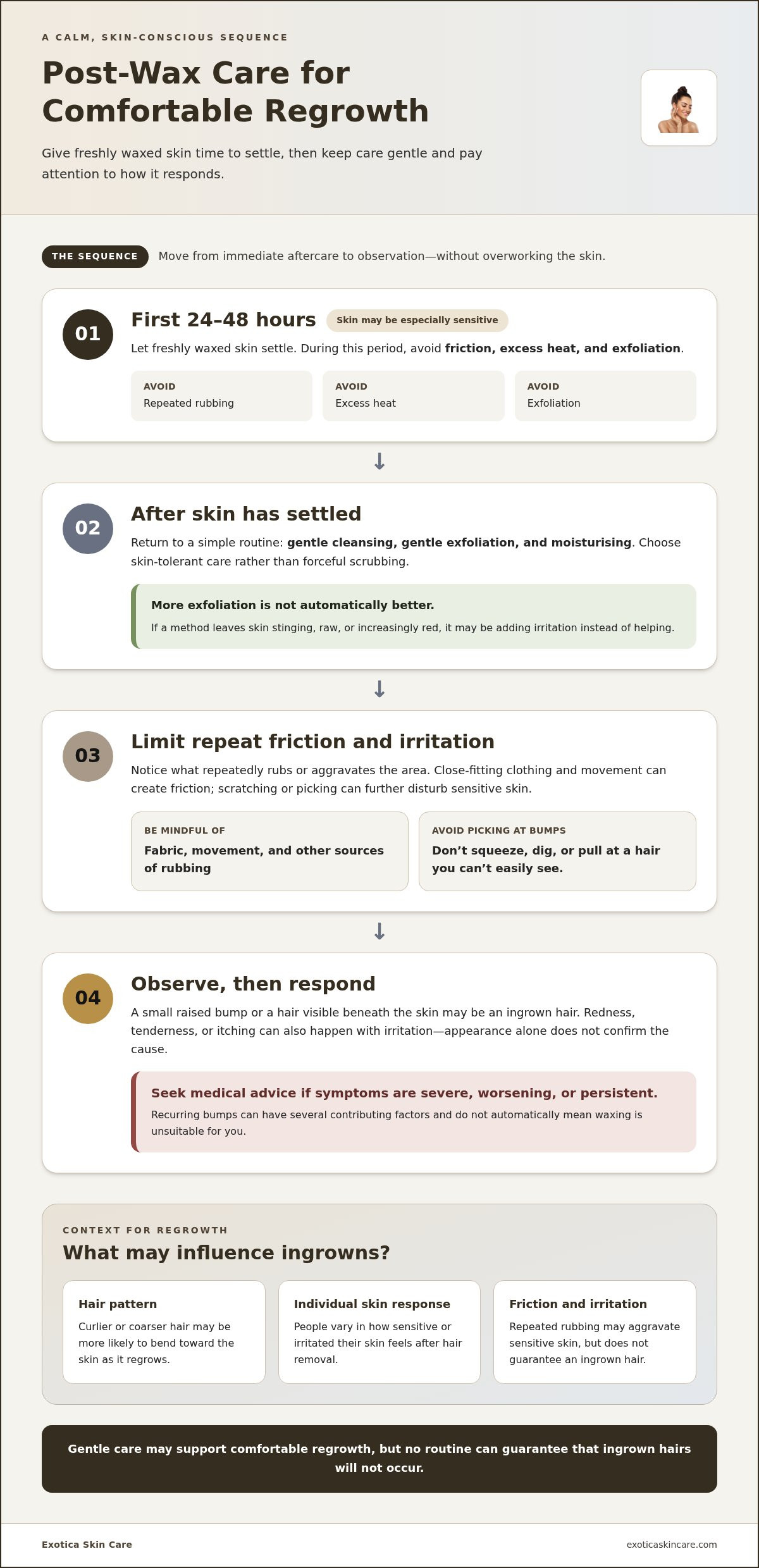
A gentle post-wax routine for the days after hair removal
Skin can respond differently after waxing, so use its comfort as your guide rather than following a rigid schedule. This sequence separates immediate care from ongoing maintenance. Pause or simplify any step that causes stinging or increased irritation.
- Start with a light touch. If the area feels warm or sensitive, leave it alone as much as possible. Avoid rubbing, scratching, picking, and forceful scrubbing. Don’t dig into, squeeze, or try to extract a trapped hair, since disturbing the skin can make irritation worse.
- Keep the area gently clean. When cleansing feels comfortable, use a gentle touch and rinse without scrubbing. Pat the skin dry rather than rubbing it with a towel. The goal is basic cleanliness, not an elaborate routine or an aggressive effort to remove every bump.
- Reduce sources of friction. While the skin feels tender, choose comfortable clothing that doesn’t press or chafe the area. Notice whether movement or fabric seems to aggravate it, and adjust where practical. Less rubbing may make the area more comfortable as it settles.
- Return to maintenance gradually. As sensitivity eases, resume gentle cleansing and moisturising if your skin tolerates them. Consider exfoliation only when the area feels comfortable, and keep the pressure light. There’s no universal start time that suits every person or body area.
- Observe the pattern. If bumps recur, note where they appear, how the area feels, and whether friction or a particular routine seems to coincide with them. This context can help you have a more useful conversation with a licensed skin-care professional.
What should you do when the skin feels irritated?
Give the area a chance to settle. Avoid harsh scrubs, unnecessary rubbing, and repeated attempts to inspect or manipulate a bump. Keep care simple, and don’t add products that sting or worsen discomfort. If a step seems to aggravate the skin, stop and let it recover rather than pushing through irritation.
How should you care for the area as it settles?
Let comfort, not a fixed number of days, guide your return to regular care. Gentle cleansing and moisturising may be appropriate as the skin tolerates them; exfoliation can wait until it no longer feels tender or irritated. Track recurring symptoms to discuss with a licensed skin-care professional, and don’t treat an existing bump as a cue to exfoliate more forcefully.
Seek medical advice if a bump persists or worsens, or if you experience worsening pain or spreading redness. For personalized body-waxing and skin-care support, explore Exotica Skin Care’s body waxing. Exotica Skin Care is not a salon or spa, we are a boutique that specializes in skin care. Our licensed, trained, and experienced estheticians will provide the best treatments for your skin’s needs.
When recurring ingrowns call for professional skin-care support
An occasional bump can be frustrating, but recurring or persistent bumps deserve attention, especially if they’re painful or getting worse. Because a bump after waxing may have more than one cause, don’t assume it’s an ingrown hair or try to manage a concerning area by exfoliating more. A medical professional can assess severe, worsening, or persistent symptoms and advise you on appropriate care.
Seek medical guidance if redness spreads, pain increases, the area continues to worsen, or the bump doesn’t settle. Avoid squeezing or digging into it while you wait for advice. A skin-care appointment is not a substitute for medical assessment: an esthetician can support a personalized skin-care experience, but diagnosis and treatment of a medical concern belong with a medical professional.
What can personalized waxing and skin care add?
Exotica Skin Care offers body waxing as part of its personalized skin-care approach. Individual skin and hair patterns vary, so a thoughtful conversation about your preferences and skin-care goals can help shape your experience without promising that ingrowns will be prevented. Professional waxing is one element of caring for your skin, not a guaranteed solution for recurring bumps.
If you’re considering professional body waxing, remember that personalized skin-care support and medical evaluation serve different purposes. For bumps that are painful, worsening, or persistent, speak with a medical professional first rather than relying on a waxing visit to assess them.
How can Las Vegas-area readers take the next step?
For readers in Las Vegas and nearby communities, Exotica Skin Care is located at Exotica Skin Care, 2480 W. Horizon Ridge #130, Henderson, Nevada. Explore the boutique’s body-waxing and skin-care services as part of a considered approach to personal care.
Learning how to prevent ingrown hairs after waxing starts with noticing how your skin responds and choosing care that respects its needs. If bumps keep returning, bring your observations to a medical professional. If you’re exploring waxing as part of your skin-care routine, explore Exotica Skin Care’s services. A personalized experience can support your skin-care goals without guaranteeing a particular result.
Make your next skin-care choice with confidence
Your skin’s response can change over time, so let experience guide your next step rather than expecting one routine to work perfectly every time. A single uncomfortable episode doesn’t have to decide whether waxing suits you. Notice what feels comfortable, adjust thoughtfully, and seek medical advice if a concern is painful, worsening, or persistent.
Learning how to prevent ingrown hairs after waxing is less about controlling every outcome and more about making informed, skin-conscious choices. If waxing remains part of your routine, personalized guidance can help you make considered decisions for your skin without promising a particular result. If you are also looking to elevate your overall grooming and hair care routine, resources like rossadamshairandbeauty.com showcase how professional hair styling and salon care can complement your personal beauty regimen.
Explore personalized skin care at Exotica Skin Care and take a thoughtful next step toward care that feels right for you. Your skin deserves patience, attention, and a routine shaped around its needs.
Frequently Asked Questions
Can waxing cause ingrown hairs?
Yes, ingrown hairs can appear as hair regrows after waxing, but waxing doesn’t mean you’ll inevitably develop them. When considering how to prevent ingrown hairs after waxing, remember that regrowth patterns and skin responses vary. A bump may also reflect irritation or another issue, so don’t assume it’s an ingrown based on appearance alone. Avoid picking at it, and monitor whether it settles or changes.
How soon after waxing can I exfoliate?
As a cautious baseline, avoid exfoliating during the first 48 hours after waxing, and wait longer if the skin is still tender, red, or irritated. Once it feels calm, try gentle exfoliation rather than a rough scrub, and stop if it stings or causes redness. Follow any specific aftercare guidance you’ve received, since timing can depend on the area and your skin’s response.
Is it safe to pull out an ingrown hair after waxing?
Don’t dig into the skin or forcefully pull out a hair you can’t easily reach. Tweezers, pins, or fingernails can break the skin and add irritation, particularly if the hair is buried or the bump is sore. Leave the area undisturbed and avoid repeated attempts to inspect it. If it remains uncomfortable or doesn’t improve, seek medical advice instead of trying a more forceful removal at home.
What should I do if an ingrown hair after waxing becomes painful?
If a bump becomes painful, stop rubbing, squeezing, or exfoliating that spot, and seek medical advice if the pain is worsening or doesn’t settle. Pain can’t confirm that the cause is an ingrown hair, so avoid treating it based on a guess. Note when the discomfort began and whether it’s changing; those details can help a medical professional assess the concern and guide your next steps.
Are ingrown hairs more common with curly or coarse hair?
Curly or coarse hair may be more likely to curve toward the skin as it grows, which can increase susceptibility for some people. It’s not a certainty: hair and skin vary, and people with similar hair textures can have different experiences. If bumps tend to return in one area, note that pattern and discuss it with a medical professional or licensed skin-care professional rather than assuming your hair type makes waxing unsuitable.
When should I seek medical advice for a bump after waxing?
Seek medical advice if a bump is severe, increasingly painful, worsening, persistent, or accompanied by redness that spreads. Don’t wait for home care to resolve symptoms that keep progressing, and don’t squeeze or puncture the area. A bump after waxing can have causes other than an ingrown hair, so a medical professional can assess what may be happening and advise you on appropriate care.