
The most advanced-looking treatment isn’t always the right first step. The licensed esthetician vs dermatologist decision depends less on how concerned you are about your skin’s appearance and more on whether you need a medical diagnosis or personalized cosmetic care.
It can be hard to know where one role ends and the other begins. Acne, uneven texture, and visible signs of aging may call for different kinds of support. A dermatologist evaluates and treats medical skin conditions; a licensed esthetician focuses on cosmetic skin care and appearance, without replacing medical diagnosis.
This guide explains what each professional can help with, how their roles differ, and how to match your goals with the right type of care. You’ll also learn how esthetician-led services, including acne care, chemical peels, and Scarlet SRF at Exotica Skin Care in the Las Vegas area, can fit into a broader skin-care plan. Start by identifying whether you need medical evaluation, cosmetic support, or both.
Key Takeaways
- The licensed esthetician vs dermatologist choice starts with your goal: cosmetic skin support and medical assessment serve different purposes.
- Credentials reflect distinct training and responsibilities, so understanding each professional’s role helps you choose care with confidence.
- Use a simple decision path: identify the concern, consider whether it needs diagnosis, then clarify your cosmetic goals.
- Personalized esthetician-led care can complement medical care as part of a thoughtful skin-care plan.
Licensed Esthetician vs. Dermatologist: What Does Each Professional Do?
Neither professional is universally “better” for every skin concern. The right choice depends on what you need: cosmetic skin-care support or a medical evaluation. Understanding that distinction can help you decide where to begin and how different kinds of care may fit together.
A licensed esthetician focuses on cosmetic skin care, such as discussing your routine and exploring treatments for the appearance and feel of your skin. An esthetician does not diagnose disease. For a basic overview of the profession, see What is an Esthetician? Services vary according to an esthetician’s training and applicable Nevada rules, so the professional’s role and the purpose of the service matter.
A dermatologist is a physician specializing in the health of the skin, hair, and nails. Dermatologists evaluate concerns, make medical diagnoses, and manage skin conditions. That medical role is the key difference in the licensed esthetician vs dermatologist comparison.
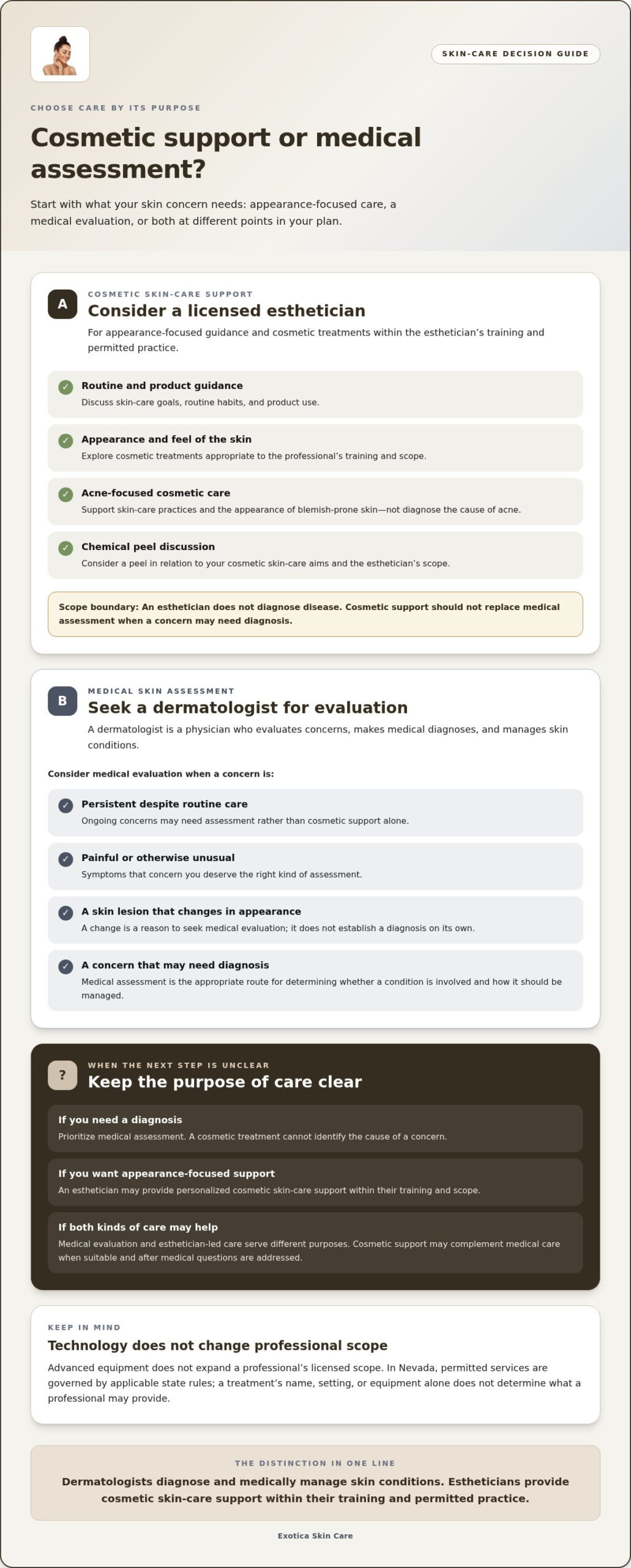
In brief: dermatologists diagnose and medically manage skin conditions; estheticians provide cosmetic skin-care support within their training and permitted practice. This distinction is about the purpose of care, not a ranking of one professional over the other.
What can a licensed esthetician help with?
An esthetician can discuss your skin-care goals, routine habits, and product use, then provide cosmetic treatments appropriate to their training and scope. Acne-focused care, for example, can address skin-care practices and the appearance of blemish-prone skin. A chemical peel is a cosmetic treatment considered in light of a client’s skin-care aims. Neither means the esthetician is diagnosing the cause of acne or another condition.
Personalized guidance can help you make your routine more considered and consistent. If a concern is persistent, painful, or otherwise unusual, cosmetic support should not take the place of medical assessment.
What does a dermatologist address?
A dermatologist assesses symptoms and changes in the skin, hair, or nails, then determines whether a medical condition may be involved and how it should be managed. A concern that persists despite routine care, or a skin lesion that changes in appearance, are examples of reasons to seek medical evaluation. These signs don’t establish a diagnosis on their own, but they deserve the right kind of assessment.
Medical evaluation and esthetician-led care serve different purposes and can both fit into a broader skin-care plan. When you need a diagnosis, a dermatologist is the appropriate professional for that medical role. After medical questions are addressed, cosmetic skin-care support may complement that care when suitable.
Training, Credentials, and Nevada Scope: Why the Distinction Matters
Credentials help explain why two professionals who work with skin may provide very different kinds of care. Dermatologists follow a physician’s educational pathway and specialty training in skin health. Estheticians follow a separate education and licensing pathway centered on skin-care services. Neither role is the right fit for every situation. The relevant question is whether your concern calls for cosmetic support or medical assessment.
A license, additional training, and experience can inform an esthetician’s qualifications, but they don’t make the professional a physician. For clients comparing a licensed esthetician vs dermatologist, that distinction matters most when a concern may need diagnosis rather than appearance-focused guidance or a cosmetic treatment.
How the two professional pathways differ
Physicians complete medical education and then pursue specialty training in their chosen field. Estheticians receive education specific to skin care and must meet applicable licensing requirements for their location. Individual training and experience can vary. Credentials describe a professional’s pathway, not a guarantee of a particular result or a substitute for a different professional role.
Advanced equipment doesn’t expand a professional’s licensed scope. A device’s capabilities and the practitioner’s permitted role are separate considerations. The technology alone doesn’t establish what a practitioner may do.
What Nevada clients should understand about scope
In Nevada, licensing and permitted services are governed by applicable state rules. Those rules can be specific, so don’t assume a treatment’s name, setting, or equipment determines what a professional may provide. Cosmetic skin-care guidance is distinct from medical assessment, and a concern that needs diagnosis belongs in a medical evaluation.
That boundary can help clarify your next step. If you want to discuss routine choices or cosmetic support, an esthetician’s training may align with your goal. If you’re concerned about symptoms or a change that may require medical evaluation, cosmetic guidance shouldn’t stand in for diagnosis. The distinction doesn’t dismiss esthetician-led care; it helps you understand what kind of question each professional is equipped to address.
As you consider your care, focus on the purpose of the appointment and the professional’s role:
- Cosmetic goal: Seek skin-care guidance or appearance-focused support within the esthetician’s training and scope.
- Medical concern: Choose medical assessment when you need a condition evaluated or diagnosed.
- Unclear concern: Don’t assume a cosmetic treatment can identify the cause; prioritize medical assessment if diagnosis may be needed.
Exotica Skin Care’s licensed estheticians provide personalized cosmetic skin-care support, including acne care and chemical peels. Explore personalized esthetician-led skin care as one part of a broader plan, not a replacement for medical diagnosis.
Esthetician vs. Dermatologist: Compare Care by Skin Concern
A skin concern can have both cosmetic and medical aspects, so the useful question isn’t simply which professional treats it. Consider what you want help with and whether the concern needs diagnosis. This comparison explains the general roles; it isn’t a diagnosis or individualized treatment recommendation. The right path may change if symptoms persist or your skin changes.
| Concern | Esthetician role | Dermatologist role | When medical assessment matters |
|---|---|---|---|
| Texture or routine support | Discuss skin-care habits and cosmetic options, such as chemical peels or radiofrequency microneedling, when appropriate. | Assess a medical cause if the texture change is new, persistent, or accompanied by other symptoms. | Seek assessment if the change is unexplained or concerning. |
| Acne-prone skin | Offer cosmetic skin-care guidance and acne-focused support without diagnosing the cause or severity. | Evaluate acne concerns medically and determine whether a condition needs clinical management. | Consider medical assessment for persistent, painful, worsening, or unusual symptoms. |
| Pigmentation or uneven tone | Discuss appearance-focused goals and suitable cosmetic skin-care support. | Evaluate new or changing areas and consider whether an underlying condition may be involved. | Have unexplained or changing pigmentation medically assessed. |
| Changing lesion or persistent rash | Cosmetic guidance doesn’t establish what caused the change. | Examine the concern and provide medical evaluation. | Seek medical assessment rather than relying on cosmetic care. |
Cosmetic goals such as texture, tone, and routine support
If your main goal is to refine the look or feel of your skin, an esthetician can help you consider routine support and appearance-focused options. A chemical peel or radiofrequency microneedling may be discussed as treatment categories, with suitability depending on individual circumstances and applicable practice boundaries. These examples aren’t a promise of results or a substitute for evaluating a medical concern.
Be specific about what you want to discuss, such as visible texture, uneven tone, or how your routine fits together. The phrase licensed esthetician vs dermatologist is useful when it helps distinguish that cosmetic conversation from a medical evaluation.
Persistent, changing, or medically concerning symptoms
Acne and pigmentation concerns can have different causes and may need different kinds of care. A professional can’t determine the cause from a short description alone. If a concern is unexplained, continues, changes, or worries you, medical assessment is the appropriate next step. A changing lesion, for example, should not be treated as a cosmetic issue based only on appearance.
Cosmetic skin care may complement a broader plan, but it doesn’t replace a physician’s assessment when diagnosis may be needed. Let the purpose of care guide your choice.
How to Choose: A Practical Decision Path for Your Skin
Choosing between an esthetician and a dermatologist becomes more straightforward when you separate the concern from the result you hope to achieve. Start by identifying what’s happening, consider whether you need a medical diagnosis, then clarify whether cosmetic skin-care support could help with your goals. If you’re unsure whether a symptom needs diagnosis, prioritize medical assessment rather than trying to resolve that uncertainty through a cosmetic treatment.
- Name the concern. Note what you’ve observed, how long it has been present, and whether it has changed.
- Decide whether diagnosis may be needed. Unexplained, persistent, painful, or rapidly changing concerns call for medical assessment.
- Clarify your cosmetic goal. If you’re seeking routine guidance or appearance-focused support, an esthetician-led consultation may be a fit.
This process doesn’t diagnose a condition or serve as a complete triage checklist. It’s a practical way to match the purpose of care with the professional’s role.
When a cosmetic skin-care consultation may fit
If your goal is to refine a routine, discuss visible texture, or learn about professional skin-care treatments, a cosmetic consultation can help shape a personalized approach. The conversation can focus on your preferences and appearance-related aims, with options considered in light of your individual circumstances. It isn’t a promise that a particular treatment is suitable or will produce a specific result.
Acne concerns can involve both cosmetic and medical questions. An esthetician may provide acne-focused skin-care support, while diagnosis and medical management remain with a physician. If you’re seeking acne-specific cosmetic guidance in the Las Vegas area, Exotica Skin Care’s personalized acne-focused skin care offers an esthetician-led starting point. That support doesn’t replace medical assessment when symptoms raise clinical questions.
When a medical assessment should take priority
Give medical assessment priority if a skin concern is unexplained, persistent, painful, or changing quickly. These examples aren’t a complete checklist, and they don’t establish what’s causing a symptom. They’re reasons to seek a physician’s evaluation instead of treating the issue as purely cosmetic.
An esthetician doesn’t diagnose medical conditions. That’s why an esthetician isn’t a substitute for a dermatologist, even if cosmetic skin-care support may help with a separate appearance-related goal. The licensed esthetician vs dermatologist choice isn’t always either-or: some people first need a medical opinion, then may consider complementary cosmetic care as part of a broader plan.
Keep the roles distinct and the plan personal. If your concern is medical, seek diagnosis; if your goal is cosmetic, explore support that aligns with it. Explore personalized acne-care support at Exotica Skin Care as one option for appearance-focused skin-care guidance.
Personalized Esthetician-Led Skin Care at Exotica Skin Care
Understanding the difference between cosmetic skin care and medical dermatology can help you choose support that fits your goals. At Exotica Skin Care, licensed estheticians provide personalized skin-care services focused on cosmetic support. That care can complement a broader plan, but it doesn’t replace a physician’s assessment or diagnosis when a medical concern needs evaluation.
A tailored approach to cosmetic skin-care goals
A thoughtful cosmetic plan starts with your priorities. A consultation can take into account what you’d like to address, your skin-care history, and the routine or treatments you’re already using. This context helps shape a conversation about options without assuming one treatment is right for everyone. If a concern seems medical or needs diagnosis, that distinction remains important.
Exotica’s offerings provide examples of options for a personalized discussion. Acne-focused care can support cosmetic skin-care goals, while chemical peels and Scarlet SRF are treatments to consider in relation to individual needs. Their inclusion doesn’t mean they’re suitable for every person or concern, and no particular result is guaranteed.
Readers comparing specific treatments can explore the Scarlet SRF Guide and BioRePeel Chemical Peel Guide for more detail on those treatment categories. A treatment guide can help explain what a service involves; a personalized conversation can put that information in the context of your goals and skin-care history.
That distinction is especially helpful if acne is part of your concern. Esthetician-led acne care can focus on cosmetic support and skin-care practices; questions about diagnosis or medical management belong with a physician. The two forms of care have different purposes and may fit into a broader plan without being interchangeable.
Explore Exotica Skin Care in Henderson
Personalized care is not about choosing the most advanced-sounding option. It’s about understanding your aims, discussing relevant skin-care history, and considering cosmetic support thoughtfully. A clear conversation can help you understand available choices and where medical assessment fits, without promising an outcome or taking the place of a diagnosis.
Visit Exotica Skin Care at 2480 W. Horizon Ridge #130, Henderson, Nevada, serving clients in the Las Vegas area.
If you’re exploring cosmetic skin-care support, explore personalized skin care at Exotica Skin Care and book a personalized consultation.
Take Your Next Skin-Care Step with Confidence
Your skin-care plan doesn’t need to be decided all at once. Let your current priority guide the next conversation, and reassess as your needs or goals evolve. The licensed esthetician vs dermatologist question is less about choosing a side than finding the right kind of expertise for the question you have today.
Start with a simple intention: what would you like to understand, change, or maintain? Bringing that focus to a professional conversation can make it easier to discuss relevant options, set realistic expectations, and identify when a different perspective is needed. Thoughtful care isn’t about pursuing every available treatment. It’s about choosing support that feels informed, appropriate, and aligned with your comfort.
Before your visit, note the questions you want answered and the preferences you want respected. That preparation can keep the conversation focused on what matters to you, rather than on a single procedure. It can also help you recognize whether a plan continues to fit your priorities over time.
For a personalized conversation about cosmetic skin-care goals, explore your skin-care options at Exotica Skin Care. Book a consultation in the Las Vegas area to discuss your goals and take the next step with clarity.
Frequently Asked Questions
Can estheticians and dermatologists work together on a skin-care plan?
Yes, their care can be coordinated when you share relevant information between appointments. Tell your esthetician about your dermatologist’s recommendations and any restrictions or aftercare instructions, then keep your physician informed about cosmetic treatments you’re considering. The licensed esthetician vs dermatologist distinction doesn’t prevent collaboration; it clarifies who handles which part of your care. Follow medical instructions first, and don’t assume a cosmetic service fits a physician-directed plan.
Should I tell an esthetician about prescription skin-care products?
Yes. Share the names of prescription products, how you use them, and when you last applied them, along with any nonprescription products in your routine. This context can help the esthetician discuss cosmetic care thoughtfully and identify when medical guidance should take priority. Don’t stop or change a prescribed treatment to prepare for an appointment unless the prescribing clinician advises you to do so.
Can I have a chemical peel while using retinoids?
There isn’t a universal yes or no. The answer can depend on the retinoid, how your skin is responding, the peel being considered, and your recent skin-care history. Tell the esthetician about your retinoid use before discussing a peel, and ask the prescribing clinician for guidance if you’re unsure. Don’t pause or adjust prescription use on your own. A treatment discussion should account for your individual circumstances.
What should I bring to a first esthetician appointment?
Bring a current list or photos of the products you use, including prescriptions, and note how often you apply them. Share relevant allergies, sensitivities, past reactions to skin-care treatments, recent procedures, and the goals you’d like to discuss. If a physician has given you skin-care instructions, bring those details too. This context helps make the conversation more specific and can flag questions that belong with your medical provider.
Can an esthetician help maintain skin after a dermatology treatment?
An esthetician may support cosmetic skin-care maintenance after a dermatology treatment when the timing and services suit your situation. Bring the dermatologist’s aftercare instructions and be clear about when the treatment took place. If you’ve been told to avoid certain products or procedures, follow that guidance. The esthetician can use the information to discuss cosmetic support, but shouldn’t override medical instructions or assess healing as a physician.
How often should I schedule an esthetician treatment?
There’s no single schedule that suits every treatment or person. Timing may depend on the service, your goals, how your skin responds, and any instructions from a physician after medical care. Rather than choosing an interval from a generic recommendation, discuss a cadence based on your circumstances and reassess if your skin changes. At Exotica Skin Care in Henderson, Nevada, treatment planning can be personalized around your cosmetic skin-care goals.